

Stop Mindless Creation, Start Intentional Art: The Guide to Meaningful Output
Golden Hook & Introduction
SECTION
Nova: Atlas, quick game. I’ll throw out a word, you hit me with the first thing that comes to mind, no filter, no overthinking. Ready?
Atlas: Oh, I like that! My brain is perpetually unfiltered, so this is my natural habitat. Hit me.
Nova: Alright. First word: "art."
Atlas: Art… hmm. "Dusty museum." Or "overpriced." Maybe "confusing."
Nova: Wow, straight for the jugular! Okay, next: "creation."
Atlas: Creation… "deadline." "Writer's block." Or "that feeling when it finally clicks."
Nova: That last one's a keeper. And finally, "meaning."
Atlas: Meaning… "elusive." "Deep dive." Or "the 'why' behind everything I do." That's the one.
Nova: "Elusive" and "the 'why' behind everything I do" – that's a perfect springboard, Atlas, because today we’re diving into exactly that with a book called "Stop Mindless Creation, Start Intentional Art: The Guide to Meaningful Output." It’s a work that grew out of my own journey, trying to bridge the sometimes abstract world of philosophy, like John Dewey's aesthetics, with the very real, often messy, process of making things. It’s less a theoretical treatise, and more a practical guide rooted in some profound thinking about purpose and process.
Atlas: That makes me wonder, if art is often "dusty" or "elusive" as I first thought, how do we make it less so? How do we find that 'why' and make creation feel less like a "deadline" and more like that "feeling when it finally clicks"?
The Blind Spot: Art as a Consumable vs. Lived Experience
SECTION
Nova: Exactly! That’s where the book starts, by identifying what I call "the blind spot." We often see art, or any creative output for that matter, as just a finished product. It’s consumed, admired, critiqued, then we move on. But that perspective, while common, misses the entire point. It’s like a zoologist who only studies taxidermied specimens in a museum. You can admire the form, the structure, but you’re missing the entire dynamic interaction, the life, the behavior, the environment that made that animal who it was.
Atlas: That’s a great analogy. So you’re saying we're looking at the 'trophy' rather than the 'hunt'? But wait, how does this apply to someone who isn't necessarily making gallery art, but maybe someone designing a complex algorithm, or even a naturalist documenting a new species? They have a finished 'product' too – the code, the published paper.
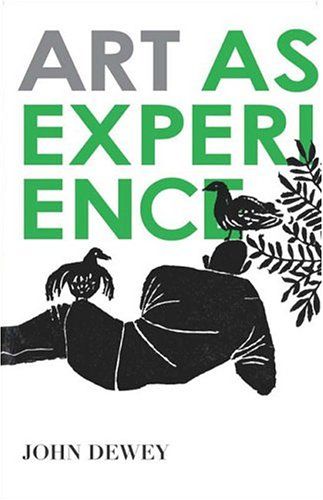
Nova: That’s it! It applies to creative endeavors. The philosopher John Dewey, in his classic "Art as Experience," argued that art isn't just an object; it’s the entire dynamic interaction between the creator, the work, and the observer. It’s about the lived experience, not just the static result. Think of it like this: an ethologist doesn't just observe an animal's final action; they meticulously study the entire behavioral sequence, the environmental cues, the internal states, the learning process. The 'art' is in that whole, interconnected dance.
Atlas: So, the blind spot is thinking the dance is just the final pose? I can see how that would make creation feel empty, as you mentioned in the book. If all you’re focused on is the final output, and you miss the richness of the process, then the joy, the struggle, the learning — all those vital elements — just become obstacles to be overcome, rather than integral parts of the experience. That sounds rough.
Nova: Precisely. The cost of this blind spot is often a feeling of disconnection, of unfulfillment, even when the "product" is successful. It’s the "mindless creation" trap – producing without truly engaging, without experiencing the inherent connection to life’s ebb and flow that makes both the process and the outcome richer.
The Shift: Context, Interaction, and Deeper Meaning in Creation
SECTION
Nova: Which naturally leads us to "The Shift." If we acknowledge this blind spot, how do we move past it? One crucial way is by understanding that our perception, and therefore our creation, is profoundly shaped by history and context. John Berger, with his influential "Ways of Seeing," really hammered this home. He showed us that how we look at a painting from the Renaissance isn't just about the paint on the canvas; it's about the social, economic, and cultural forces that shaped its creation and our contemporary viewing of it.
Atlas: That’s a fascinating point. For a naturalist, understanding an ecosystem’s geological history and the evolutionary pressures on its species is absolutely crucial to understanding its present state. How does that translate to personal creative endeavors, though? How does understanding historical context change how create, not just how I old art?
Nova: That’s the core of the shift! It means bringing that same rigorous, holistic understanding to your own creative 'ecosystem.' It’s about recognizing that your work isn't created in a vacuum. It's influenced by your personal history, your cultural background, the tools you use, the audience you hope to reach, even the very moment in time you’re creating it. When you understand these layers, your creation moves beyond surface beauty to deeper meanings and intentions. Think of a conservation biologist developing a strategy for a threatened species. They don't just look at the animal; they analyze its entire environment, the human impacts, the historical changes in its habitat.
Atlas: Okay, so it's about being an ethologist of your own creative process. Analyzing the 'why' behind not just the output, but the inputs and the environment. But how does your "Nova's Take" – connecting art to life's ebb and flow – practically manifest? What does it mean for a creator to 'engage' with that ebb and flow beyond just churning out work?
Nova: It's about intentionality, Atlas. It's about recognizing that the setbacks, the moments of inspiration, the unexpected detours – these aren't just things that happen your creative process; they part of the process. It's like a river: it doesn't just flow straight to the sea. It meanders, it encounters rocks, it carves new paths, it floods, it recedes. All of that is the river. So, for a creator, it means reflecting on those moments, learning from them, allowing them to shape the work, rather than trying to force a linear path. It's about continuous interaction with the work, with your evolving self, and with the world, making every step meaningful.
Synthesis & Takeaways
SECTION
Nova: So, in essence, we're talking about transforming creative endeavors from mere production into a richer, more engaging experience by first acknowledging that art is a dynamic process, not just a static product, and then by deeply understanding the context and interactive nature of that process. It's a move from mindless creation to intentional art.
Atlas: That’s actually really inspiring. For anyone who seeks deep understanding and analyzes the world rigorously, this calls for bringing that same lens to their own creative pulse. What’s the single most actionable insight you’d offer our listeners who want to integrate this shift into their own work, especially those who are driven by connection to the living world and seek to understand its intricate workings?
Nova: I'd say, become the ethologist of your own creative process. Observe it. Analyze it. Understand the 'why' at every stage – why you start, why you pause, why you choose one path over another. Trust your innate wisdom, as your user profile suggests, because that deep understanding of processes is your superpower. And then, share those insights, because others can learn from your depth, just as we're doing now.
Atlas: That's a perfect way to put it. It’s about bringing that rigorous, observant spirit to the internal world of creation.
Nova: Absolutely.
Atlas: This is Aibrary. Congratulations on your growth!