

Beyond the Canvas: The Philosophy Behind Artistic Expression
Golden Hook & Introduction
SECTION
Nova: What if I told you that the way most of us experience art, the way we've been taught to look at it, is fundamentally... incomplete? That we're often missing the entire point?
Atlas: Hmm, that’s a bold claim, Nova. I imagine a lot of our listeners, myself included, think they know what art is. It's beautiful, it's thought-provoking, it hangs in a gallery. What exactly are we missing?
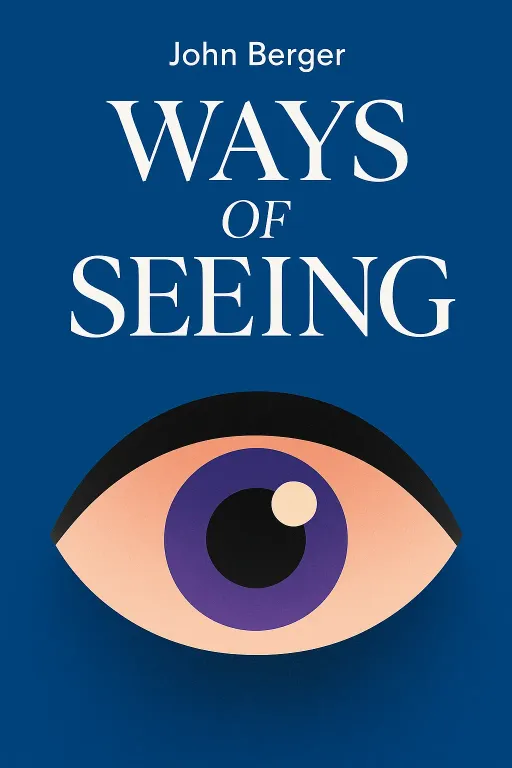
Nova: Exactly! And that's the blind spot we're exploring today, drawing on the profound philosophies behind what we're calling "Beyond the Canvas: The Philosophy Behind Artistic Expression." We're not talking about a single book, but rather the revolutionary ideas of thinkers like John Berger, with his iconic, and John Dewey, with his seminal.
Atlas: Ah, Berger and Dewey. Two titans. I'm curious, for those who might not be familiar, what makes their perspectives so revolutionary?
Nova: Well, let's start with Berger. His actually began as a groundbreaking BBC television series in the early 70s, which is incredible because it literally brought art criticism to a mass audience, challenging the academic gatekeepers and showing how images are never neutral. He democratized the conversation around art. And Dewey, as a pragmatist philosopher, insisted that thought and experience are deeply intertwined. For him, art wasn't some detached intellectual exercise, but a vital, transformative part of life itself. These aren't just theories; they're invitations to fundamentally change how we interact with the world.
Atlas: Right, so we're talking about a paradigm shift, not just a new way to decorate our walls. That makes me wonder, what this "blind spot" you mentioned? What's the traditional view we need to shake off?
The 'Blind Spot': From Object to Experience
SECTION
Nova: The blind spot, Atlas, is the pervasive tendency to view art primarily as a static object. We admire it for its beauty, its technique, its historical value, almost like a precious artifact under glass. We go to a museum, we look at a painting, we say "Oh, that's nice," and then we move on. We treat it as a finished product, a thing to be consumed.
Atlas: I totally know that feeling. I've walked through countless galleries, nodded thoughtfully, and then felt like I didn't it. Like there was a secret language I didn't speak. It felt distant, almost intimidating. So, are you saying that feeling of disconnect is part of the blind spot?
Nova: Precisely. That disconnect comes from treating art as a passive object rather than a dynamic experience. It’s like looking at a meticulously drawn map of a foreign country and believing you've actually there. The map is beautiful, it's informative, but it's not the journey itself. Art, in its truest sense, is not just a thing; it's a dynamic experience, a way of seeing and understanding the world that actively shapes us.
Atlas: That’s a great analogy. So, what are the real consequences of this "map, not journey" approach? How does it limit our engagement?
Nova: When we overlook art's dynamic role, we limit our engagement with culture, with history, and even with ourselves. We miss how art functions as a powerful lens, shaping our perceptions and connecting us to broader cultural narratives. It stops being a living dialogue and becomes merely an aesthetic adornment. Imagine a historical event, like a revolution. If all you do is look at a painting depicting it, you get one perspective. But if you understand the artist's intent, the social climate, the political forces influencing its creation and reception, the painting itself becomes a portal to a much deeper understanding.
Atlas: That makes sense. It's like we're approaching art with a pre-set filter, and that filter is 'object-admiration.' But why is that filter so prevalent? Is it just how we've always been taught?
Nova: It's deeply ingrained. Part of it stems from the historical shift where art moved from being a communal, often functional, part of life – think ancient rituals or public murals – to becoming a commodity, collected by the wealthy, housed in private collections, and later, in public museums. This shift subtly transformed the public perception of art from an active participant in life to a valued possession, an object of prestige. This commercialization, this commodification, subtly reinforced the idea of art as a static object, an investment, rather than a living, breathing experience.
The 'Shift': Redefining Art Through Berger and Dewey
SECTION
Nova: And that's precisely where thinkers like John Berger and John Dewey come in, offering a radical shift in perspective that dismantles this "object" mindset. Let’s start with Berger and his. He radically challenges how we interpret art, showing us that our perceptions are never neutral.
Atlas: Okay, but wait. "Never neutral"? What do you mean by that? I thought art was about universal beauty, about something that transcends time and place. Are you saying there's no such thing as objective beauty?
Nova: Berger argues that our perceptions are profoundly shaped by history, power, and context. He urges us to question traditional art appreciation, which often presents a singular, authoritative interpretation. Think about a classic European oil painting of a wealthy merchant. Traditionally, we might admire the technique, the light, the composition. But Berger would ask: Who commissioned this painting? Who was the intended audience? What was its purpose beyond mere aesthetics? He shows how the meaning of that painting changes dramatically when it's reproduced in an art history textbook versus when it was originally unveiled in the merchant's private study. The context, the power dynamics, the gaze of the viewer – all these actively shape what we "see" and how we interpret it. He makes us realize that the way we see the world, including art, is a construct.
Atlas: So he's essentially saying we need to deconstruct the gaze, deconstruct the narrative around the art, to truly understand it. That’s fascinating, especially for anyone who likes to analyze systems and power dynamics. But how does that connect with Dewey's idea of art as "experience"?
Nova: Excellent question, Atlas. Berger provides the critical lens, helping us see our perception is shaped. Dewey then takes us a step further by emphasizing the importance of. For Dewey, art is not separate from life; it’s an intensification of life. He argues that true art transforms the observer, making them a participant. It's not about passively receiving a message; it's about an active, evolving transaction between the artwork and the viewer.
Atlas: So it's not just about what the artist put it, but what get out of it, and how it changes me? Is it like a conversation, rather than just listening to a lecture?
Nova: That's a perfect analogy! Dewey would say a lecture is passive consumption, but a true conversation is a dynamic experience where both parties are changed. When you truly engage with a piece of art, it evokes feelings, thoughts, memories, and connections that transform your understanding, not just of the art, but of yourself and the world. It’s a process, not an endpoint. Together, Berger’s critical deconstruction and Dewey’s call for active, transformative experience empower us to become much richer, more personal, and culturally aware participants in the meaning-making of art. It turns passive admiration into active inquiry and personal growth.
Atlas: That’s actually really inspiring. It sounds like they're giving us permission, even a mandate, to bring our whole selves to the experience of art, rather than just our 'educated' selves. It’s about being present and letting the art something to you.
Synthesis & Takeaways
SECTION
Nova: Absolutely. And that brings us back to the deep question posed in the philosophy we've been exploring: How might a deeper awareness of these 'ways of seeing' change your next encounter with a piece of art or cultural artifact? It’s about recognizing that art isn't just an object to be admired, but a powerful lens. It shapes our perceptions, connects us to broader cultural narratives, and offers a profound path to understanding.
Atlas: It’s a complete reframing. Instead of feeling inadequate in front of a masterpiece, we can now approach it as an active participant, asking questions: Who made this? Why now? What does it reveal about power, about society, about my own conditioning? And how does it make feel, and what does that feeling tell me? It’s about bringing that analytical rigor to something often relegated to mere aesthetic pleasure.
Nova: Exactly. This shift in perspective impacts not just how we appreciate a painting, but how we engage with every cultural artifact around us – from advertisements to architecture, from news headlines to historical monuments. It teaches us to look beyond the canvas, beyond the surface, to the underlying philosophies, power structures, and human experiences that give everything meaning.
Atlas: So, for our listeners who seek clarity and depth, who want to understand the intricate systems behind what they see, this isn't just about art appreciation. It's about a fundamental intellectual upgrade, a new set of glasses through which to view the entire world. What a powerful takeaway.
Nova: Indeed. It's about turning passive observation into active, transformative insight.
Atlas: That’s a truly profound way to end this discussion. What an eye-opener. This is Aibrary. Congratulations on your growth!