

Beyond the Canvas: Seeing the World Through an Artistic Lens
Golden Hook & Introduction
SECTION
Nova: Quick, Atlas, what’s the most boring thing you saw today?
Atlas: Oh, easy. My overflowing inbox. Why?
Nova: What if I told you that even that overflowing inbox is an 'artistic experience' you're just not fully perceiving?
Atlas: Hold on. My inbox, which is currently a digital black hole of urgent requests and unread emails, is? You're going to have to explain that one.
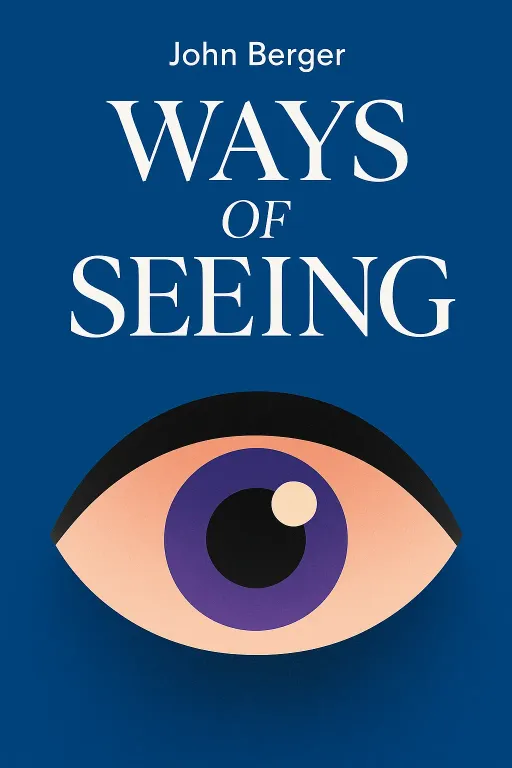
Nova: Absolutely! And that's exactly what we're diving into today. We're tearing down the walls of the traditional art gallery to talk about two seminal works that completely redefined how we interact with images and experiences: John Berger's "Ways of Seeing" and John Dewey's "Art as Experience." Berger, a fascinating figure who was a Marxist art critic and novelist, wrote "Ways of Seeing" as an accompanying book to a BBC TV series in the early 70s, which itself was a radical challenge to traditional art criticism. It was designed to be accessible, almost a manifesto for a new way of viewing art, and it completely shook up the art world, becoming a foundational text for cultural studies. It’s a book that still sparks passionate debate decades later.
Atlas: So, it's not just some dusty academic text, but something that genuinely provoked a conversation. I can see how that would be important.
Nova: Exactly. And that idea of "not fully perceiving" your inbox, or anything else for that matter, is where Berger truly shines a light. He wants us to acknowledge the 'blind spots' that keep us from seeing the deeper meaning in things.
The Blind Spot: Unseen Influences on Perception
SECTION
Nova: Berger's core argument is that we often look at art or cultural artifacts without truly seeing their deeper meaning or the context that shapes our perception. We're passive consumers, and he argues that images, especially in advertising, are used to maintain power structures and consumerism.
Atlas: So, are you saying art isn't just beautiful, it's a weapon? Or at least a tool?
Nova: A powerful tool, yes. Think about a classic oil painting from, say, the 17th century. A portrait of a wealthy merchant. On the surface, it's a display of artistic skill, right? But Berger would deconstruct it, revealing not just the painter's technique but the embedded power dynamics. The merchant isn't just sitting; he's presenting his status, his wealth, his 'gaze of ownership' over his possessions and, implicitly, over the viewer.
Atlas: Right, like saying, "Look at me, look at what I have."
Nova: Precisely. And Berger shows how this gaze translates directly into modern advertising. Take a luxury car ad. It's not just selling transportation. It's selling a lifestyle, a perception of self, a social status. The sleek lines, the opulent setting, the implied freedom—it all creates a desire not just for the car, but for what the car represents in the social hierarchy. It's designed to make us feel like we that status, that belonging, and in doing so, it reinforces and perpetuates existing social norms and consumerist cycles.
Atlas: Wow. That's a bit unsettling. So, if we're constantly being subtly manipulated by these images, how do we even begin to 'see' truly? How do we break free from that blind spot?
Nova: That’s the critical question. Berger encourages us to question everything, to become active interrogators of the images we consume. It’s about recognizing the frame, the context, the intention behind what's being presented to us, rather than just accepting it at face value. It's moving from "what is this?" to "who made this, why, and for whom?"
Atlas: So you're saying that even a piece of street art, a vibrant mural on a brick wall, isn't immune? It might seem rebellious, but it could still be reinforcing some unseen message?
Nova: Absolutely. While street art often aims to subvert, even its placement, its subject matter, or its eventual commodification can be part of a larger, unseen narrative. It’s about developing a critical eye for visual communication, not just what hangs in a museum. It's a constant process of peeling back layers.
Art as Experience: Bridging Aesthetics and Everyday Life
SECTION
Nova: Once we peel back those layers of inherited perception, once we start to actively question the images that surround us, what's left? That's where John Dewey steps in with "Art as Experience." He argues that art isn't just an object, something separate and highbrow that you go to a gallery to see. It's an experience that integrates with ordinary life.
Atlas: So, my morning commute could be art if I just... pay attention? That sounds a bit out there.
Nova: Not out there at all! Dewey posits that an aesthetic experience isn't exclusive to the Louvre. It's any interaction where there's a complete engagement, a sense of flow where means and ends are integrated. Think about brewing a perfect cup of coffee. Most people rush through it. But if you're fully present—the aroma of the beans, the sound of the water heating, the slow pour, the steam rising—and you're completely absorbed in that process, and it culminates in a fulfilling taste, that's an aesthetic experience. The process and the outcome are harmoniously linked.
Atlas: I can see that. It’s like when you're really immersed in a difficult coding problem, and you lose track of time because you're so focused on the solution. That 'flow state' feels almost artistic.
Nova: Exactly! Or consider a deep, engaged conversation. Not just talking someone, but truly listening, responding, building ideas together. The back-and-forth, the unexpected insights, the shared understanding that emerges—that interaction, that co-creation, that's art. The participants are actively completing the experience. It’s a far cry from a distracted exchange where one person is checking their phone. The difference is the quality of engagement.
Atlas: That’s a great way to put it. For someone in a high-pressure tech environment, where everything is about efficiency and deliverables, how do you even begin to integrate this 'artistic experience' into their day without it feeling like another task to optimize?
Nova: That's the challenge, but also the opportunity. It's not about adding more tasks; it's about changing you approach existing ones. It's not about making a project 'pretty,' but about approaching the problem-solving itself with a sense of deliberate craft, curiosity, and full presence. Like your coding example, it's finding the aesthetic in the process, not just the finished product. It's the difference between merely completing a sprint and engaging with the elegant solution you're building.
Atlas: So it's like shifting from passively consuming images and tasks to actively, critically, and personally engaging with them. It’s about bringing that energy and focus from the 'art gallery' of life into every moment.
Synthesis & Takeaways
SECTION
Nova: Absolutely. By recognizing the 'blind spots' that Berger illuminates – how we're subtly influenced by social and power dynamics in what we see – and then embracing Dewey's concept of 'art as experience,' we move beyond passive consumption to a much richer, more active engagement with life.
Atlas: It's powerful. It’s about reclaiming our agency, transforming the mundane into something meaningful. It's not just about appreciating a painting; it's about appreciating the intentionality, the craft, the connection in everything we do. It’s a radical act of slowing down and truly perceiving.
Nova: Precisely. It’s about transforming how you engage with art and culture into a more active, critical, and personal journey, and extending that critical perception to every conversation, every walk, every interaction. It’s about living a more perceived, richer, and ultimately, more meaningful life.
Atlas: That gives me chills. So, for our listeners, what everyday interaction will you choose to transform into an 'artistic experience' this week?
Nova: We encourage you to look beyond the canvas, beyond the screen, and truly see the world through this artistic lens.
Atlas: This is Aibrary. Congratulations on your growth!