

Beyond the Canvas: How to Find Meaning in the Art Around You.
Golden Hook & Introduction
SECTION
Nova: Alright, Atlas, quick, in one sentence: what's the first thing that comes to mind when I say 'art'?
Atlas: Oh, Nova. Probably 'that thing I feel obligated to pretend I understand at museums while secretly just looking for the exit sign.'
Nova: I love that honesty. And you know, you're not alone. That feeling of intimidation, that sense that art is for some special, enlightened few, that's exactly the 'blind spot' we're tackling today. We're diving into the profound ideas from a fantastic conceptual framework called "Beyond the Canvas: How to Find Meaning in the Art Around You."
Atlas: Okay, I’m listening. Because honestly, sometimes art feels like a secret club I wasn't invited to.
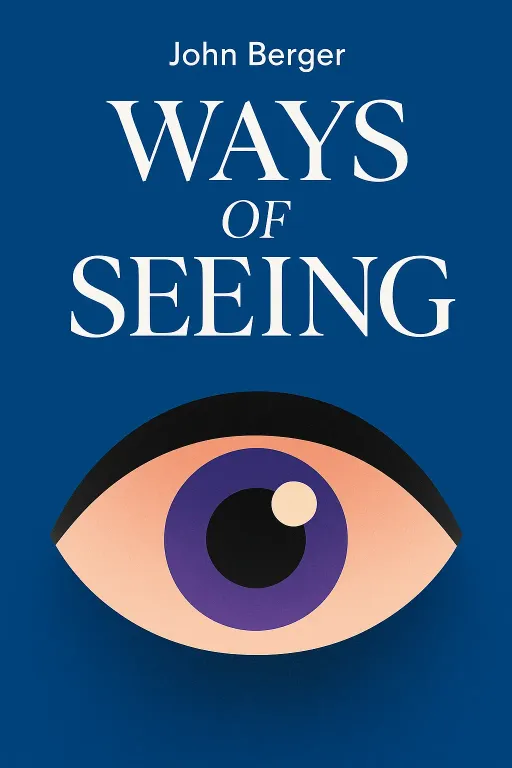
Nova: Exactly! And this framework draws from some absolute titans who cracked open that secret club for everyone. We're talking about the revolutionary insights of John Berger's "Ways of Seeing" and John Dewey's "Art as Experience." Berger's work, originally a groundbreaking BBC television series, completely reshaped how a generation thought about the power structures embedded in art. He made art criticism an accessible tool for critical thinking, rather than just an aesthetic judgment reserved for the elite.
Atlas: Wow. That's a big claim. So, he's saying there are unseen forces shaping how I look at a painting? My 'pretending to understand' might actually be a symptom of something deeper?
The Cultural Lens: Questioning How We See Art
SECTION
Nova: Absolutely. That’s our first core idea. Berger brilliantly argues that how we see art is profoundly shaped by cultural assumptions and power structures. Think about it: when you walk into a grand art gallery, the sheer architecture, the hushed tones, the way certain pieces are dramatically lit – it all subtly tells you, "This is important. This is valuable. You, the viewer, are perhaps not quite as important or valuable as the art itself."
Atlas: You know, I can see that. It's almost like the museum itself is part of the art, creating this aura of reverence.
Nova: Precisely. And this isn't just about museums. Berger points out that this historical visual language, especially in European oil painting, was often about affirming the status and wealth of the commissioning patron. A portrait wasn't just a likeness; it was a depiction of ownership, of power, of material possessions. The way light fell on a silk dress, the glint on a silver goblet – these were visual cues of economic standing.
Atlas: So you're saying I don't truly 'see' the art, but rather 'see' what society, or history, or even the artist's patron, tells me to see? That sounds a bit out there. Can you give an example of how this plays out in everyday life, beyond just old paintings?
Nova: Of course. Think about the advertising we consume today. It uses the same visual language of aspiration and status. A luxury car ad isn't just selling a vehicle; it's selling an image of success, freedom, a certain lifestyle. And it consciously or unconsciously taps into the same visual grammar that those old portraits of landowners did. We're conditioned to associate certain aesthetics with value, even when that value is constructed.
Atlas: That makes sense. It’s like the 'blind spot' isn't just about not seeing the art, but not seeing we're seeing the art. I’ve definitely felt that pressure to appreciate something because it's 'important' or 'valuable,' even if it leaves me cold.
Nova: Exactly. And Berger encourages us to question these influences, to reclaim our personal interpretation. It’s about moving past that passive consumption, that feeling of needing an expert to tell you what to think, and instead, engaging with it on your own terms. It makes art accessible and relevant, not just for the elite, but for anyone willing to look critically.
Art as Active Engagement: The Experiential Connection
SECTION
Nova: And that naturally leads us to a second profound idea, which offers a powerful way to actively reclaim that connection: John Dewey's concept of "Art as Experience." While Berger helps us deconstruct the external forces, Dewey gives us the internal tools to truly engage. He proposes that art isn't just an object; it's an active process of engagement.
Atlas: What exactly do you mean by 'active process'? Like, do I need to start finger painting in the museum? Because that might get me kicked out.
Nova: Not quite finger painting! Dewey emphasizes that the value of art lies in its ability to enrich our sensory and emotional lives, connecting us to the world. It's about moving beyond simply 'looking' at a piece to actually it. Let me give you a scenario. Imagine someone standing in front of a Rothko painting – those huge canvases with blocks of color. They might initially feel confused, thinking, "What does this? Where's the story? What am I supposed to 'get'?"
Atlas: Oh, I've been there. Absolutely. My brain immediately goes into 'problem-solving' mode, trying to intellectualize it.
Nova: And that's where Dewey steps in. Instead of asking 'what does it mean?', he'd encourage you to ask 'how does it feel?' Spend ten minutes with that Rothko, not trying to decipher a hidden message, but simply letting the colors wash over you. Notice the subtle shifts in hue, the texture of the paint, how your mood changes as you stand there. Does the red feel warm or aggressive? Does the blue evoke calm or melancholy?
Atlas: Wow. That's actually really inspiring. So it's like letting the art wash over you, rather than trying to dissect it? It sounds almost meditative.
Nova: It can be. It's about trusting your own sensory and emotional response, rather than searching for an external validation of 'meaning.' It’s about the direct, unmediated encounter. And this is vital because art, in Dewey's view, isn't separate from life; it's an intensified form of experience that connects us more deeply to our own humanity and environment.
Atlas: That’s a great way to put it. So, for someone who finds a piece of art challenging, like our initial 'blind spot' scenario, the book's 'Healing Moment' instruction to 'spend 10 minutes with it, focusing on how it makes you feel, rather than what you think it 'means'' is essentially Dewey in action? It's a way to unlock that personal, experiential connection?
Synthesis & Takeaways
SECTION
Nova: Precisely. It’s the perfect synthesis. Berger makes us aware of the subtle, often invisible, cultural frames that shape our perception – urging us to be critical consumers of visual information. And then Dewey gives us the path to move beyond that critique into active, personal engagement. By combining these insights, we transform our relationship with art. We move it from a passive, potentially intimidating viewing to an active, meaningful experience that enriches our sensory and emotional lives.
Atlas: So basically, we're saying: be smart about how you're being influenced, but then get messy and feel the art for yourself. It’s about personal liberation through engagement, isn't it? Breaking free from the 'shoulds' and finding your own 'feels.'
Nova: Exactly. It's about reclaiming art as a vital part of the human experience, not just as something to be admired from a distance or understood by an expert. It's about realizing that art isn't just aesthetics; it's a profound lens through which we can understand ourselves, our emotions, and the shared human condition more deeply.
Atlas: And what if, by simply choosing to rather than, we don't just understand art better, but we understand ourselves, and the world around us, a little bit more deeply? That’s a beautiful thought.
Nova: That's a beautiful thought, Atlas. And a perfect place to leave our listeners today. Thank you for joining us on this journey of rediscovery, moving beyond the canvas and into the heart of what art truly means.