

Stop Guessing, Start Governing: The Guide to AI in Enterprise.
Golden Hook & Introduction
SECTION
Nova: Did you know that over eighty percent of enterprise AI projects fail to deliver on their promised value? It’s a staggering number, especially when you consider the massive investments. But what if the real problem isn't the tech itself, but something far more fundamental?
Atlas: Eighty percent? Wow, that number is brutal for anyone leading a digital transformation or trying to build out a new AI capability. It feels like a high-stakes gamble for so many.
Nova: It absolutely is. And today, we're dissecting that very challenge, guided by the insights from "Stop Guessing, Start Governing: The Guide to AI in Enterprise." This book cuts through the hype to address the core issue facing every organization trying to harness AI. It’s a relatively new but urgently needed voice in the conversation, emerging precisely as enterprises globally are grappling with AI's complex integration.
Atlas: I can see that. For architects and strategists out there, the relevance is immediate. It feels like this book is providing that crucial missing piece for so many.
Nova: Exactly. And that missing piece, in essence, is governance.
The AI Governance Imperative: Vision, Data, and Value
SECTION
Nova: Too often, companies jump into AI projects with enthusiasm but without a clear strategic roadmap, or, crucially, the guardrails needed to guide them. The book makes it clear: without robust governance, AI initiatives flounder. It’s like building a skyscraper without an architect or a clear building code.
Atlas: That’s a powerful analogy. So, what you’re saying is, it’s not just about having the technology, it’s about having the for the technology.
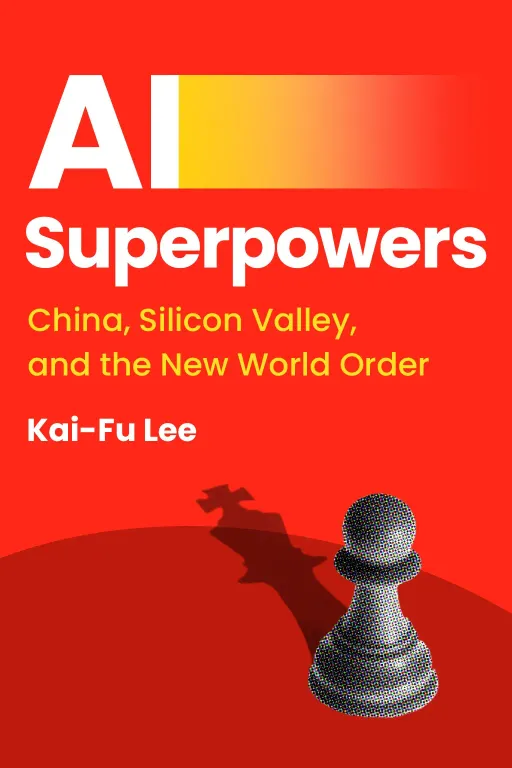
Nova: Precisely. And for a powerful illustration of this, the book references Kai-Fu Lee's insights from "AI Superpowers." Lee highlights China's rapid AI advancement, emphasizing their data advantage and strategic national policies. This isn't just about a country; it’s a masterclass in how clear vision and top-down governance accelerate AI impact.
Atlas: Okay, but for an enterprise architect or a strategist, how does a national strategy translate into a Monday morning action item? What's the direct parallel for a company trying to leverage its own data?
Nova: That’s a brilliant question, Atlas. The parallel is direct in its principles. Think of enterprise AI governance as mirroring that national strategy: defining ethical boundaries, establishing clear data usage policies, and setting strategic objectives from the leadership down. Let me give you a vivid example: imagine a massive retail giant, excited about AI personalization. They launched a project to use customer data to predict buying habits and offer hyper-targeted ads. Sounds great on paper, right?
Atlas: Sounds like the holy grail of retail, honestly.
Nova: It should be. But their project failed spectacularly. The cause? A complete lack of data governance. There were no clear policies on how customer data could be collected, stored, or used, especially across different departments. The process became a free-for-all, with various teams pulling data without proper anonymization or consent checks. The outcome was predictable: privacy breaches, a massive customer backlash, and ultimately, the project was abandoned, costing them millions in investment and even more in reputational damage.
Atlas: Wow, that's a nightmare scenario. It’s not just about compliance, then, but about unlocking actual competitive advantage. It sounds like governance is the blueprint for value, not just a rulebook.
Nova: You've hit the nail on the head. Effective AI governance isn't a bureaucratic hurdle; it’s the bridge that transforms technological potential into real-world business value. It ensures that your AI efforts are not just technically sound, but strategically aligned, ethically responsible, and ultimately, profitable. Without that blueprint, you’re just guessing.
Building the Ethical AI Framework: Strategy, Integration, and Trust
SECTION
Nova: Speaking of blueprints for value, understanding the 'why' is one thing, but the 'how' is where the rubber meets the road. And that brings us to the practical layers of building an ethical AI framework. This is where M. Zohaib Khan's "Applied AI" becomes incredibly relevant, focusing on practical steps for integration and the crucial ethical considerations.
Atlas: Okay, so how do you actually AI ethically without stifling innovation or getting bogged down in bureaucracy? For someone responsible for transforming operations, 'ethical considerations' can sometimes feel like an abstract ideal. What are the concrete steps?
Nova: That’s a common and valid concern. Khan emphasizes a top-down, well-defined AI strategy. It starts with leadership explicitly outlining not just the business goals for AI, but also the ethical guidelines that will govern its development and deployment. These aren't just vague statements; they're actionable principles that cascade down to every team. For example, a financial institution implementing an AI-driven fraud detection system. Their previous attempt failed because the algorithm was biased against certain demographics, leading to false positives and a huge loss of trust.
Atlas: Oh, I've heard stories like that. It’s a quick way to alienate your customer base.
Nova: Absolutely. This time, their leadership put clear ethical guidelines at the forefront: the algorithm be fair, transparent in its decision-making, and regularly audited for bias. They integrated these principles into every step of the development process. They also implemented a robust change management strategy, training their human analysts on how to work the AI, understanding its outputs, and overriding it when necessary. This combination of top-down ethical leadership and effective user adoption strategies built trust, not only with their customers but also with their employees. The system became incredibly effective, reducing fraud while maintaining customer goodwill.
Atlas: That’s a powerful distinction. So, it's about embedding ethics from the outset, not just bolting it on as an afterthought. It sounds like change management is as critical as the tech itself, especially for user adoption and ensuring that trust.
Nova: Exactly. Because what Nova's Take on the book boils down to is this: effective AI governance isn't just about rules; it’s about intentionally bridging the gap between AI's technological potential and its real-world business value. It’s about building trust, ensuring adoption, and ultimately, making AI a genuine force for positive transformation.
Synthesis & Takeaways
SECTION
Nova: So, bringing Kai-Fu Lee's strategic vision together with M. Zohaib Khan's practical, ethical frameworks, it becomes unequivocally clear: strategic governance is not a nice-to-have; it is the non-negotiable foundation for AI success in any enterprise.
Atlas: For our listeners who are architects and strategists, striving for mastery and impact, the takeaway is clear: AI isn't a magic wand; it's a powerful tool that demands intelligent governance. It’s about building the right foundations, the right ethical scaffolding, and the right strategic vision to truly transform operations and deliver tangible results.
Nova: Exactly. So, for your tiny step this week, we challenge you to audit your current AI initiatives. Do you have clear governance structures in place? Are your success metrics clearly defined, and do they align with ethical principles? It's the first crucial step to moving from merely guessing at AI to truly governing it with purpose.
Atlas: And perhaps, ask yourself: is our AI strategy a rigid set of rules, or a living blueprint for innovation and trust?
Nova: That’s a perfect question to ponder. This is Aibrary. Congratulations on your growth!