

Strategic Thinking for Anticipating Market Shifts
Golden Hook & Introduction
SECTION
Nova: Most leaders think they have a strategy. They don't. They have goals, maybe a budget, a wish list even. But a true strategy? That's a different beast entirely. It's the difference between merely hoping for success and actually designing it.
Atlas: Oh, I love that. "Designing success." Because, let's be honest, a lot of what gets called "strategy" these days feels more like a glorified to-do list or just reactive firefighting.
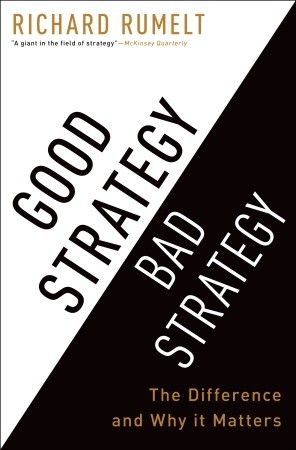
Nova: Exactly! And that's where we're starting today. We're dissecting that crucial difference through the brilliant mind of Richard Rumelt and his seminal work,. Rumelt, who actually started his career as a NASA engineer before becoming a strategy guru, has this uncanny ability to cut through corporate jargon like a laser, revealing the true essence of strategic thinking.
Atlas: Cutting through jargon is definitely a superpower we need more of. But how does that connect with anticipating those wild market shifts everyone's talking about? Because that's the big question for so many of our listeners right now.
Nova: That's precisely where we bring in the profound wisdom of Donella H. Meadows and her incredible. Meadows, a pioneering environmental scientist, taught us how to see the invisible forces, the feedback loops, and the leverage points that truly govern any complex system, be it an ecosystem or, crucially, a market.
Atlas: So, Rumelt gives us the 'what' of good strategy – the foundational coherence. And Meadows gives us the 'how' to see the dynamic world where that strategy plays out. I can see how those two together could be a powerful framework for foresight.
Nova: Absolutely. It’s about building a robust framework for strategic foresight, seeing beyond the surface.
The Art of True Strategy and Systems Thinking
SECTION
Nova: So, let's dive into Rumelt first. He makes this absolutely critical distinction between what he calls "good strategy" and "bad strategy." Bad strategy, he argues, is often just fluff, vague objectives, or a string of buzzwords without any real underlying coherence.
Atlas: That sounds like a lot of corporate annual reports I've read. You know, "maximize shareholder value through synergistic innovation." Sounds impressive, but what does it actually?
Nova: Precisely. Good strategy, for Rumelt, has a 'kernel.' And that kernel has three parts: a diagnosis, a guiding policy, and coherent actions. The diagnosis is the most vital. It's about truly defining the nature of the challenge. Not just saying "we need more sales," but understanding sales are down, what the competitive landscape looks like, what the customer actually needs.
Atlas: So it's like a doctor's diagnosis. You don't just treat the symptom; you figure out the underlying illness. But is that really different from common sense? Or is it just a more rigorous way of thinking?
Nova: It's a more rigorous way of thinking that often gets overlooked. Think about Blockbuster versus Netflix. Blockbuster's 'strategy' was to open more stores and charge late fees. Their diagnosis was probably "we need to optimize our physical rental business." Netflix's diagnosis was different: "people want convenient access to content, and physical media is a distribution constraint." That led to a guiding policy of mail-order DVDs, and later, streaming, with coherent actions to build that infrastructure.
Atlas: That makes sense. Their diagnosis was about the of entertainment consumption, not just their existing business model.
Nova: Bingo! And that brings us perfectly to Donella Meadows. Her work on systems thinking provides the lens to make those kinds of diagnoses. She teaches us that everything is interconnected. Markets aren't static; they're dynamic systems full of feedback loops.
Atlas: What exactly do you mean by feedback loops? Because that sounds a bit academic. Can you give a more relatable example?
Nova: Think of your home thermostat. That's a simple feedback loop. The furnace heats the room, the temperature rises, the thermostat senses it, and tells the furnace to turn off. That's a feedback loop. Or think about social media: the more people post, the more engagement, the more people see it, the more people post. That's a feedback loop.
Atlas: Oh, I see! So in a market, a reinforcing loop could be something like a popular product. The more people buy it, the more buzz it gets, the more people want it, creating a snowball effect.
Nova: Exactly. And Meadows argues that if you can understand these loops, you can identify "leverage points"—places where a small nudge can create a huge change in the system. For instance, in the music industry, the shift from physical albums to digital downloads and then streaming wasn't just a technology change. It fundamentally altered the leverage points for artists, labels, and consumers. Suddenly, distribution wasn't controlled by a few record companies; it was democratized.
Atlas: So for a "resilient analyst," as many of our listeners identify, understanding these leverage points means identifying potential disruptions before they overwhelm you. It's seeing the current that might turn into a tidal wave.
Nova: Precisely. It’s about not just reacting to the waves, but understanding the currents and how they form. It's a holistic approach to understanding dynamics, not just symptoms.
Embracing Antifragility for Market Shifts
SECTION
Nova: Speaking of thriving amidst disruption, our next concept takes resilience to a whole new level. Because once you've diagnosed the system and understood its dynamics, the question becomes: how do you not just survive, but actually gain from its inherent volatility?
Atlas: That’s a powerful question. Because "resilience" implies bouncing back, returning to normal. But in a constantly changing market, "normal" might not even exist anymore.
Nova: Precisely. And that's where Nassim Nicholas Taleb steps in with his revolutionary book,. Taleb introduces the concept of antifragility, which is far beyond robustness or resilience. It's about things that actually get from shocks, stress, and disorder.
Atlas: Wait, so not just surviving, but getting from chaos? That sounds almost counter-intuitive, or maybe just lucky. How is that even possible? Most things break under stress, or at best, they just endure it.
Nova: It’s a paradigm shift. Think about the human immune system. Exposure to pathogens makes it stronger. Or evolution itself: environmental stresses drive adaptation and improvement. A robust system resists shock, like a sturdy stone. A fragile system breaks, like glass. An antifragile system, like muscle, grows stronger with stress.
Atlas: So it's not about avoiding stress, but about designing systems that literally from it. That’s fascinating. What does that look like in a business context? Because for someone trying to build sustainable solutions, what does 'gaining from disorder' mean without just inviting chaos?
Nova: It means designing your organization with optionality, decentralization, and redundancy. It means having many small experiments rather than one huge, fragile project. Think about venture capital firms: they don't bet on one company; they make many small bets, knowing most will fail, but a few will yield massive returns. The failures make the overall portfolio antifragile.
Atlas: So, it's about building in buffers, not just for survival, but for discovery. It sounds like accepting that you can't predict every disruption, but you prepare your organization to learn and grow from whatever comes.
Nova: Exactly. It's about designing for the unknown. Taleb would argue that if you optimize too much for efficiency, you become fragile. You remove all slack, all redundancy, and when an unexpected shock hits, the whole system collapses. An antifragile system has built-in buffers, small errors are allowed, even encouraged, because they provide information and opportunities for adaptation.
Atlas: That makes me wonder about the ethical implications though. Does this mean actively disorder, or even creating it, if it benefits your organization? That sounds like it could be quite ruthless, potentially at the expense of others in the market.
Nova: That's a crucial distinction, Atlas. Taleb isn't advocating for creating chaos; he's advocating for designing systems that to natural or unavoidable chaos in a way that generates benefit. It’s about having a "skin in the game" mentality, where you also bear the downside of your actions. It’s about building a system that can absorb and learn from volatility, not inflict it. The ethical innovator seeks to thrive through adaptability and learning, not by causing harm.
Synthesis & Takeaways
SECTION
Nova: So, bringing it all together: Rumelt grounds our understanding of what a strategy looks like, a coherent response to a challenge. Meadows then gives us the tools to diagnose that challenge by understanding the complex, interconnected systems it lives within. And finally, Taleb pushes us beyond mere survival, showing us how to build organizations that can actually grow stronger, more capable, and more insightful from the very market shifts that send others scrambling.
Atlas: It’s a powerful combination. It’s not about predicting the future with a crystal ball, but rather building a robust framework to understand the present, identify the leverage points, and then design your organization to actually thrive on the inevitable surprises the future will bring. For anyone seeking deep understanding and a holistic approach to building sustainable solutions, this is a game-changer.
Nova: Absolutely. My advice for our listeners, the strategic storytellers and resilient analysts out there, is to start small. Don't try to overhaul everything at once. Begin by truly diagnosing a core challenge in your current environment. Then, apply a systems lens: what are the feedback loops, what are the hidden interdependencies? And finally, ask yourself: where can you introduce small, intelligent optionality or redundancy to make your own processes or projects a little more antifragile?
Atlas: That’s a powerful shift in mindset. It's not about avoiding risk, it's about transforming it into an advantage. It’s about becoming a designer of resilient, thriving futures, not just a reactive player.
Nova: Exactly. It's about becoming a strategic storyteller of your own future, resilient and antifragile.
Atlas: Because in a world of constant change, the ability to gain from disorder isn't just a competitive advantage; it's a profound path to meaningful contribution and lasting impact.
Nova: This is Aibrary. Congratulations on your growth!