

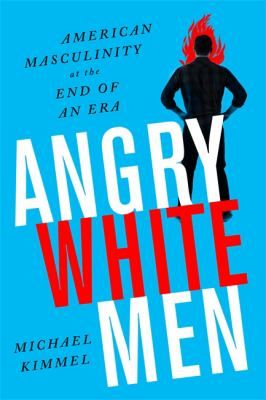
Angry White Men
American Masculinity at the End of an Era
Introduction: The Unspoken Crisis of American Masculinity
Introduction: The Unspoken Crisis of American Masculinity
Nova: Welcome back to the show. Today, we are diving into a book that felt like a sociological time bomb when it dropped, and perhaps even more relevant now: Michael S. Kimmel’s "Angry White Men: American Masculinity at the End of an Era." Alex, when you hear that title, what’s the first image that pops into your head?
Nova: That’s exactly right. It’s not just about anger; it’s about is angry and. Kimmel’s core diagnosis is what he calls 'aggrieved entitlement.' Imagine a group that has historically held the keys to the kingdom—economic, social, political—and suddenly, those keys are being distributed elsewhere. The reaction isn't just disappointment; it’s a furious sense of betrayal. It’s the feeling that something you were has been stolen.
Nova: Absolutely not. He’s looking at a spectrum. He’s examining the anxieties, the fears, and the rage bubbling up across a significant swath of American white males who feel their traditional status—their masculinity—is eroding due to economic shifts and gains in social equality for women and minorities. It’s a deep dive into what happens when the bedrock of your identity starts to crack.
Nova: Because, as Kimmel meticulously documents, this unaddressed rage doesn't stay internal. It spills out. It fuels everything from the rise of the Men’s Rights Movement to domestic violence, and yes, even the most extreme acts of political violence. Understanding the source code of this anger is crucial for understanding the last decade of American politics and social discourse. We need to unpack the 'why' behind the 'what.'
Nova: Let’s move into our first core chapter. We need to define the landscape of this entitlement and how it turned into resentment.
Key Insight 1: The Definition of Aggrieved Entitlement
The Erosion of the 'Man Box': Entitlement Meets Reality
Nova: In this first deep dive, we’re defining the central concept: aggrieved entitlement. Kimmel argues that for generations, American masculinity—especially white, middle-class masculinity—was defined by a set of unspoken rules, what sociologists sometimes call the 'Man Box.' You provide, you lead, you are the unquestioned head of the household, and you are economically dominant. Right, Alex?
Nova: That’s the collision point. The promise was conditional on maintaining a specific social hierarchy. When women enter the workforce en masse, when minority groups gain ground, and when globalization hollows out the factory towns, the traditional markers of male success disappear, but the of success remains. Kimmel notes that these men don't see it as the economy changing; they see it as taking their rightful place.
Nova: Extremely potent. Kimmel points out a crucial distinction: these men often aren't the poorest in society, but they are often the poorest or relative to their fathers' generation. He found that many of the men he studied felt they were doing everything 'right'—working hard, staying out of trouble—yet they were falling behind. This creates a profound sense of injustice.
Nova: Absolutely. Kimmel states clearly: their pain is legitimate, but their anger is misdirected. They feel humiliated, and humiliation demands a target. Instead of looking at corporate restructuring, automation, or the decline of unions, they look sideways at the people who have gained ground: women demanding equality, immigrants competing for jobs, or people of color demanding civil rights. It’s easier to blame the 'other' for your loss of status than to blame the system that elevated you in the first place.
Nova: Precisely. And this feeling of being a victim—a victim of feminism, of political correctness, of affirmative action—is what allows them to reframe their historical dominance as current victimhood. It’s a psychological defense mechanism against acknowledging privilege. Kimmel’s research shows this narrative is incredibly compelling to men who feel adrift in a world that no longer rewards the old definition of manhood.
Nova: Very little, according to Kimmel. And that void is what the anger rushes in to fill. It provides a structure, a purpose, and a community—even if that community is built on resentment. This leads us perfectly into our next section: where do these men channel this energy? Because the manifestations are diverse and often alarming.
Key Insight 2: Documenting the Manifestations
The Spectrum of Rage: From Online Forums to Real-World Violence
Nova: Far from it. Kimmel meticulously maps out the spectrum. On one end, you have the more organized, though still deeply resentful, movements like the Men’s Rights Activists, or MRAs, and the Fathers’ Rights groups. These groups often frame themselves as fighting for 'men's issues' against a biased legal or social system, particularly around divorce and custody.
Nova: Exactly. But Kimmel shows how this rhetoric, which focuses on perceived systemic bias against men, is a gateway. It normalizes the idea that men are under siege. And as you move along that spectrum, the rhetoric hardens, and the actions become more extreme. He documents cases involving domestic violence, where the man feels entitled to control his partner, and when she asserts independence, the violence erupts as a desperate attempt to reassert that lost dominance.
Nova: This is where the book becomes deeply prescient, especially looking back from today. Kimmel discusses the recruitment pipeline into white supremacist and far-right movements. These groups offer a powerful, ready-made narrative that perfectly explains the aggrieved white man’s situation: 'It’s not your fault; it’s fault—the Jews, the immigrants, the globalists.'
Nova: He found that these movements provide a sense of belonging and purpose that the modern, atomized economy stripped away. For men feeling invisible and emasculated by economic shifts, being told they are the last line of defense against societal collapse is an incredibly powerful, albeit toxic, source of validation. Think about the statistics he cites regarding participation in online hate forums or the documented links between these grievances and mass shootings. The consequences are tragically concrete.
Nova: The common thread is the refusal to adapt masculinity to a new reality. They are clinging to a 20th-century definition of manhood that no longer fits the 21st-century world. They are fighting to keep the 'Man Box' intact, even if it means destroying everything around them in the process. It’s a desperate attempt to freeze time. We need to talk about how Kimmel suggests we might actually address this, because simply labeling them angry isn't enough.
Key Insight 3: The Path Forward and Critique
The Sociologist's Prescription: Reimagining Manhood
Nova: We’ve established the problem: aggrieved entitlement leading to dangerous manifestations. Now, let’s look at Kimmel’s proposed solution, which is rooted in his background as a scholar of masculinity. He’s not just diagnosing; he’s prescribing a cure, which involves redefining what it means to be a man.
Nova: It’s incredibly difficult, which is why the book is so provocative. Kimmel advocates for what he calls a 'new masculinity'—one that is not based on dominance, control, or economic supremacy, but on connection, empathy, and shared responsibility. He wants men to find value in roles that society has historically undervalued for men: caregiving, emotional labor, and community building.
Nova: He uses examples, often through his work with organizations like the National Organization for Men Against Sexism, which he co-founded. The idea is to show men that true strength lies in vulnerability and partnership, not in stoic self-reliance. For instance, he champions men who are actively involved fathers, not just providers, or men who champion gender equality in the workplace, seeing it as strengthening the whole system, not weakening their own position.
Nova: That’s a fair critique that surfaces in academic reviews. Some argue that while he correctly identifies the in white men, the analysis sometimes underplays the structural forces of capitalism and historical racial/gender stratification that created the initial imbalance of power. If the economic foundation for status is gone, simply telling men to be nicer providers doesn't solve the underlying material insecurity.
Nova: Precisely. However, Kimmel’s strength is in showing that even within those harsh economic realities, the is a choice. He argues that while economic shifts are real, the to channel that frustration into misogyny or racism is a cultural one, rooted in gender norms. He wants men to stop outsourcing their masculinity to external markers like job titles or perceived dominance.
Nova: It is. And that’s why the book remains essential. It forces the conversation away from simple political labels and into the difficult, messy territory of identity, status, and gender roles. It asks: What does it mean to be a man in a world where you are no longer automatically the most powerful person in the room?
Synthesis and Takeaways
The Enduring Legacy: Why 'Angry White Men' Still Matters
Nova: We’ve covered a lot of ground today, Alex, from the concept of aggrieved entitlement to the dangerous manifestations of that rage. If we had to distill Kimmel’s entire thesis into two essential takeaways for our listeners, what would they be?
Nova: I agree. And the second takeaway, which is the call to action, is that the solution cannot be found in doubling down on outdated masculine ideals. The path forward requires men to actively redefine strength away from dominance and toward connection, empathy, and shared humanity. It means accepting that equality for others does not equal victimhood for oneself.
Nova: And that’s why the book was so controversial and so necessary. It provided a sociological vocabulary—'aggrieved entitlement'—to explain a political and social energy that was clearly on the rise, long before it dominated headlines. It gave us the tools to look past the immediate political shouting match and examine the deep cultural anxiety underneath.
Nova: That question hangs heavy in the air, doesn't it? Kimmel’s work is a powerful reminder that gender roles are not static; they are negotiated, and when those negotiations feel threatening to those accustomed to privilege, the result can be explosive. It’s a crucial text for anyone trying to make sense of contemporary social friction.
Nova: My pleasure, Alex. Understanding the roots of social conflict is the first step toward building something better. This is Aibrary. Congratulations on your growth!