

The Cost of Silence: Dismantling Healthcare Barriers from AIDS to the Modern Era
Golden Hook & Introduction
SECTION
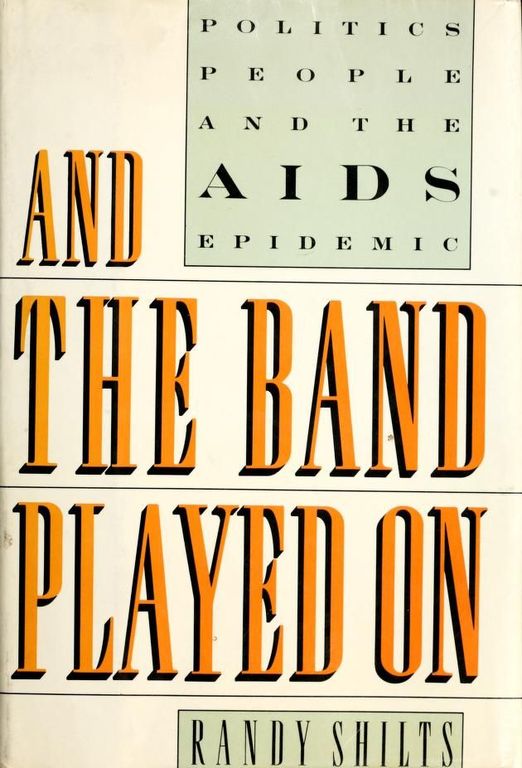
Socrates: Imagine a world where a deadly, transmissible virus is actively spreading, but the institutions designed to protect you choose to look away because of who is getting sick. This is not a dystopian novel. It is the historical reality documented in Randy Shilts's masterpiece, And the Band Played On. Today, we are going to tackle this book from two different angles. First, we will explore the devastating impact of institutional silence and stigma during the early years of the AIDS epidemic. Then, we will discuss the rise of grassroots advocacy and how treating the whole person is key to breaking down modern healthcare barriers. Joining me is Togar Woodor, a dedicated healthcare advocate who works on the frontlines with young people facing HIV, tuberculosis, and malaria. Togar, welcome. When you read Shilts's account of the early 1980s, did it feel like ancient history, or did it feel painfully familiar?
Togar Woodor: Thank you, Socrates. It is an honor to be here. To answer your question, it felt incredibly, almost painfully familiar. When Shilts describes the early days of the epidemic, the silence, the looking away, the feeling that certain lives simply mattered less to the people in power, I did not feel like I was reading about the 1980s. I felt like I was reading about the challenges my team and I face every single day. Stigma does not change its colors; it just changes its targets. Whether we are talking about HIV in San Francisco in 1981 or young people dealing with HIV, TB, and malaria in our communities today, the structural barriers built by prejudice and neglect look remarkably similar.
Socrates: It is striking how history repeats itself. Shilts's book is a massive, detailed chronicle, but at its heart, it is a story about barriers. What is the first barrier that stood out to you as you read his account of those early years?
Togar Woodor: The very first barrier is the barrier of naming and acknowledging. In the early eighties, before the virus even had the name HIV or AIDS, it was referred to by some in the medical community and the media as GRID, or Gay-Related Immune Deficiency. That naming immediately built a wall. It told the general public, this is not your problem. It told politicians, you do not need to care about this to get re-elected. And most tragically, it told the people who were sick that their illness was a moral failing rather than a medical crisis. That is a barrier I see today. When we treat certain diseases as if they only happen to marginalized groups, we stop looking for systemic solutions.
Deep Dive into Core Topic 1
SECTION
Socrates: Let us look closely at how that played out institutionally. Shilts introduces us to Dr. Don Francis, a brilliant virologist at the Centers for Disease Control. Francis had worked on Ebola and Hepatitis B. He knew how viruses behaved, and he saw early on that this new disease was likely a blood-borne, sexually transmitted virus. He begged his superiors for resources. He wanted to run basic laboratory tests to prove his theory and start screening the blood supply. Do you remember the figure Shilts mentions? Francis was begging for a mere fifteen thousand dollars to buy basic equipment. And he was turned down. How does a public health agency, designed to protect millions, refuse fifteen thousand dollars in the face of a growing epidemic?
Togar Woodor: It is mind-boggling, but it reveals a fundamental truth about public health: science is never purely scientific. It is always political. The CDC was facing massive budget cuts under the new administration. Resources were scarce. But more than that, there was a profound lack of political will. If Don Francis had been asking for fifteen thousand dollars to investigate a mysterious illness affecting wealthy, politically connected citizens, that money would have appeared overnight. But because the early victims were gay men and intravenous drug users, the decision-makers could afford to hesitate. They could afford to say, let us wait and see. In advocacy, we call this institutional inertia. It is the passive refusal to act because the cost of acting is deemed higher than the political value of the lives at stake.
Socrates: And that inertia had a human cost. Shilts describes how the virus quietly slipped into the blood supply. Hemophiliacs, surgical patients, newborn babies, all began contracting the virus through blood transfusions. Yet, the blood bank industry resisted testing. They argued that the risk was too low and that the cost of testing was too high. They protected their profit margins while a fatal pathogen was distributed nationwide. When you look at your work with young people fighting malaria and tuberculosis, do you see similar calculations being made?
Togar Woodor: Absolutely. It is the same calculation, just updated for the twenty-first century. Take malaria, for example. We have known how to prevent and treat malaria for decades. It is not a scientific mystery. Yet, hundreds of thousands of children and young people die from it every year. Why? Because the people dying are primarily in low-income, marginalized regions. The global pharmaceutical and healthcare systems do not see a high profit margin in developing and distributing cheap, accessible treatments to these areas. The barrier is not a lack of knowledge; it is a lack of equity. Just like the blood banks in the eighties, modern systems often prioritize financial and political convenience over human lives.
Socrates: It seems the barrier is also psychological. Shilts writes about the press conferences at the White House during those early years. Journalists would ask Larry Speakes, President Reagan's press secretary, about the growing AIDS crisis. The response from the press room was often laughter. They made jokes about the "gay plague." The president himself did not publicly utter the word "AIDS" until 1985, by which time thousands of Americans had already died. How does an advocate fight against that level of normalized apathy and mockery?
Togar Woodor: You fight it by humanizing the data. Stigma thrives on abstraction. It is easy to ignore a statistic, and it is easy to make a joke about a group of people you have already dehumanized. But it is much harder to ignore a face, a voice, a story. In my work, we focus heavily on peer-to-peer advocacy. We empower young people who are living with HIV or surviving TB to tell their own stories. When a young person stands up and says, "This is my life, this is my struggle, and I deserve to healthy," it shatters that comfortable apathy. You cannot laugh at a person who is looking you in the eye and demanding their basic human rights. That is what Randy Shilts did with his book. He did not just write a clinical history; he wrote a deeply human story about people who loved, suffered, and fought.
Socrates: He gave them their names back. He rescued them from being mere numbers in a CDC report. But let us look at the other side of this barrier. Shilts does not spare the gay community itself from criticism. He describes a fierce internal debate in San Francisco over whether to close the bathhouses, which were known transmission hot spots. Some community leaders and business owners fought public health officials, claiming that closing the bathhouses was an infringement on their hard-won civil liberties and sexual liberation. They accused the public health officials of homophobia. How do you, as an advocate, navigate that incredibly delicate line between respecting individual autonomy and protecting public health?
Togar Woodor: That is one of the most difficult tightropes to walk in healthcare advocacy. It requires what I call a "whole brain" approach—you have to balance analytical public health data with deep empathy for the community's lived experience. In the early eighties, the gay community had just spent decades fighting for the right to exist, to love, and to have safe spaces. When the government, which had historically persecuted them, suddenly showed up saying, "We need to close your spaces for your own good," of course there was deep suspicion. The barrier there was a lack of trust. As advocates, we have to understand that you cannot enforce public health from the top down if you have not built trust from the bottom up. If you do not involve the community in the decision-making process, they will see your health interventions as policing, not care.
Deep Dive into Core Topic 2
SECTION
Socrates: Trust, then, is the bridge over the barrier. If the government or the medical establishment is viewed as hostile, the message, no matter how scientifically sound, will be rejected. This brings us to our second major theme: the rise of grassroots advocacy. When the institutions failed, the community had to save itself. Shilts details the work of people like Cleve Jones, who helped start the San Francisco AIDS Foundation and later conceived the AIDS Memorial Quilt, and Larry Kramer, who co-founded Gay Men's Health Crisis and later ACT UP. They did not just ask for help; they demanded it, and they built their own systems of care. How does this transition from passive patient to active advocate happen?
Togar Woodor: It happens out of sheer necessity. When you realize that no one is coming to save you, you have to save yourself. That is the birth of grassroots advocacy. In San Francisco, because the hospitals were overwhelmed and often hostile, the community created the "San Francisco model of care." They organized volunteers to deliver meals, clean apartments, provide emotional counseling, and offer hospice care. They treated the whole person, not just the disease. This is exactly what we try to do today. When we work with young people facing HIV, TB, or malaria, we cannot just hand them a bottle of pills and say, "Good luck." We have to ask: Do they have food to eat so they can take this medication? Do they have a safe place to sleep? Do they have mental health support to deal with the trauma of their diagnosis? If we do not address the whole brain and the whole body, the medical treatment will fail.
Socrates: Treating the whole person sounds beautiful, but it must be incredibly difficult to implement when resources are scarce. Shilts shows how the early advocates had to become self-taught experts. They read medical journals, they challenged FDA approval processes, they forced drug companies to lower prices. They essentially demystified medicine. Is that a strategy you use in your work?
Togar Woodor: Absolutely. Demystifying medicine is one of the most powerful ways to break down barriers. Often, the medical system uses language that is designed to exclude. It is full of jargon and complex terms that make patients feel powerless. We work to translate that science into language that young people can actually use. We teach them how malaria is transmitted, how TB affects their lungs, and how antiretroviral therapy works in their bodies. When a young person understands the science of their own health, they cease to be passive recipients of care. They become active partners in their own survival. They can ask their doctors better questions, they can demand better treatment, and they can educate their peers. Knowledge is the ultimate barrier-breaker.
Socrates: It seems that this empowerment also changes the dynamic of the healthcare system itself. Instead of the doctor being the sole authority, the patient becomes an expert in their own life. But Shilts also highlights the immense emotional toll of this work. He describes how these young advocates were constantly attending funerals, watching their friends die week after week, while still fighting the political battles. It is a recipe for profound burnout. As an advocate with years of experience on the frontlines, how do you protect your own mental and emotional health—your own "whole brain"—while carrying this heavy burden?
Togar Woodor: It is a constant struggle, Socrates. Burnout is very real in this field. You cannot look at suffering day after day without it leaving a mark on you. For me, as an INFJ, I tend to absorb the emotions of the people I am trying to help. I have had to learn that I cannot pour from an empty cup. To protect my mental health, I have to ground myself in the community. I find strength in the resilience of the young people I work with. When I see a young person who was once terrified and isolated now standing up, healthy, and helping others, that feeds my soul. It reminds me why we do this. And we also have to build support systems for the advocates themselves. We need to care for each other the same way we care for our clients. We cannot fight the band if we are playing ourselves to exhaustion.
Socrates: "We cannot fight the band if we are playing ourselves to exhaustion." That is a powerful image. Shilts chose the title as a metaphor for how the nation's institutions—the government, the media, the medical establishment, and even parts of the affected communities—continued with business as usual while a catastrophe unfolded. The band played on while the ship was sinking. How do we stop the band today? How do we force society to stop and pay attention to the ongoing crises of HIV, TB, and malaria?
Togar Woodor: We stop the band by disrupting the music. We have to make the cost of ignoring these crises higher than the cost of addressing them. In the eighties, ACT UP did this through direct action—they shut down Wall Street, they blocked traffic, they forced their way into FDA offices. Today, we disrupt the music by refusing to let these issues be swept under the rug. We use digital media, we lobby policymakers, we mobilize youth-led movements. But most importantly, we disrupt the music by refusing to accept "good enough." We cannot accept a world where a child dies of malaria every minute when we have the tools to prevent it. We cannot accept a world where young people are still afraid to get tested for HIV because of stigma. We have to keep raising our voices until the old tune of apathy is completely drowned out.
Synthesis & Takeaways
SECTION
Socrates: It seems the ultimate lesson of Shilts's book, and of your work, Togar, is that public health is not merely a matter of biology and medicine. It is a mirror that reflects our societal values. It shows us who we value, who we are willing to protect, and who we are willing to abandon. If you could leave our listeners with one core insight from your years on the frontlines, a single action they can take to help break down these barriers, what would it be?
Togar Woodor: I would ask everyone to look at their own communities and ask: Who is invisible here? Who are the people we are letting slip through the cracks because they are inconvenient or different? Breaking down barriers to health services starts with breaking down the barriers in our own minds. It starts with empathy. If you want to be an advocate, you do not need a medical degree or millions of dollars. You just need the courage to stand with the marginalized, to listen to their stories, and to refuse to let the band play on in the face of their suffering. We must treat healthcare not as a privilege for the few, but as a fundamental right for all.
Socrates: A profound and necessary challenge. Togar Woodor, thank you for your tireless work on the frontlines, and thank you for sharing your insights with us today.
Togar Woodor: Thank you, Socrates. It was a privilege to have this conversation.
Socrates: And to our listeners, the next time you hear of a health crisis, or see a barrier to care in your own neighborhood, remember the lessons of history. Do not let the band play on. Speak up, stand up, and make a difference. Until next time, keep asking questions.