

Data-Driven Decisions: Statistical Methods for Environmental Analysis
Golden Hook & Introduction
SECTION
Nova: Atlas, I was today years old when I realized that if you can predict the weather with statistical models, you can practically predict... well, anything in the environment. It’s like having a crystal ball, but instead of magic, it’s math.
Atlas: Oh, I love that! A crystal ball powered by regression coefficients. So, you’re telling me that we can use numbers to essentially see into the future of our planet’s health? That’s wild.
Nova: Exactly! And that's precisely what we're dissecting today. We're diving into the quantitative rigor needed to translate raw environmental data into actionable insights and robust conclusions, pulling from some truly foundational texts.
Atlas: That makes me wonder, how many environmental impact assessments out there are just... wishful thinking? Because if we’re talking about turning complex data into real-world impact, we need to know we’re working with solid ground.
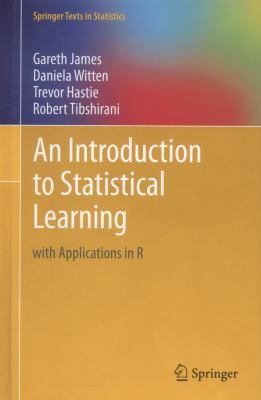
Nova: Absolutely. And that solid ground often comes from the principles laid out in books like "An Introduction to Statistical Learning" by Gareth James, Daniela Witten, Trevor Hastie, and Robert Tibshirani, which covers modern methods like regression and classification. And for a more tailored approach, "Statistics for Environmental Science and Management" by Helen Chapman is invaluable, specifically focusing on techniques for ecological research.
Atlas: Hold on, so these aren't just dry textbooks, are they? Because the idea of 'statistical learning' sounds a bit like something a robot would do, not necessarily a human trying to save the planet.
Nova: Far from it! While "An Introduction to Statistical Learning" can feel a bit dense for beginners, it's highly regarded for making complex machine learning concepts accessible. It's actually one of the most cited books in its field, praised for its clear explanations and practical examples, which is why it's a go-to for anyone wanting to seriously get into data science, environmental or otherwise. It's about equipping you with the tools to what the robots are doing, and then some.
Atlas: That makes sense. So it’s less about being a robot and more about understanding the language the data speaks so we can then translate it into human action. I can see how that would be crucial for anyone trying to make a real difference, rather than just guessing.
The Power of Prediction: Regression and Classification
SECTION
Nova: Precisely. Let's start with what James, Witten, Hastie, and Tibshirani call 'statistical learning.' Think of it as the art and science of making predictions and discovering patterns from data. In the environmental context, this is revolutionary.
Atlas: So you’re saying we can predict things like deforestation rates or the spread of invasive species? Give me an example. How does this 'statistical learning' actually work in the wild?
Nova: Imagine you have a massive dataset of satellite imagery, temperature readings, rainfall, and land use changes over decades in the Amazon. Using regression models, you can identify how factors like human population density or specific agricultural practices correlate with deforestation. You can then predict future deforestation hotspots based on current trends and interventions.
Atlas: Wow. So it’s not just observing, it’s foreseeing. That’s a powerful tool, but isn't there a risk of just seeing what you want to see in all that data? Like, if I really want to prove that my new eco-friendly policy is working, I might accidentally skew the numbers.
Nova: That's a critical point, and it's where the rigor comes in. These methods are designed to minimize bias, but human interpretation is always a factor. Beyond regression, there's classification. Think of classifying land cover types—forest, urban, agricultural—from satellite images. Or even classifying water samples as polluted or clean based on chemical markers. This isn't just about 'if' something will happen, but 'what' kind of something it will be.
Atlas: Okay, so regression for predicting quantities, like how much deforestation, and classification for predicting categories, like what kind of land use. I get that. But how do you know if your model is actually good? What if it's just predicting noise?
Nova: That’s where the 'learning' part comes in. You train your models on existing data, then you test them on new, unseen data to see how well they perform. A good model isn't just accurate; it's robust, meaning it performs well across different datasets and situations. The book emphasizes cross-validation techniques, which are essentially ways to rigorously check if your model is actually learning patterns or just memorizing the training data.
Atlas: So it's like a scientific method for data; you develop a hypothesis, build a model, and then try to break it to see if it holds up. That’s actually really compelling, especially for someone who wants to make sure their environmental work isn't just based on gut feelings.
Nova: Exactly. It moves environmental science from anecdotal evidence to robust, data-driven conclusions. It empowers researchers and policymakers with the confidence to say, "Based on these statistical models, this is the most probable outcome, and this intervention is likely to be effective." It turns environmental analysis into a proactive, rather than purely reactive, field.
Atlas: That’s actually really inspiring. It takes away some of the despair, knowing that we have tools to understand and potentially influence the future, not just lament it.
From Data to Decision: Hypothesis Testing and Sampling Design
SECTION
Nova: Building on that, Helen Chapman’s "Statistics for Environmental Science and Management" shifts our focus from broad predictive models to the nitty-gritty of how we collect and interpret data specifically for environmental questions. It's about ensuring our insights are not just statistically sound, but environmentally relevant.
Atlas: I’m curious, what’s the difference? Because 'statistical learning' sounds pretty relevant already. What does Chapman add that’s so crucial for environmentalists?
Nova: Chapman emphasizes the unique challenges of environmental data. For example, environmental systems are inherently complex, often have spatial and temporal dependencies, and sometimes involve rare events. So, simple random sampling might not be enough. She delves into specialized sampling designs—like stratified sampling for different habitats or systematic sampling along a pollution gradient—to ensure you're capturing the true variability of the environment.
Atlas: Hold on, so it’s not just about crunching numbers, it’s about you get the numbers in the first place? That sounds like a fundamental step that could completely derail your analysis if you get it wrong.
Nova: Absolutely. Imagine you want to assess the impact of a new factory on local water quality. If you only sample upstream from the factory, or only on sunny days, your data will be biased. Chapman guides you through designing a sampling plan that accounts for seasonal variations, potential sources of pollution, and the spatial distribution of your study area, ensuring your results are truly representative.
Atlas: That’s a lightbulb moment for me. Because if your data collection is flawed, even the most sophisticated regression model is going to spit out garbage, right? It’s like building a skyscraper on a foundation of sand.
Nova: Precisely. And then there's hypothesis testing. This is where you formally test your assumptions. For instance, is the average water quality significantly different after the factory opened? Or, is the biodiversity in a restored wetland demonstrably higher than in an unrestored one? Chapman provides the statistical frameworks to answer these questions with a quantifiable level of confidence.
Atlas: So this is how you move from just 'seeing a trend' to actually 'proving a difference.' That's going to resonate with anyone who needs to present robust evidence to stakeholders or policymakers. How can improved statistical literacy help critique and strengthen environmental impact assessments and policy proposals?
Nova: Think about it: if you understand sampling bias, you can spot flaws in an environmental impact assessment that claims a project will have 'no significant impact,' simply because they didn't sample adequately. If you understand hypothesis testing, you can challenge policy proposals based on weak or unproven claims about environmental benefits. It empowers you to be a more effective advocate for the environment, armed with data.
Atlas: That’s a great way to put it. It turns you into a data detective, able to sniff out dodgy science and demand better evidence. It's not just about doing your own analysis, it's about critically evaluating analysis too.
Synthesis & Takeaways
SECTION
Nova: So, what we've really explored today is the journey from raw environmental observation to undeniable, actionable insight. It's about using tools like regression and classification to predict and understand the complex dance of nature, and then employing rigorous sampling and hypothesis testing to ensure our interventions are based on solid, defensible evidence.
Atlas: Okay, so it's not just about collecting data, it’s about collecting the data in the way, and then asking the questions of that data. That’s a profound shift in mindset for anyone who wants to move beyond passion and into truly impactful environmental work.
Nova: Exactly. It's about moving beyond simply caring about the environment to truly mastering the language of its systems. The ability to translate complex ecological processes into statistical models and robust conclusions is becoming an indispensable skill for anyone hoping to make a real difference in the face of global environmental challenges.
Atlas: And that gives me chills, honestly. Because it offers a pathway to understanding chaos, to finding order in what feels overwhelming, and then using that order to build a better future. It’s a call to action for anyone who wants to truly empower their analysis.
Nova: Indeed. The tiny step we recommend is to take a publicly available environmental dataset—like climate data—and apply a simple regression model to identify potential trends or correlations. Just get your hands dirty with the data.
Atlas: I love that. Start small, build confidence, and then you’re equipped to ask those big, deep questions that can truly strengthen environmental impact assessments and policy proposals. It’s about not just being an ethical explorer, but an empowered one.
Nova: This is Aibrary. Congratulations on your growth!