

The Digital Dilemma: Why Our Minds Struggle in the Age of Constant Connection
Golden Hook & Introduction
SECTION
Nova: Atlas, five words. Describe your relationship with your smartphone.
Atlas: An indispensable, distracting, necessary, love-hate tool.
Nova: Mine: Pocket-sized genius, attention-span destroyer.
Atlas: Wow, that's pretty accurate. I feel like we just summarized the entire human condition in ten words.
Nova: Exactly! And those ten words perfectly set the stage for what we're unraveling today, a concept we're calling "The Digital Dilemma." We're diving deep into the profound, often unseen, ways our constant connection to digital tools is reshaping our minds and our relationships.
Atlas: That sounds rough, but also incredibly relevant. I imagine a lot of our listeners, especially those who spend their days sifting through information or trying to connect disparate historical threads, feel this pull.
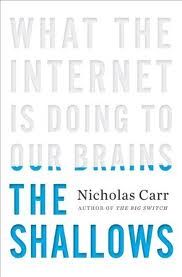
Nova: They absolutely do. And our exploration today is deeply informed by two seminal works: Nicholas Carr's and Sherry Turkle's. Carr's book, a Pulitzer Prize finalist, truly sparked a global conversation about the internet's cognitive impact. He drew on neuroscience, history, and philosophy to challenge our assumptions about digital progress, and it really resonated with many.
Atlas: Oh, I've heard mentioned in so many discussions about modern cognition. It makes me wonder, if the internet is literally rewiring our brains, what does that mean for how we approach complex historical analysis, where deep reading and sustained focus are paramount?
Nova: That's a perfect lead-in, Atlas, because Carr's central thesis is precisely that: the internet’s very architecture, with its hyperlinks, constant notifications, and endless streams of fragmented information, actively encourages superficial scanning over deep, linear reading. It's like we're constantly on a cognitive treadmill, perpetually moving but rarely settling into profound thought.
Atlas: So, it's not just that we to skim, it's that the medium itself is making it harder for us to do anything else? Can you give an example?
Nova: Think about how you read an article online. You might see a hyperlink, click it, then another, then check an email notification, then a social media alert. Before you know it, an hour has passed, and you've consumed a lot of information, but how much have you? How much do you? Studies have shown a significant reduction in comprehension and memory recall when reading digitally compared to print, especially for complex texts. It's the tyranny of the hyperlink, constantly pulling our attention away.
Atlas: Wow. So, for someone trying to synthesize dense historical documents, or an analyst piecing together complex economic data, this isn't just about willpower. It’s about a fundamental neurological challenge to sustained focus. What are the long-term implications of this cognitive shift?
Nova: The implications are vast. Deep thought, critical analysis, and even creativity often blossom from sustained, uninterrupted concentration. When our brains are constantly switching tasks, constantly anticipating the next digital stimulus, we diminish our capacity for these crucial cognitive functions. We become excellent at information retrieval, but perhaps less skilled at wisdom formation. It's a trade-off many don't even realize they're making. And this struggle for deep thought often goes hand-in-hand with another unsettling paradox.
The Paradox of Digital Connection and Increasing Isolation
SECTION
Nova: And that brings us to Sherry Turkle's illuminating work. She explored how digital devices, while promising unprecedented connection, can paradoxically lead to deeper feelings of isolation and fundamentally alter the quality of our human relationships.
Atlas: But wait, I mean, isn't it good to connect with people across distances? How does a device that literally connects us make us feel alone? It seems counter-intuitive.
Nova: It absolutely does, and that’s the core of the paradox. Turkle's research shows that social media, for instance, allows us to curate our interactions. We present idealized versions of ourselves, carefully crafting our online personas. This leads to a fear of genuine, messy, in-person vulnerability. We become "alone together"—physically present but mentally absorbed in our devices, always "waiting for a more interesting call" or a more flattering notification.
Atlas: So, it's not just about the quantity of connections, but the and? Can you paint a picture of what that looks like in everyday life?
Nova: Imagine a family dinner where everyone is scrolling their phones, or a couple texting each other from opposite ends of the couch. Or consider someone who prefers to text a difficult conversation rather than confronting it face-to-face. These aren't necessarily malicious acts, but they illustrate how the of connection diminishes. We avoid the discomfort and vulnerability of real-time, in-person interaction, opting instead for the controlled, edited performance of self that digital platforms allow. We're essentially outsourcing our emotional labor to technology.
Atlas: That’s a great way to put it. We're expecting technology to fill voids that only genuine human interaction, with all its messiness and unpredictability, truly can. From an analyst's perspective, this has broad societal implications beyond just individual feelings, doesn't it?
Nova: Absolutely. It impacts our capacity for empathy, for active listening, and for building truly resilient relationships that can weather conflict and deep understanding. When we're constantly 'connected' but rarely truly, our social fabric frays. Turkle argued that we've become accustomed to a kind of 'edited' version of life, where we can always hit 'delete' or 'refresh,' and that expectation starts to bleed into our real-world interactions, making them feel inadequate.
Synthesis & Takeaways
SECTION
Nova: So, bringing these two powerful arguments together, the digital dilemma is truly multi-faceted. It impacts both our individual cognitive capacities—our ability for deep thought and sustained focus—and our collective social fabric, eroding the depth of our human connections. Technology isn't neutral; it actively shapes who we are.
Atlas: That makes me wonder, from a civic perspective, how do we foster informed debate and genuine understanding if our capacity for deep thought is diminished and our connections are superficial? It seems like a foundational challenge to an engaged citizenry.
Nova: It absolutely is, Atlas. And this leads us right back to the deep question from the book's core: How might your daily digital habits unknowingly be limiting your capacity for deep thought or genuine connection? The solution isn't to abandon technology entirely; it’s about cultivating intentionality and digital literacy. It means understanding technology's inherent biases and then proactively designing our own usage.
Atlas: So, it's about conscious engagement and informed perspective, rather than just blind acceptance. It’s about reclaiming agency over our attention and our relationships.
Nova: Precisely. It’s about recognizing that our minds and our connections are too valuable to be left to the whims of algorithms. What small shift can you make today to reclaim a piece of your mind or a moment of genuine connection? This is Aibrary. Congratulations on your growth!