

Unpacking AI's Industrial Revolution: A Strategic Compass
Golden Hook & Introduction
SECTION
Nova: Atlas, I was today years old when I realized that the future isn't just coming; it's already here, and it's powered by algorithms.
Atlas: Oh, I know that feeling. It's like waking up one morning and realizing that the 'sci-fi' we grew up with is now just... 'fi'. It’s not a distant dream anymore.
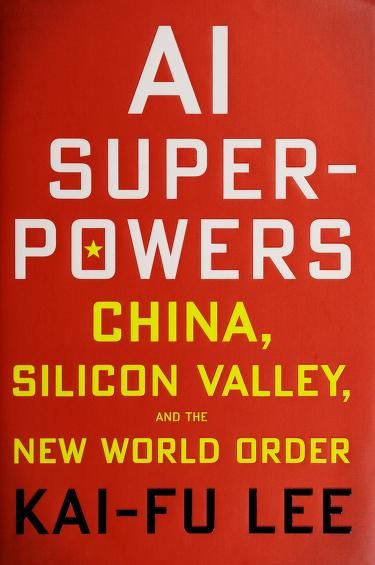
Nova: Exactly! And today, we're unpacking a strategic compass for navigating this algorithmic age, drawing heavily from two seminal works: Kai-Fu Lee's "AI Superpowers: China, Silicon Valley, and the New World Order" and Erik Brynjolfsson and Andrew McAfee's "The Second Machine Age: Work, Progress, and Prosperity in a Time of Brilliant Technologies."
Atlas: Those are heavy hitters. I'm curious, what's one surprising fact that sets the stage for these books?
Nova: Well, about Kai-Fu Lee, what's fascinating is his unique vantage point. He's not just an AI expert; he's a Taiwanese-American venture capitalist who has worked at Apple, Microsoft, and Google, and then led Google China. He's seen the AI revolution from both sides – Silicon Valley's innovation engine and China's rapid application-driven approach – giving him an unparalleled perspective on this global tech race. It's rare to find someone with such deep roots in both worlds.
Atlas: Wow, that’s a perspective. So, he’s literally got a foot in both camps, which makes his insights on the US-China AI dynamic incredibly potent. It’s not just theory for him; it’s lived experience.
Nova: Absolutely. And that unique insight is where we begin our journey today. Because what Lee and others reveal is that AI isn't just a technology; it's a societal force, reshaping global power dynamics and economic structures.
AI's Geopolitical Chessboard: The US vs. China
SECTION
Nova: So, let's dive into this geopolitical chessboard. Lee's book, "AI Superpowers," isn't just a tech analysis; it's a strategic warning and a roadmap. He paints a picture of a global AI race where the US and China are the undisputed frontrunners.
Atlas: But wait, isn't AI a global phenomenon? Why focus so intensely on just two players?
Nova: That’s a great question. While innovation happens everywhere, Lee argues that the sheer scale of investment, data, and talent, coupled with national strategic focus, places these two nations in a league of their own. Think of it like this: the US has the pioneering spirit, the research breakthroughs, and the foundational algorithms. Silicon Valley is still the birthplace of many AI innovations.
Atlas: Right, the Googles, the OpenAIs, the deep learning breakthroughs often originate there.
Nova: Precisely. But then you have China, which Lee describes as having an incredible "copy-to-innovate" strategy, coupled with a massive population generating unprecedented amounts of data, and a government that's all-in on AI as a national priority. They aren't just catching up; they're creating their own distinct AI ecosystem, especially in application.
Atlas: So, it's not just about who invents the next big algorithm, but who can deploy it faster, at scale, and gather the most data from its use. That makes sense for China with its vast market.
Nova: Exactly. Lee highlights what he calls China's four key advantages: abundant data, a massive market, fierce entrepreneurial competition, and a government that supports AI development with a top-down approach. Imagine a country where everything from ordering food to paying bills, hailing a taxi, or even getting credit scores is done through super-apps, generating oceans of data for AI to learn from.
Atlas: That makes me wonder, though, what about the ethical implications of such pervasive data collection and government oversight? For our listeners who are aspiring innovators, that balance between innovation and ethical use must be a constant tension.
Nova: It's definitely a tension, and it's one of the core differences Lee points out. While the US often prioritizes individual privacy and regulatory caution, China, with its collectivist culture and centralized governance, has historically been more willing to embrace widespread data collection for societal goals, including AI development. This allows for rapid iteration and deployment, but it also raises significant questions about surveillance and individual liberties.
Atlas: So, it’s not just a technological race; it’s a philosophical one, too. Two different approaches to how AI should integrate into society.
Nova: Absolutely. And the stakes are enormous. Lee argues that whoever wins the AI race will effectively control the economic and geopolitical future. It’s not just about GDP; it’s about influence, military power, and setting global norms. What's particularly striking is his prediction that many routine white-collar and blue-collar jobs are highly susceptible to automation, especially in China, given their focus on efficiency through AI.
Atlas: That sounds rough. It's easy to get caught up in the excitement of new tech, but the impact on human livelihoods is a huge piece of the puzzle. So, while the US might be strong in research, China's strength in application and data could give them a decisive edge in certain sectors.
Nova: That's the crux of his argument. He saw firsthand how Chinese entrepreneurs, driven by intense competition and a 'gladiator spirit,' would take an AI idea, quickly build a product, and iterate at breakneck speed, often outmaneuvering slower-moving Western companies in their own backyard. It's a relentless, data-fueled sprint.
The Second Machine Age: Automation, Productivity, and Societal Transformation
SECTION
Nova: And that naturally leads us to the second key idea we need to talk about, which often acts as a counterpoint or, rather, a broader context for what we just discussed: the profound societal transformation AI is ushering in, as explored in Brynjolfsson and McAfee's "The Second Machine Age."
Atlas: I'm curious, what do they mean by "The Second Machine Age"? Is the first one the Industrial Revolution?
Nova: That’s a perfect way to think about it! The first machine age, powered by steam engines and later electricity, augmented our muscles, allowing us to do physical work on an unprecedented scale. The second machine age, driven by digital technologies, especially AI, is augmenting our minds. It's allowing us to do cognitive tasks, analyze vast datasets, and make decisions with incredible speed and accuracy.
Atlas: So, it's not just about building better cars; it's about building better brains, or at least better cognitive tools.
Nova: Exactly. They argue that this isn't just another technological wave; it's a fundamental shift that's accelerating innovation and productivity at an exponential rate. Think about how quickly AI has gone from a niche academic field to something impacting everything from medical diagnostics to creative art generation.
Atlas: That’s kind of mind-boggling. But if AI is augmenting our minds, what does that mean for human work? Are we just going to be replaced by smarter machines? That’s going to resonate with anyone who's worried about their job security in a rapidly changing world.
Nova: That's the central tension they explore. On one hand, AI drives immense productivity and creates new forms of wealth. We see incredible breakthroughs in medicine, logistics, and communication thanks to these technologies. On the other hand, it displaces human labor in ways that are far more widespread than previous technological revolutions. It's not just factory workers anymore; it's radiologists, lawyers, even journalists.
Atlas: So, it's not just repetitive tasks, but tasks requiring expertise and judgment. That’s a bit like what Kai-Fu Lee touched on with white-collar automation.
Nova: Absolutely. Brynjolfsson and McAfee introduce the concept of the "Great Decoupling," where productivity continues to soar due to technology, but median wages stagnate for many, and inequality widens. The benefits of this new machine age aren't automatically distributed evenly.
Atlas: So, while the pie is getting bigger, some people are getting much smaller slices, or even no slice at all. What’s the solution they propose for that? It sounds like a problem that needs more than just technological fixes.
Nova: They emphasize that while technology creates the challenge, human ingenuity and policy choices are crucial for the solutions. They advocate for a range of strategies, including investing in education and retraining for 21st-century skills, encouraging entrepreneurship, and even exploring ideas like a universal basic income or a negative income tax to ensure a safety net.
Atlas: So, the machines are getting brilliant, but our social and economic systems might not be keeping pace. It's not inevitable that AI leads to mass unemployment or extreme inequality, but it requires conscious decisions and proactive policy.
Nova: Precisely. They highlight the importance of "racing with the machine" rather than against it. This means focusing on human skills that complement AI, like creativity, social intelligence, and complex problem-solving, rather than trying to compete with machines on tasks they excel at. It's about finding our comparative advantage in an AI-driven world.
Bridging Theory to Ethical AI Practice: Your Playbook
SECTION
Nova: This brings us to our third and final core topic, and it's where the rubber meets the road for our listeners, especially the aspiring innovators among them. How do we bridge this deep understanding of AI's geopolitical and economic impact to practical, ethical AI development?
Atlas: This is where it gets really personal. It's one thing to understand the grand forces at play, but it's another to actually build something that's both innovative and responsible. I’ve been thinking about this a lot.
Nova: And that's exactly the deep question Nova's Take poses: As an innovator, how can you ensure AI development remains ethical and beneficial for all, not just a select few? It's about aligning profit with purpose, as our user profile suggests.
Atlas: Right, because if we're not careful, we could accidentally hardwire biases into our AI, or create systems that exacerbate inequalities, even with good intentions.
Nova: Exactly. Think about AI in hiring systems. If trained on historical data that reflects past biases against certain demographics, the AI will perpetuate and even amplify those biases, making it harder for those groups to get jobs. Or consider facial recognition technology – powerful for security, but also ripe for misuse and surveillance, impacting privacy and civil liberties.
Atlas: So, a tiny step for an innovator might be to identify one industry they're passionate about and research an AI-driven startup within that sector. How are they leveraging AI for competitive advantage, but also, how are they addressing these ethical challenges?
Nova: That's a fantastic practical exercise. For example, if you're passionate about healthcare, you might look at a startup using AI for early disease detection. The competitive advantage is clear: faster, more accurate diagnoses. But the ethical question immediately arises: How do they ensure fairness across different patient demographics? How do they protect sensitive patient data? What happens if the AI makes a mistake?
Atlas: And it's not just about avoiding harm, but actively building for good. For someone driven to make a tangible difference, they need to ask: Is this AI creating genuine value for society, or just optimizing a process for a narrow group?
Nova: This is where the concept of 'AI for good' comes in. It's about designing AI systems with human values embedded from the start. That means diverse teams building the AI, involving ethicists and social scientists, transparent algorithms, and robust oversight mechanisms. It means constantly asking: Who benefits? Who might be harmed? And are we considering all stakeholders?
Atlas: It’s a continuous journey of discovery, as our growth recommendations suggest. It's not a one-time fix but an ongoing commitment to responsible innovation. And finding mentors who embody that change is crucial.
Nova: Absolutely. The future landscape will be defined by how well we integrate AI, not just technologically, but ethically and socially. The second machine age demands a second look at our values and priorities.
Synthesis & Takeaways
SECTION
Nova: So, Atlas, looking at Kai-Fu Lee's AI superpowers, Brynjolfsson and McAfee's second machine age, and our own ethical playbook, what's one overarching insight that truly resonates?
Atlas: For me, it's the idea that AI is not a neutral tool. It's a mirror reflecting our intentions, our biases, and our societal structures, and it has the power to amplify them. The profound insight is that while technology accelerates, human wisdom, ethics, and proactive policy become even more critical. We can't just let it happen; we have to steer it.
Nova: That's incredibly well put. The sheer scale of data China is leveraging, the rapid displacement of jobs across sectors, and the ethical dilemmas we're just beginning to grapple with – it all points to a singular truth: AI's industrial revolution is here, and it requires us to be strategic learners, conscious explorers, and aspiring innovators who actively shape its impact.
Atlas: It’s about understanding the profound impact of technology, yes, but more importantly, it’s about making sure that impact is holistic, ethical, and beneficial for everyone.
Nova: Precisely. For our listeners, we encourage you to take that tiny step: research an AI startup in an industry you care about. See how they’re leveraging AI, but also, critically, how they’re addressing the ethical questions. Because the future of AI isn't just about what machines can do; it's about what we, as humans, choose to do with them.
Atlas: And that's a choice we all get to make, one innovation at a time.
Nova: This is Aibrary. Congratulations on your growth!