

AI in Action: Intelligent Threat Detection and Defense
Golden Hook & Introduction
SECTION
Nova: Most people think cybersecurity is about building higher walls. But what if the real game-changer isn't stronger defenses, but smarter, almost clairvoyant ones?
Atlas: Whoa, clairvoyant? That sounds a bit out there, Nova. Are we talking about crystal balls or actual technology here? Because the idea of security that can into the future… that's a big promise.
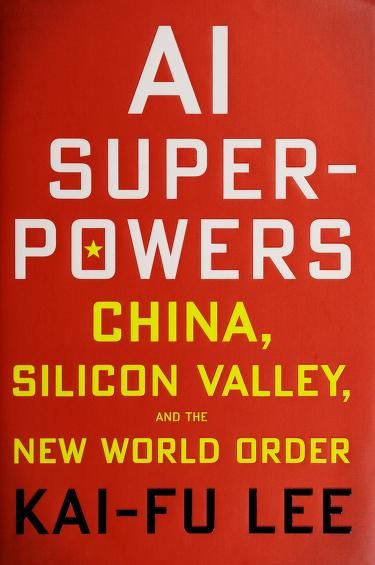
Nova: Absolutely actual technology, Atlas, though the "seeing into the future" part is a powerful metaphor for what AI brings to the table. Today, we're diving into this profound shift, drawing insights from works like Kai-Fu Lee's pivotal book, "AI Superpowers: China, Silicon Valley, and the New World Order."
Atlas: Oh, I like that. Kai-Fu Lee has such a unique perspective. I remember he worked at Apple, SGI, Microsoft, then became a huge venture capitalist in China. That gives him an unparalleled vantage point on the global AI race. How does his geopolitical lens on AI dominance, which sounds quite broad, apply specifically to the urgent, strategic implications for cybersecurity?
Nova: Exactly! His background isn't just academic; it's a front-row seat to the global AI arms race. He highlights that AI isn't just a technological advancement; it's a strategic national asset. For cybersecurity, this translates into an urgent imperative. We're not just fighting individual hackers anymore; we're in an evolving digital battlefield where nation-states and sophisticated threat actors are leveraging AI to launch attacks at unprecedented scale and speed. Traditional, reactive defenses simply can't keep up.
The Strategic Imperative: AI as the New Frontier in Cyber Defense
SECTION
Atlas: So you’re saying it’s less about simply patching vulnerabilities and more about a fundamental shift in how we even conceive of defense? That's going to resonate with anyone in a high-stakes security role who feels like they’re constantly playing catch-up. Can you give me a concrete example of how AI fundamentally changes threat detection—not just makes it faster, but genuinely?
Nova: That’s a great question, Atlas. It's about moving from reactive defense to predictive intelligence, anticipating attacks before they fully materialize. Think of it like this: traditional antivirus software is like a security guard checking IDs against a list of known criminals. It's effective against what it knows. But what about a brand-new, never-before-seen threat? A zero-day attack?
Atlas: Right, those are the nightmares that keep security teams up at night. The unknown unknowns.
Nova: Exactly. This is where AI steps in. Instead of just matching signatures, AI analyzes patterns of behavior. Imagine an AI system monitoring network traffic, user activity, and system logs. It learns what "normal" looks like. Then, when a novel piece of malware or a sophisticated phishing campaign tries to infiltrate, it might not have a known signature, but its —how it tries to move laterally, encrypt files, or access sensitive data—deviates from the learned norm.
Atlas: Oh, I see. So it's not looking for a specific face in a crowd, it's looking for someone acting suspiciously? Like someone trying to pick a lock instead of using a key.
Nova: That’s a perfect analogy! The AI can flag these subtle anomalies, these "suspicious behaviors," in real-time, even if the threat is entirely novel. It’s identifying the or the rather than just the known malicious code. This allows organizations to respond to threats that haven't even been officially categorized yet. It's moving from being a passive recipient of attacks to having a proactive immune system that can detect and neutralize threats in their nascent stages.
Atlas: That’s actually really inspiring for anyone who's trying to lead in this space. So, you're saying it's less about patching holes and more about seeing the storm before it even forms? How does a leader act on that kind of foresight? Because predicting something is one thing, but making actionable decisions based on a subtle anomaly… that requires a different kind of leadership.
Architecting Intelligent Defenses: Practical & Ethical AI/ML Implementation
SECTION
Nova: That foresight, Atlas, brings us directly to the practical challenge: how do we actually these smarter systems, and perhaps even more critically, how do we do it responsibly? This is where books like "Applied AI: A Handbook for Business Leaders" by Mariya Yao, Adelyn Zhou, and Marlene Jia become invaluable. They guide us through the nuts and bolts of integrating AI/ML models into existing security infrastructures, focusing on the critical elements of data, algorithms, and ensuring ethical guidelines are front and center.
Atlas: Okay, but how do you integrate these AI/ML models without compromising data privacy or ethical guidelines? Especially when you're talking about predictive capabilities that might involve sensitive user data? For our listeners who are ethical innovators, this is a huge hurdle—the promise of better security versus the very real risk of surveillance or misuse.
Nova: That's the delicate balance, and it's a question every ethical innovator in this field must grapple with. One technique gaining traction is called federated learning. Instead of sending all your sensitive data to a central cloud for AI training, the AI model is sent to the data. It learns locally on individual devices or servers, only sending back the —the updated model—not the raw data itself.
Atlas: So, the AI gets smarter by learning from everyone's data, but no single entity ever sees the individual, personal data? Like a chef who learns how to make a better dish by tasting everyone's feedback, but never sees what's on their plate?
Nova: Precisely! Another approach is differential privacy, where mathematical noise is added to datasets before they're used for training. This ensures that even if someone tried to reverse-engineer the training data, they couldn't identify individual data points. The goal is to get the benefits of AI's predictive power without creating a massive honey pot of personal information. It’s about building trust, which is paramount for any security system.
Atlas: That makes sense, but what about bias in algorithms? If the training data itself is inherently biased—perhaps reflecting historical disparities or certain user demographics—does the AI just perpetuate those biases, potentially misidentifying legitimate activity as a threat for certain user groups? How does a leader ensure ethical AI in practice, and not just in theory? That sounds like a minefield for an impact-driven leader.
Nova: It absolutely can be a minefield, and it’s a critical challenge we cannot ignore. The AI is only as good, and as unbiased, as the data it's trained on. If your historical threat data disproportionately flags activity from certain regions or user groups, the AI will learn that bias. Ensuring ethical AI requires diverse, representative datasets from the outset, and continuous, rigorous auditing of AI models. It’s not a one-time fix; it’s an ongoing process. You need human oversight, not just to catch errors, but to define and enforce those ethical boundaries, ensuring accountability. It’s about building a system that actively bias, rather than amplifying it.
Synthesis & Takeaways
SECTION
Atlas: That’s a powerful distinction. It sounds like the future of security leadership isn't just about technical prowess, but about a deep, continuous engagement with ethical implications and the very human element of AI.
Nova: Absolutely. What we've discussed today shows that AI isn't just a tool; it's a paradigm shift for cybersecurity. Understanding its strategic implications and practical, ethical deployment is crucial for effective threat detection. It moves us beyond merely reacting to threats to proactively anticipating and neutralizing them, but only if we build these systems with foresight and a strong ethical compass.
Atlas: For our listeners who are strategic architects, ethical innovators, and impact drivers, this isn't just about mastering the next frontier of defense; it's about shaping the rules of the digital world itself. It's about leading with both technical acumen and profound ethical responsibility.
Nova: Indeed. It's a journey of continuous learning, as the landscape shifts, so must we. We invite you to join the conversation. Share your thoughts on ethical AI in cybersecurity on our community channels. We want to hear how you're approaching these challenges.
Atlas: Your insights are invaluable as we collectively navigate this new world.
Nova: This is Aibrary. Congratulations on your growth!