Data, Dominance, and Judgment: An Analyst's Guide to AI Superpowers
Golden Hook & Introduction
SECTION
Dr. Warren Reed: What if I told you the most important event in the 21st-century power struggle wasn't a treaty or a battle, but a board game? In 2017, an AI named AlphaGo defeated the world's best Go player, a young prodigy named Ke Jie. In Silicon Valley, it was a cool tech demo. But in Beijing, it was a 'Sputnik Moment'—a national humiliation that triggered an unprecedented surge, a declaration of a new kind of war. A war fought with data.
D: It's an incredible framing. A single event, a single data point of loss, completely reorienting a nation's technological trajectory. It shows how symbolic events can have very real, very massive capital consequences.
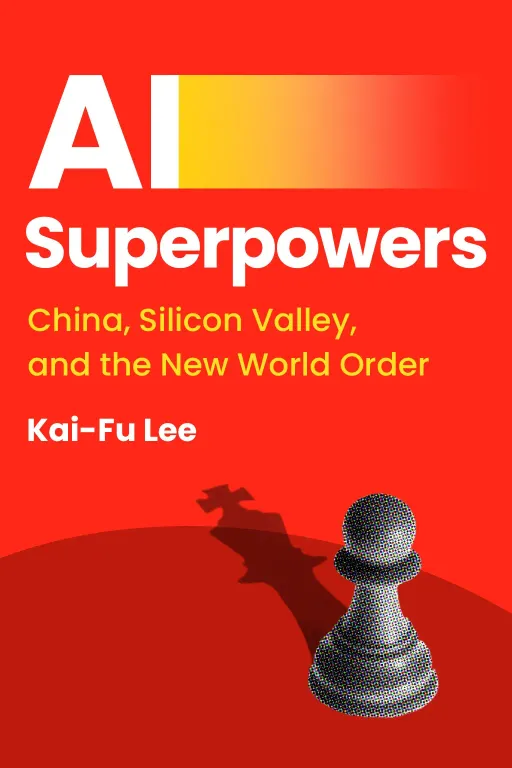
Dr. Warren Reed: Exactly. And that's the heart of Kai-Fu Lee's 'AI Superpowers.' Today we'll dive deep into this from two powerful perspectives. First, we'll explore the 'Gladiator's Gambit'—how China's unique, data-drenched environment turned it into an AI implementation machine. Then, we'll confront 'Algorithmic Judgment,' examining the dual punishment AI threatens: economic disruption and its new role in literal crime and punishment. And to help us decode this, we have D, a data analyst with a PhD and over 15 years in the tech industry. D, welcome. It feels like this book was written for you.
D: Thanks, Warren. It’s a fascinating read. It connects the dots between technology, economics, and geopolitics in a way that feels incredibly urgent. I’m excited to get into it.
Deep Dive into Core Topic 1: The 'Gladiator's' Gambit
SECTION
Dr. Warren Reed: So let's start with that 'Sputnik Moment.' Kai-Fu Lee argues the AI race isn't about who has the smartest researchers anymore. It's about implementation. And China's training ground for this was, frankly, brutal. It was a coliseum.
D: The 'Copycats in the Coliseum' chapter. It paints a picture of a tech ecosystem that’s almost unrecognizable to the Silicon Valley ideal of the mission-driven founder.
Dr. Warren Reed: Totally. And the perfect case study is Wang Xing. In the West, he was derided as 'The Cloner.' He copied Friendster, then Facebook, then Twitter. But his final act was copying Groupon. In 2010, the group-buying model exploded, and in China, this sparked what Lee calls the 'War of a Thousand Groupons.' It was absolute chaos. Thousands of companies, all with the same business model, burning through cash.
D: A classic market saturation problem, but on an unbelievable scale.
Dr. Warren Reed: Exactly. And this is where the story gets interesting. Groupon itself entered China, partnered with Tencent, and expected to dominate. But they failed spectacularly. Why? Because Wang Xing's company, Meituan, wasn't just a copycat. He was a gladiator. While Groupon was a 'light' tech company—just a website connecting users to deals—Meituan went 'heavy.' They built their own payment systems, managed their own delivery logistics, and had armies of salespeople on the ground building relationships with merchants. They got their hands dirty.
D: They controlled the entire value chain. From a systems perspective, that’s a much more defensible and robust model. It’s not just an information layer; it’s the whole operational stack.
Dr. Warren Reed: And here's the kicker, the part that matters for AI. This 'heavy,' online-to-offline model, or O2O, generated oceans of real-world data. Not just what you clicked on, but what you actually bought in a store, what you ate for lunch, where you took a shared bike. It created a digital replica of the physical world. D, from a data analyst's perspective, this is the key, right? It's not just 'big data.' It's the of data. How does a dataset built from real-world transactions, food delivery, and bike rides differ from one built on website clicks and 'likes'?
D: It’s the difference between a 2D map and a 3D model of a person's life. The data from clicks and likes is behavioral, but it's often abstract. The O2O data provides context and causality. You can model not just a person bought something, but the entire chain of events leading to it—the location, the time of day, the payment method, the subsequent travel. For a predictive algorithm, that's gold.
Dr. Warren Reed: So it's richer?
D: Infinitely richer. In machine learning, we talk about 'feature engineering'—creating the right input variables for your model. With this kind of data, the features are practically engineering themselves. You have a multi-dimensional view of a user, which allows for far more accurate predictions about future behavior. It's the difference between guessing what someone might want and knowing what they'll need next. China, as Lee puts it, became the Saudi Arabia of data.
Dr. Warren Reed: And the 'crime' of the copycat era, the intellectual property theft, ironically created the gladiators who were best equipped to mine that new oil. A brutal, but effective, gambit.
Deep Dive into Core Topic 2: Algorithmic Judgment
SECTION
Dr. Warren Reed: So this 'gladiatorial' environment, this data gold rush, built China's AI engine. But every revolution has a cost. And that brings us to the 'punishment' phase. Kai-Fu Lee warns the real crisis isn't robot overlords, it's economic and social chaos. And in some cases, AI is already being used to deliver judgment.
D: This is where the book pivots from a business and tech analysis to a deeply societal one. The implications are staggering.
Dr. Warren Reed: And it's not science fiction. Let's talk about a company called iFlyTek. They are a world leader in AI-driven speech recognition. But they're applying their technology in a truly startling place: the Chinese legal system.
D: I found this section both fascinating and deeply unsettling.
Dr. Warren Reed: Right? They've developed AI tools that are being piloted in courtrooms. One tool uses natural language processing to read through all the case files—police reports, witness statements, interrogations—and it cross-references everything, automatically flagging contradictions for the judge. On one hand, that sounds like a useful tool for an overworked legal system.
D: It could help ensure no piece of evidence is overlooked. A digital paralegal, in a sense.
Dr. Warren Reed: But then there's the other tool. The 'sentencing assistant.' This AI scans a database of millions of past court records to find similar cases. Based on that historical data, it then makes a recommendation to the judge for jail time or fines.
D: And that's where the alarm bells go off.
Dr. Warren Reed: Exactly. D, this is our theme of 'crime and punishment' made literal. An algorithm suggesting jail time. As someone who builds and analyzes models, what's your immediate red flag here?
D: My first thought is 'garbage in, garbage out.' It's the foundational problem of all data science. If the historical sentencing data reflects societal biases—for example, if certain demographic groups have historically received harsher sentences for the same crimes—the AI will not only learn those biases, it will amplify them. It will codify prejudice into a seemingly objective system, laundering human bias through a machine and presenting it as impartial truth.
Dr. Warren Reed: So it could make the system even more unfair, but with a veneer of technological neutrality.
D: Precisely. And the second red flag is the 'black box' problem. Many deep learning models are incredibly complex. They can give you an answer, but they can't tell you they arrived at it. If the model can't explain it recommended a 10-year sentence over a 5-year one, how can that be considered justice? It undermines the entire principle of due process, which requires reasoned, explainable decisions. You can't cross-examine an algorithm.
Dr. Warren Reed: It's a form of punishment without accountability. And this is just the literal interpretation. Lee's bigger fear is the economic 'punishment'—widespread job loss creating a dystopian social structure, like the one in the sci-fi story 'Folding Beijing,' where society is split into a tiny elite and a massive, jobless underclass.
D: That story was haunting because it felt so plausible. It's a physical manifestation of economic stratification. The data-rich get to live in the sun, while the data-poor are literally folded away underground. It's a powerful metaphor for the winner-take-all economics of AI.
Synthesis & Takeaways
SECTION
Dr. Warren Reed: So we have this incredible paradox. A brutal, copycat culture—a 'crime' of sorts—led to an implementation machine that's powering a nation. But the 'punishment' is twofold: the looming threat of job displacement, and the chilling reality of algorithmic judgment.
D: And both are fueled by the same thing: massive, uncurated datasets. The same rich, real-world data that powers Meituan's delivery efficiency could also power a biased legal system. The technology is agnostic; the application is everything. It's a tool, and like any tool, it can be used to build or to break.
Dr. Warren Reed: A perfect summary. Kai-Fu Lee ends the book on a surprisingly personal note. He was a workaholic, a human optimization algorithm, until a cancer diagnosis forced him to stop. He realized his life of maximizing 'impact' was empty. He pivoted to optimizing for love and human connection. So I'll leave our listeners, especially the analysts and tech leaders like you, D, with this question: In a world where AI can optimize everything—from logistics to justice—what is the one human metric that we should refuse to automate?
D: It's a crucial question. For me, the answer has to be empathy. The ability to understand and share the feelings of another. Data can find correlations in behavior, but it can't capture the subjective, internal experience of being human. That's the space we have to protect.
Dr. Warren Reed: Empathy. I like that. A powerful place to end. D, thank you for lending your expertise today. This was fantastic.
D: My pleasure, Warren. It was a great conversation.