The AI Revolution: Steering Technology for Governance and Social Good.
Golden Hook & Introduction
SECTION
Nova: You know, most people think AI is just about faster computers or smarter apps. They’re missing the entire revolution. We're talking about a force that's rewriting the rules of nations and societies, and if we don't understand its true power, we risk being left behind in a world we didn't help design.
Atlas: Wow, that’s a pretty bold statement right out of the gate, Nova. It sounds less like a tool and more like… a tidal wave. For those of us trying to build the future, that kind of blind spot could be catastrophic.
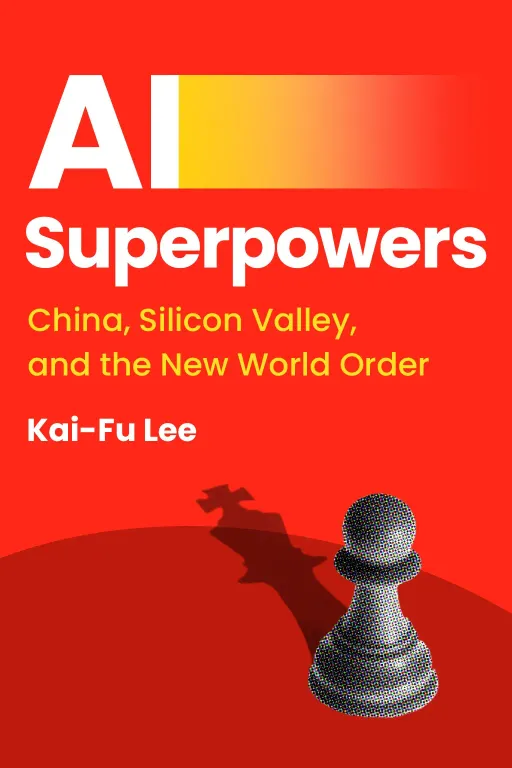
Nova: Exactly, Atlas. It's that precise blind spot we need to illuminate. And to do that, we’re diving into two incredibly insightful books today: Kai-Fu Lee’s "AI Superpowers" and Shoshana Zuboff’s "The Age of Surveillance Capitalism." These aren't just tech books; they're blueprints for understanding the profound implications of AI for governance and social equity. They collectively reveal AI's undeniable role in shaping global power and ethical dilemmas, forcing us to move beyond viewing it as a mere tool.
Atlas: Okay, so we're not just talking about algorithms, we're talking about global power shifts and the very fabric of society. That’s a much bigger game.
Nova: It absolutely is. And the first part of that game, as Kai-Fu Lee brilliantly lays out, is this intense geopolitical AI race.
The Geopolitical AI Race: Power and a New World Order
SECTION
Nova: Lee argues that AI is not just a technology, it's creating a new global order. He paints a vivid picture of the race, particularly between the US and China, for AI dominance. Imagine it like a new space race, but instead of rockets, the fuel is data, talent, and capital. Each nation is pouring immense resources into developing cutting-edge AI, not just for economic advantage, but for strategic geopolitical leverage.
Atlas: That makes me wonder, what does this 'race' actually look like on the ground? Is it about who has the most PhDs, or is it something more fundamental? For someone trying to navigate global policy, understanding the mechanics of this competition is crucial.
Nova: It’s multi-faceted. On one hand, yes, it's about talent—attracting and retaining the best AI researchers and engineers. On the other, it's about data. China, for instance, has a massive population and fewer privacy restrictions, which translates to an enormous dataset for training AI models. Lee highlights how this scale, combined with a government-driven strategy, allows them to iterate and deploy AI faster in certain areas. The cause is technological advancement, the process is intense national competition, and the outcome is a redefined global hierarchy where AI capability dictates influence.
Atlas: So, it's not just about who builds the best AI, but who has the infrastructure and the societal model that allows them to leverage it most effectively? That sounds like a diplomatic minefield. How does this 'race' impact international collaboration, especially on critical issues like climate action, which demand global cooperation?
Nova: That’s a brilliant point, Atlas. The tension is palpable. While AI could be a powerful tool for climate modeling or sustainable energy management, the competitive nature of the AI race can hinder the open sharing of crucial data and research that global challenges require. Each nation might view its AI advancements as a strategic asset, making collaboration on shared global problems more complex. It's a classic prisoner's dilemma, but with algorithms.
Atlas: That’s actually really inspiring, but also a bit terrifying. Innovators want to build solutions, but if the underlying framework is a zero-sum game, it makes it incredibly difficult to ensure those solutions serve humanity broadly.
Nova: Precisely. It emphasizes that seeing AI as just a tool for economic growth is a blind spot. It's a force that will shape international relations, trade, and even military strategy. Understanding where AI leadership is forming is key to understanding the next phase of global power.
Surveillance Capitalism and Ethical AI: Data, Power, and Human Autonomy
SECTION
Atlas: So, if nations are racing for data, what does that mean for data? That brings us to Shoshana Zuboff’s powerful insights in "The Age of Surveillance Capitalism." Her work feels like a necessary counterpoint to the 'AI Superpowers' narrative, shifting from national power to individual autonomy.
Nova: Absolutely. Zuboff reveals how data extraction and prediction are transforming economic and social life, but not always for the better. She argues that we’ve entered an economic order where our personal experiences are secretly harvested, packaged as data, and then used to predict and modify our behavior, all for profit. Think of it like this: your digital footprint isn't just breadcrumbs you leave behind; it's a new natural resource being mined, refined, and sold, often without your explicit consent or even your awareness.
Atlas: That’s a bit like someone secretly building a profile of my preferences by watching me through a two-way mirror, and then selling that profile to influence my choices. How can someone building a new AI solution ensure they're not inadvertently contributing to this system? That's a huge ethical challenge for any innovator.
Nova: It’s a profound challenge. Zuboff highlights that this isn't just about privacy; it's about power. The power to know, predict, and ultimately, to shape human behavior. For innovators, it means deeply scrutinizing the business models that underpin their AI solutions. Are they reliant on vast, often opaque, data collection? Are they designing systems that empower users, or subtly manipulate them? The critical need for ethical governance in AI for community protection becomes paramount here.
Atlas: So, for the 'builders' out there, what concrete governance models, or even design principles, can protect citizens without stifling the very innovation that could solve real-world problems?
Nova: That’s the million-dollar question. It involves a multi-pronged approach. First, robust data privacy regulations, like GDPR, are a start, but they need to evolve. Second, transparency in algorithms and data usage is crucial so people understand how their data is being used. Third, and perhaps most importantly, we need to foster a culture of 'ethical by design' in AI development. This means building in privacy and fairness from the ground up, rather than trying to bolt it on later. It also means empowering individuals with greater control over their own data, moving towards data trusts or personal data sovereignty models.
Atlas: That’s a powerful idea. Because if we're not careful, the very technology designed to make our lives better could end up eroding our fundamental freedoms. It sounds like the tension between innovation and ethics is at an all-time high.
Synthesis & Takeaways
SECTION
Nova: And that’s where both Lee’s and Zuboff’s insights converge. The "blind spot" isn't just about missing AI's technological prowess; it's about failing to see its immense power to reshape our societies, our governance, and our very autonomy. Whether it's nations vying for global supremacy through AI, or corporations subtly influencing our behavior through data, the core message is clear: AI is not a neutral tool. It's a force that demands intentional steering. Unchecked power, whether national or corporate, can easily undermine social good.
Atlas: So, the deep question then becomes: How can emerging AI technologies be strategically integrated into governance models to advance climate action and social equity without compromising privacy or autonomy? That’s the ultimate challenge for anyone who wants to build a better future.
Nova: It is. The answer lies in proactive policy, international cooperation that transcends geopolitical rivalries, and a fundamental redefinition of 'progress' that prioritizes human well-being and planetary health over unchecked technological advancement or pure profit. It means moving beyond a reactive stance to one that is anticipatory, designing systems and policies that bake in ethical considerations from the start. For all the innovators and builders listening, this means constantly asking not just "can we build it?" but "should we build it, and if so, how do we build it responsibly?" Seek out mentors in ethical AI, engage in policy discussions, and always consider the long-term societal impact of your work.
Atlas: That’s a powerful call to action. It's about being a global citizen, a responsible innovator, and a builder of truly beneficial pathways.
Nova: This is Aibrary. Congratulations on your growth!