

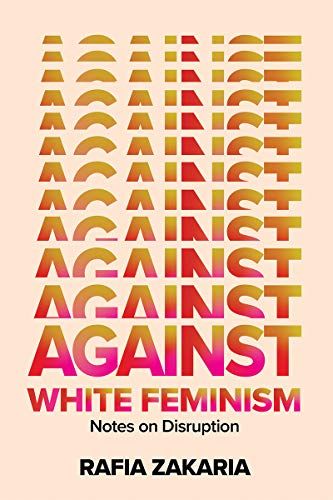
Against White Feminism
Notes on Disruption
Introduction: Unmasking the 'F' Word
Introduction: Unmasking the 'F' Word
Nova: Welcome back to The Deep Dive. Today, we are tackling a book that is less a gentle critique and more a necessary demolition: Rafia Zakaria’s "Against White Feminism: Notes on Disruption." Alex, I want to start with a jarring statistic I found during my research. Did you know that when the first major women's rights convention happened in Seneca Falls in 1848, the participants were primarily focused on securing rights for white women, often at the expense of, or completely ignoring, the concerns of Black women?
Nova: Exactly. Zakaria’s central thesis is that "white feminism" isn't just about white women; it's a political ideology that centers white supremacy and capitalism, regardless of the color of the person practicing it. It’s a framework that seeks empowerment only for those who fit within the established, privileged structure.
Nova: The takeaway is that if your feminism doesn't actively dismantle systems of oppression that benefit you—like racism or classism—it’s probably just reinforcing them. Zakaria calls for a radical reconstruction. We’re going to spend the next few chapters unpacking the history, the modern manifestations, and the necessary path forward, starting with those very first betrayals.
Key Insight 1: The Roots of White Supremacy in Suffrage
The Historical Betrayal: Seneca Falls and the Politics of Exclusion
Nova: Let’s anchor this in history, Alex. The 1848 Seneca Falls convention is often taught as the birth of American feminism. But Zakaria highlights how the movement quickly fractured along racial lines. When Black abolitionists like Frederick Douglass showed up to support the cause, some white suffragists, like Elizabeth Cady Stanton, actually recoiled and prioritized the vote for white women over universal suffrage.
Nova: The rationale, as Zakaria points out, was often pragmatic, but deeply racist. They feared that pushing for Black suffrage alongside women's suffrage would jeopardize the entire effort, arguing that white male voters wouldn't support a ballot that included Black men and all women. It was a calculated decision to center white female enfranchisement as the primary, most urgent goal.
Nova: Precisely. And this pattern repeats. Think about the early 20th century. When the 19th Amendment finally passed, many Black women were still systematically disenfranchised by Jim Crow laws—poll taxes, literacy tests—laws that white suffragists, having achieved their goal, did little to actively fight against.
Nova: She does. And she notes that this historical pattern established a precedent: that the needs of the most privileged women define the movement’s agenda. The movement’s success was measured by how much closer it brought white women to white male power, not how much it uplifted the most marginalized.
Nova: It was often overt in its prioritization. Zakaria points to how the narrative of the movement was later sanitized, whitewashed, to erase the complicity of figures like Stanton and Susan B. Anthony in using racist rhetoric to appeal to Southern white voters. The official history conveniently forgets the moments where they actively undermined Black equality.
Nova: And that filtering is what allows the myth of universal sisterhood to persist. If you look at the statistics on who benefited most immediately and completely from the 19th Amendment, it was overwhelmingly white, property-owning women. For many others, the fight for the vote continued for decades.
Nova: Zakaria insists we must see them as the latter, and understand that this foundational act of exclusion created the blueprint for the "white feminist" politics we see today—politics that are inherently exclusionary.
Nova: Absolutely. And this blueprint didn't just stay in the US. It traveled, morphing into the global savior complex we see in the second and third waves. That leads us perfectly into how this historical pattern plays out on the world stage today.
Key Insight 2: When Feminism Becomes Imperialism
The Global Savior Complex: War, Culture, and Condescension
Nova: That’s the most explosive part of her argument. Zakaria directly links the rhetoric of white feminism to justifications for Western intervention, particularly in the Global South. She points to the post-9/11 narrative where the liberation of Afghan women became a primary justification for war and occupation.
Nova: It is. Zakaria argues that this framing is deeply condescending. It treats women in Afghanistan, or Iraq, or elsewhere, not as "full subjects" with their own political agency and complex realities, but as passive victims whose only hope lies in adopting Western norms, often enforced by military might. She notes that figures like Hillary Clinton were vocal proponents of this line of thinking.
Nova: It completely erases them. Their struggles—which might be about land rights, economic justice, or resisting local corruption—are flattened into a single, easily digestible narrative: 'They need saving from their culture.' This allows Western feminists to feel virtuous without doing the hard work of solidarity or understanding local political dynamics.
Nova: Exactly. And Zakaria points out the hypocrisy: this same brand of feminism often ignores or downplays the struggles of women of color the West—women facing police brutality, mass incarceration, or economic precarity—because those issues don't fit the neat, liberal narrative of progress.
Nova: Absolutely. The empowerment sought is often the ability to participate in the same system that exploits them globally. Zakaria contrasts this with what she sees as the feminism of women of color, which is often rooted in rebellion against the very structures that white feminism seeks to merely optimize for itself.
Nova: Certainly. Think about how certain international NGOs or media campaigns frame issues like the hijab or the veil. The white feminist lens often sees it only as oppression, demanding its removal as the ultimate act of liberation. Zakaria argues this ignores the agency of women who choose to wear it, or who see it as a form of cultural resistance against Western cultural hegemony.
Nova: It is. And the result is that white feminism becomes a tool of cultural imperialism. It’s not about lifting women up; it’s about ensuring that the definition of 'woman' and 'freedom' aligns with the dominant Western, liberal, and implicitly white worldview. This is why Zakaria insists we must dispense with whiteness entirely, even if we aren't white ourselves.
Key Insight 3: A New Framework for Solidarity
Reconstruction: Centering Resilience and Intersectionality
Nova: So, we’ve seen the historical exclusion and the modern global condescension. The natural question is: what does Zakaria propose as the alternative? If we are to move "Against White Feminism," what does the path forward look like?
Nova: Intersectionality is central, but Zakaria pushes it further. She emphasizes that for women of color, class and color are not secondary factors that are added on later; they are the primary conditions of existence. She stresses that feminism must be rooted in the lived realities of those at the bottom of the intersecting hierarchies.
Nova: Exactly. Zakaria highlights the difference between what she calls the feminist thought of "rebellion" versus "resilience." White feminism often frames its struggle as one of resilience—enduring and succeeding within the existing system. But for many women of color, the struggle is one of active rebellion against the system itself.
Nova: Zakaria’s call is to stop centering yourself and your comfort. It means listening to the critiques from women of color without becoming defensive. It means recognizing that your definition of 'success'—a corner office, a certain level of visibility—might be irrelevant or even detrimental to the struggles of others.
Nova: She makes a powerful point about the global context: Western feminists need to stop demanding that women in the Global South adopt Western feminist frameworks. Instead, they must engage in a "culturally comparative view" that decenters Western whiteness as the default standard for liberation.
Nova: And it means understanding that solidarity isn't about pity or rescue; it’s about shared struggle against common oppressors—white supremacy, patriarchy, and capitalism—even if the manifestations of those oppressions look different for each person.
Nova: That’s the core of the disruption Zakaria seeks. It’s about moving away from liberal empowerment—which is often just individual success—toward collective liberation that uplifts the most vulnerable first. It’s a call to action to become, in her words, 'women of color' in our political practice, even if we aren't racially women of color.
Conclusion: The Mandate for Disruption
Conclusion: The Mandate for Disruption
Nova: We’ve covered a lot of ground today, Alex, tracing the lineage of exclusion from the suffrage movement right up to contemporary foreign policy justifications. The central message of "Against White Feminism" is that feminism, when untethered from a rigorous critique of race and class, becomes a tool for maintaining existing power structures.
Nova: Indeed. The key takeaway we must carry forward is Zakaria’s insistence that white feminism is a political stance, not just a racial one. Anyone who prioritizes their own comfort, or the comfort of the dominant group, over the liberation of the most marginalized, is practicing white feminism.
Nova: It’s a mandate for disruption. It asks us to dismantle the comfortable narratives we’ve been fed about sisterhood and replace them with a harder, more honest commitment to true intersectional justice. It’s not about being a better feminist; it’s about demanding a fundamentally different kind of politics.
Nova: Precisely. It’s a challenging but ultimately hopeful vision, because by naming the problem so clearly, Zakaria gives us the tools to finally build something truly inclusive. Thank you for diving into this crucial text with me today, Alex.
Nova: This is Aibrary. Congratulations on your growth!