Recharting Our Shared Horizon
Golden Hook & Introduction
SECTION
Nova: We have this strange obsession with looking at the future as if it’s something that just happens to us, like a weather pattern we have no control over.
Atlas: That is true. It’s either utopian tech will save us, or total collapse is coming. We seem to bounce between those two poles constantly. It’s exhausting, honestly.
Nova: Exactly. But what if the blueprint for our future isn't actually in a tech lab, but in the archives of history and the messy, gritty reality of the present? Today, we are looking at two books that, on the surface, seem worlds apart. One is a deep, rigorous excavation of the past, and the other is a global, boots-on-the-ground look at our current geological era.
Atlas: Okay, I’m intrigued. Usually, history books and climate science books don't sit on the same shelf. What are we talking about?
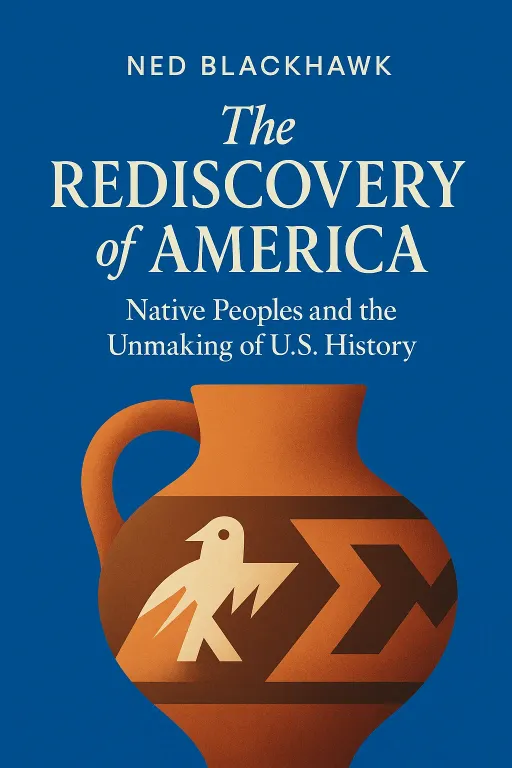
Nova: We are diving into The Rediscovery of America by Ned Blackhawk and Adventures in the Anthropocene by Gaia Vince. Blackhawk’s work won the National Book Award and essentially rewrites the American narrative by putting Indigenous nations at the absolute center of the story. And then, Gaia Vince, who is this incredible science journalist, traveled the world to document how actual humans are engineering their own survival in the face of climate change.
Atlas: So, one is about how we got here, and the other is about how we stay here.
Nova: That is the perfect way to frame it. The Rediscovery of America, which came out of years of meticulous archival work, changes how we understand the foundation of the United States. It shows that Native nations weren’t just passive casualties of expansion; they were the primary political actors that shaped the country. And Gaia Vince’s work in the Anthropocene shows that our survival isn't just about big policy shifts, but about the localized, brilliant, and often weird solutions people are inventing right now.
Atlas: And that brings us to the big question we want to unwrap today. How do we take those lessons—the political sophistication of the past and the practical engineering of the present—and use them to design a future that actually works for everyone?
The Political Agency of History
SECTION
Nova: Let’s start with Blackhawk’s work. One of the reasons this book received such critical acclaim and became a cornerstone of modern historical discourse is because it refuses to treat Indigenous history as a sidebar. It’s not a story of decline. It’s a story of endurance and high-stakes diplomacy.
Atlas: I think that’s the part that usually gets lost in the classroom version of history. We’re taught that the expansion of the United States was this inevitable, linear march. Like a tide going out. You’re saying that’s a misread?
Nova: It is. It’s a massive misread. What Blackhawk demonstrates is that the United States was constantly forced to negotiate. When you look at the interactions between Native nations and colonial powers, you see a complex game of chess. These nations were managing trade, forming alliances, and playing European powers against each other to maintain their sovereignty.
Atlas: So, it wasn't just, "Here comes the US, everything changes." It was, "Here comes the US, how do we force them to deal with us on our terms?"
Nova: Precisely. And that creates a completely different mental model for leadership and strategy. When you study how these nations survived, you’re not just learning about the 1700s or 1800s. You’re studying the art of operating within a system that is fundamentally designed to exclude you.
Atlas: That resonates with anyone who has ever felt like they were trying to build a business or a career in a landscape that wasn't built for them. It’s that constant pivot. You’re saying the resilience wasn't just about stubbornness, but about active, calculated political maneuvering.
Nova: Yes. And that’s the crucial insight. Resilience in this context is active. It’s not just "toughing it out." It’s about leveraging your resources, forming the right coalitions, and understanding the power dynamics of your environment so well that you can influence the outcome. Blackhawk’s thesis is that the US political system itself is a product of these negotiations. The country is what it is because it had to contend with Indigenous power.
Atlas: That gives me a different perspective on the idea of "influence." We often think of influence as having the loudest voice or the most money. But what you’re describing is influence as the ability to force a system to recognize your reality.
Nova: Exactly. And that’s a skill set that translates perfectly into the modern world. Whether you are leading a team in a massive corporation or trying to navigate a shifting professional landscape, the lesson is the same. You don't just wait for the tide to sweep you away. You map the currents, you identify who the other players are, and you engage.
Adaptation in the Anthropocene
SECTION
Atlas: Okay, that makes sense for the history side. You’re analyzing the "how" of political survival. But now we have to shift gears to the future. If Blackhawk is about navigating human systems, Gaia Vince’s work feels like it’s about navigating the physical environment.
Nova: That’s a great bridge. Because while Blackhawk looks at how we navigate political systems, Gaia Vince looks at how we are redesigning our actual, physical reality. Adventures in the Anthropocene is such a fascinating book because it avoids the typical doom-and-gloom narrative.
Atlas: Which is refreshing, because I think a lot of people are just fatigued by the "everything is burning" headlines. It’s hard to stay motivated when the narrative is just "we’re doomed."
Nova: It is. And Vince doesn't ignore the crisis. She documents it. But she frames it through the lens of human ingenuity. She traveled to places like the Maldives, where people are dealing with rising sea levels, or to regions in the Andes where water scarcity is an immediate, life-or-death problem.
Atlas: What does she find? I imagine it’s not just people waiting for government solutions.
Nova: It’s the opposite. She finds that people are becoming citizen scientists and amateur engineers. In some places, they are creating artificial glaciers to store water. In others, they are re-engineering their agricultural practices to withstand heat and drought. It’s this incredible, decentralized wave of adaptation.
Atlas: So, it’s like a global lab. Everyone is experimenting with what works.
Nova: That’s exactly what it is. And that’s where the connection to Blackhawk’s work becomes so clear. In both cases—whether it’s Indigenous nations navigating colonial politics or people in the Anthropocene navigating climate change—the common thread is agency. It’s the refusal to be a bystander.
Atlas: I see what you’re doing there. It’s about moving from a state of "being acted upon" to "being the actor."
Nova: Right. And for anyone listening who feels overwhelmed by the complexity of their own career or the state of the world, that is the most empowering shift you can make. When you look at the people Vince documents, they aren't waiting for a miracle. They are looking at the specific resources they have, the specific constraints they face, and they are saying, "Okay, how do we hack this? How do we build a solution that works for us?"
Atlas: It makes me think of the concept of "local knowledge." We tend to think that the biggest, most centralized solution is the best one. But what you’re describing—both in the history book and the science book—is that the most effective solutions are often the ones that are deeply rooted in the specific reality of the people facing the problem.
Nova: That is such a vital point. Centralized solutions are great for scale, but they often lack the nuance required for survival. Blackhawk’s history shows that Indigenous nations succeeded because they understood their local terrain and their specific diplomatic leverage better than the colonizers did. Vince’s work shows that climate solutions succeed when they are adapted to the specific geography and community needs.
Atlas: So, if I’m a leader, or just someone trying to build a career, the lesson isn't to look for the "one big fix" that everyone else is talking about. The lesson is to become an expert in my own specific landscape.
Nova: Yes. And to be a connector. One of the things Vince highlights is that these successful solutions don't stay isolated. They spread. People share what works. It’s a decentralized network of resilience.
Synthesis & Takeaways
SECTION
Atlas: This is starting to feel like a complete picture. We have the political strategy from the past and the practical engineering from the present. How do we synthesize this? If I’m a listener, and I want to apply this tomorrow, what am I actually doing?
Nova: I think the first step is a mindset shift. We need to stop viewing our professional or ecological challenges as "inevitable." That’s the trap. When you believe something is inevitable, you become passive.
Atlas: And passivity is the enemy of resilience.
Nova: Exactly. So, step one is recognizing your agency. In every interaction, in every project, you have more room to maneuver than you think. Just as those nations in the 18th century found space to negotiate, you can find space to innovate.
Atlas: That’s good. And the second step?
Nova: The second step is to embrace the "hands-on" approach that Gaia Vince documents. Stop waiting for the perfect, top-down strategy. Start prototyping. Start testing. If you are facing a problem at work, don't wait for a corporate directive. Find a small, local solution that works for your team, test it, and see what happens.
Atlas: It’s the "small, consistent steps" principle again.
Nova: It is. And the third step, which I think is the most profound, is about the nature of the network. Resilience isn't a solo sport. It’s about building alliances. Blackhawk shows that Indigenous nations survived because they were interconnected. Vince shows that climate adaptation works best when communities share information. We have to be better at connecting with others who are solving similar problems.
Atlas: I love that. It’s about finding your tribe—not just for support, but for intelligence sharing.
Nova: Yes. And that’s the beauty of looking at history and science together. You realize that the human story isn't one of inevitable decline or monolithic power. It’s a story of constant, creative, and sometimes messy adaptation. We are, by nature, a species that finds a way.
Atlas: That’s a much more hopeful view than the usual doom-scrolling narrative we get. It’s not about ignoring the risks; it’s about acknowledging our capacity to handle them.
Nova: It is. And that’s what I want our listeners to take away. Whether you are dealing with a high-pressure career, a complex political landscape, or the reality of a changing climate, remember that the power to rechart the horizon is in your hands. You don't have to be a victim of the circumstances. You can be the architect of your own resilience.
Atlas: Well, that’s a challenge I think we can all get behind. It’s not about having all the answers; it’s about having the courage to experiment and the wisdom to connect.
Nova: Exactly. And that is how we build a sustainable future. It’s not a destination; it’s a practice.
Atlas: I’m walking away from this with a lot to think about. It’s funny how a book about 18th-century diplomacy and a book about future climate change can actually give you better advice for your Monday morning meeting than a standard business book.
Nova: That’s the beauty of deep reading, Atlas. It gives you patterns that work across time and space.
Atlas: I’m definitely going to dive deeper into both. This has been a great conversation.
Nova: I’m glad we could pull these threads together. For everyone listening, start small, stay connected, and remember that you have more agency than you realize.
Atlas: And with that, we’ve covered a lot of ground today. Thanks for being here, and here’s to building a more resilient future. This is Aibrary. Congratulations on your growth!