

The Power of Play: Gamification for Intuitive HMI Design
Golden Hook & Introduction
SECTION
Nova: Quick, Atlas, what’s the most frustrating piece of technology you’ve interacted with recently, and what if I told you it could be as engaging as your favorite game?
Atlas: Oh, Nova, that’s easy. Trying to navigate those labyrinthine self-checkout menus. I swear they're designed by a committee of sadists. Engaging as my favorite game? That sounds like pure science fiction, or maybe a very optimistic dream!
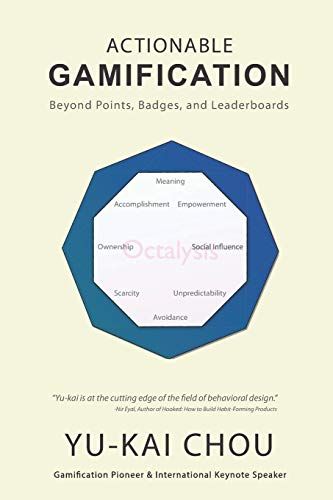
Nova: Not as far-fetched as you might think! We're diving into a powerful idea today, drawn from a book that fundamentally shifted how we think about human engagement: Yu-kai Chou’s. Chou, a true pioneer, didn't just write a book; he essentially codified the human experience of play into a framework, one that has been widely acclaimed for its depth.
Atlas: Right, I've heard the term "gamification" thrown around a lot, usually followed by a cynical eye-roll. Often it just means adding a leaderboard to some mundane task, and it rarely works beyond a fleeting novelty. Did Chou’s work face that kind of skepticism when it first came out?
Nova: Absolutely. Some early critics definitely questioned if gamification could truly move beyond those superficial rewards. But Chou’s genius was in dissecting games are engaging, not just they do. He showed that it’s not about slapping on points, but about tapping into core human drives. That’s the real promise: transforming even the most complex, frustrating systems into something intuitive and deeply satisfying.
Unlocking Engagement: The Octalysis Framework and Human Drives
SECTION
Nova: And that brings us to the heart of his work, the Octalysis Framework. Forget the flashy graphics and high scores for a moment. Octalysis is a lens for understanding eight core human drives that motivate us, often unconsciously, to engage with an experience. It’s about the psychology of why we things.
Atlas: Eight core human drives? That sounds like a big claim. Are we talking about basic needs, or something more nuanced? Because I'm picturing Maslow's hierarchy, but with extra levels for 'likes' and 'streaks.'
Nova: Precisely, it's far more nuanced than just basic needs. Think of it as a set of fundamental psychological triggers. Let's look at a couple. First, there's the "Epic Meaning & Calling" drive. This is when users feel they are part of something bigger than themselves, that their actions contribute to a greater good.
Atlas: So, like, saving the planet, or curing a disease? That's a pretty grand ambition for a mobile app or a dashboard, isn't it? Can you really engineer something like "epic meaning"?
Nova: You absolutely can, and it's done subtly. Consider Wikipedia. Users contribute massive amounts of knowledge, not for financial reward, but because they believe in the mission of universal knowledge. Or think about many open-source projects. People dedicate countless hours because they feel they're building something vital for the community. Their actions have "epic meaning" within that context.
Atlas: Okay, so it’s about aligning individual action with a perceived higher purpose. That makes sense on a societal scale, but what about a more individual drive? What’s another key one?
Nova: Another crucial one is "Development & Accomplishment." This is the drive for progress, for mastering skills, for overcoming challenges. Think about those language learning apps, for instance. You see your progress bar fill up, you unlock new levels, you gain fluency. Each small step is a visible accomplishment.
Atlas: Ah, I know that feeling! It’s incredibly satisfying to see that little green bar inch forward. That makes me wonder, how does this differ from just simple rewards or incentives? Is it just a fancier way of saying 'carrot on a stick'?
Nova: That’s a critical distinction, Atlas. Simple rewards, like a discount for signing up, are "extrinsic" motivators. They work, but often temporarily. The Octalysis drives, especially the ones we're discussing, tap into "intrinsic" motivation. The reward is the activity itself – the feeling of accomplishment, the sense of purpose, the joy of creation. It's about making the process inherently satisfying, not just the outcome.
Atlas: That’s a great way to put it. So, it’s not just about the destination, but making the journey compelling. I can see how that could transform a dull task into something people to do. But for our listeners who are building complex systems, like HMI for industrial control, this still feels a bit abstract. How do we bridge that gap?
Beyond the Screen: Gamifying Intuitive HMI Design
SECTION
Nova: And that naturally leads us to the second key idea we need to talk about. Now that we understand these fundamental human triggers, the real challenge, and the real opportunity, lies in applying them to systems that are traditionally anything but playful – like complex Human-Machine Interfaces. We're talking about taking those insights from Chou's framework and using them to design truly intuitive HMIs that reduce cognitive load and increase user proficiency.
Atlas: That’s where the rubber meets the road. I can imagine a lot of our listeners, especially those working on AI/ML integration or sustainable energy solutions, are thinking: "How do I take 'epic meaning' and put it into a control panel for a power grid?" It sounds like a huge leap.
Nova: It's less of a leap and more of an intentional design choice. Let's take "Development & Accomplishment" again. In a complex HMI, instead of just a static display of data, imagine a system that visually tracks an operator's mastery of specific, complex procedures. Clear progress indicators, skill trees for advanced functions, or even "mastery badges" displayed on their profile within the system. The operator isn't just performing a task; they're visibly progressing in their expertise.
Atlas: So, transforming training and operational proficiency into a visible journey of skill acquisition? I like that. It moves beyond just a "check-the-box" mentality for compliance and taps into an operator's desire for professional growth. But what about something like "Ownership & Possession"? How does that translate into an HMI for, say, a smart factory? You can't exactly "own" a part of the interface.
Nova: You absolutely can, through customization and personalization. Imagine an HMI where operators can genuinely configure their dashboards, not just with pre-set options, but by building their own data visualizations, creating custom alerts, or even scripting small automation routines within a safe sandbox. When they invest their time and creativity into tailoring the interface, they develop a sense of "ownership" over their workspace. It becomes tool, optimized by.
Atlas: That’s brilliant! It goes beyond just user preferences; it's about empowering the user to shape their environment, which in turn could lead to incredible efficiency gains because the interface truly reflects their workflow. But Nova, we’re talking about high-stakes environments. What about the "dark side" of gamification? How do we ensure we're not just manipulating users, especially in critical infrastructure like a renewable energy grid management system, where a misstep could have serious consequences?
Nova: That’s a crucial concern, and it’s where Chou’s work really shines. True actionable gamification, especially in HMIs, isn't about manipulation. It's about ethical design that respects the user's autonomy and enhances their capability. When you design for intrinsic motivation – for mastery, for meaning, for empowerment – you're not tricking users; you're building systems that naturally align with their human desire to be competent and impactful. The "dark side" emerges when designers focus solely on short-term extrinsic rewards or deceptive patterns.
Atlas: So the key is to ensure the gamified elements genuinely support the user’s goals and the system’s purpose, rather than distracting from them. It’s about intuitive guidance, not addictive loops. That seems incredibly important for systems that need to be reliable and transparent. Does this approach actually reduce errors, or just make the system feel more pleasant?
Nova: Studies and implementations have shown it significantly reduces cognitive load. When an interface intuitively guides you through complex tasks, provides clear feedback on your progress, and makes the consequences of your actions visible in a meaningful way, you spend less mental energy deciphering the system and more on the actual task. This leads to fewer errors, faster training, and ultimately, higher proficiency and better decision-making, particularly in adaptive control systems. It's not just pleasant; it's profoundly effective.
Synthesis & Takeaways
SECTION
Nova: So, what we’re really talking about today is that truly intuitive HMI design isn't about slapping on game elements, but about deeply understanding human motivation. It’s about recognizing that whether we're playing a game or operating a complex control system, our brains are wired for certain kinds of engagement.
Atlas: Exactly. By designing for those core human drives – for meaning, for accomplishment, for empowerment – we don't just make systems easier to use. We make them more human-centric. We create environments where the human operator isn't just a cog in the machine but an active, engaged participant. And for those of us focused on building smarter, more adaptive control systems or tackling sustainable energy solutions, that's not just a nice-to-have; it's a game-changer.
Nova: It truly is. We're moving beyond simple functionality to a place where systems actively foster human proficiency and reduce the potential for error, even in the most demanding contexts. It’s about designing for the human experience first, and letting the technology serve that.
Atlas: It makes me think about those frustrating self-checkout machines again. If they applied even a fraction of these principles, imagine the collective sigh of relief. It’s not just about making things less annoying; it’s about unlocking human potential and making our interactions with technology genuinely productive and, dare I say, even enjoyable.
Nova: Absolutely. And I'd love for our listeners to think about a complex system they interact with regularly, whether it's at work or in their daily lives. How could understanding these core human drives transform that experience from frustrating to intuitive, from confusing to compelling?
Atlas: That’s a fantastic challenge. We’d love to hear your thoughts on that! Share your ideas on how gamification could transform your most challenging interfaces.
Nova: This is Aibrary. Congratulations on your growth!