

Unlocking Your Inner Genius: Practical Creativity for Everyday Life
Golden Hook & Introduction
SECTION
Nova: We often think of creativity as this spontaneous lightning bolt, right? A sudden flash of brilliance, appearing out of nowhere. But what if the most profound creative breakthroughs actually come from two very different, often clashing, parts of your brain working together, not just one?
Atlas: Oh, I love a good brain mystery! So you're saying my 'aha!' moments aren't just pure magic, they're… a team effort? Tell me more.
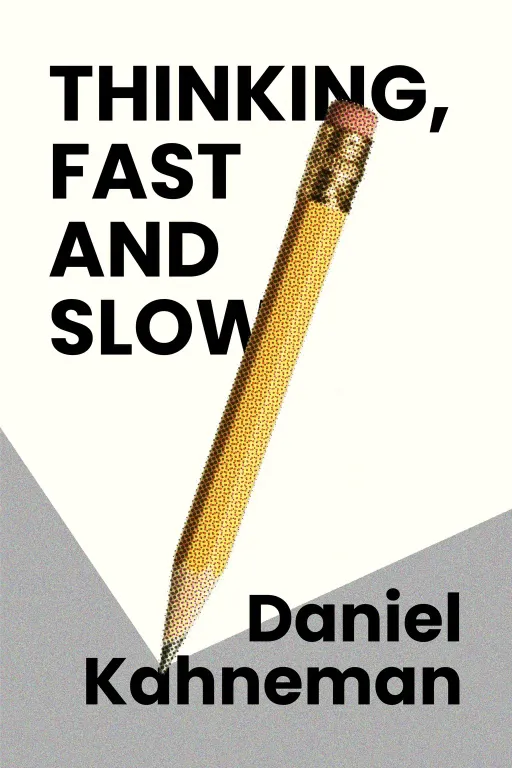
Nova: Exactly! Today, we're diving into how our minds truly unlock creative genius, guided by two monumental thinkers. First, Daniel Kahneman, a Nobel laureate in Economic Sciences, whose groundbreaking book "Thinking, Fast and Slow" fundamentally reshaped our understanding of human cognition. His work, though rooted in economics, has had a profound impact on every field, including how we approach creativity. And then we'll turn to Daniel H. Pink, a former political speechwriter who pivoted to become a leading voice on business and the future of work, with his insightful book "A Whole New Mind."
Atlas: That's fascinating, a Nobel winner alongside someone who saw the future of work years ago. Okay, so what exactly are these two systems Kahneman talks about? Are we talking about left-brain, right-brain stuff again, or something deeper that helps us understand this 'team effort' you mentioned?
Deep Dive into Core Topic 1: Kahneman's Dual Systems of Creative Thought
SECTION
Nova: It's definitely deeper, and far more nuanced than the old left-brain/right-brain dichotomy. Kahneman introduces us to System 1 and System 2 thinking. Think of System 1 as your mind's autopilot: it’s fast, intuitive, emotional, and works automatically. It’s what allows you to recognize faces, understand simple sentences, or react quickly to a sudden noise.
Atlas: Okay, so it’s the gut feeling, the instant reaction. I imagine a lot of our listeners feel that jolt of intuition.
Nova: Precisely. Now, System 2 is your mind's manual mode. It’s slow, deliberate, logical, and requires effort. This is the system you engage when you're solving a complex math problem, learning a new language, or carefully weighing a difficult decision. It's thoughtful, analytical, and takes energy.
Atlas: That's a great way to put it. I can definitely relate to that feeling of my brain working hard on something. But how do these two systems interact when we're trying to be creative? Isn't true genius just System 1 on overdrive, like a spontaneous burst of insight? Is there a risk of overthinking and stifling that initial spark with too much System 2?
Nova: That's a crucial question, and it's where the magic happens. Many people mistakenly believe creativity is purely a System 1 phenomenon—a sudden, unbidden flash. But Kahneman's work, and subsequent research, shows that System 2 is equally vital. Consider the classic "bat and ball" problem: a bat and a ball cost $1.10 in total. The bat costs $1.00 more than the ball. How much does the ball cost?
Atlas: Oh, I know this one! My System 1 immediately screams "10 cents!"
Nova: Exactly! And that's your intuitive System 1 at work. It sees the "10 cents" pattern and jumps to a quick, plausible answer. But that's incorrect. If the ball was 10 cents, the bat would be $1.10, making the total $1.20. It takes conscious effort, your System 2, to override that initial intuition and calculate the correct answer: 5 cents.
Atlas: Wow, that’s a perfect example. So, when it comes to creativity, System 1 might give you that initial wild idea, that unexpected connection. But then System 2 steps in to refine it, test its viability, structure it, and turn it into something tangible.
Nova: Absolutely. System 1 is brilliant for generating novel connections, spotting patterns, and providing intuitive leaps. It’s what fuels brainstorming sessions. But then System 2 takes over to evaluate those ideas, to see if they're actually feasible, to iterate, and to bring them to fruition. Think of a seasoned musician improvising versus composing a complex symphony. The most profound creativity often emerges from this dynamic interplay, where System 1 throws out possibilities, and System 2 sculpts them into masterpieces.
Atlas: That makes sense. It’s about more than just avoiding cognitive traps; it’s about leveraging both for a higher purpose. So, how does understanding this interaction help us more creative, beyond just avoiding those quick, incorrect judgments?
Nova: It helps us be. Instead of waiting for inspiration, we can consciously engage both systems. We can dedicate time for free association and intuition and then follow it with dedicated time for critical analysis and refinement. Conscious effort, or System 2, also trains System 1. The more you learn and practice, the more accurate and insightful your intuition becomes. It builds expertise that makes your "gut feelings" more reliable.
Deep Dive into Core Topic 2: Pink's Right-Brain Aptitudes for the Conceptual Age
SECTION
Nova: And this idea of consciously honing our intuitive and analytical tools perfectly sets the stage for Daniel Pink's vision of the "conceptual age." He argues that we're moving beyond an information age where pure logic and left-brain dominance ruled. Pink, with his unique background moving from political speechwriting to future-of-work insights, saw this shift coming years ago, and his book "A Whole New Mind" became a widely acclaimed guide for navigating it.
Atlas: That's actually really inspiring. I imagine a lot of our listeners are thinking, "Okay, I get it, but what does 'conceptual age' even mean for someone trying to innovate in a practical field?" What exactly are these 'right-brain' aptitudes Pink talks about?
Nova: Pink argues that as routine, rules-based work gets automated or outsourced, the future belongs to those with "right-brain" aptitudes. These are qualities like creativity, empathy, and the ability to find meaning. He outlines six essential aptitudes for success: Design, Story, Symphony, Empathy, Play, and Meaning.
Atlas: Okay, these sound like buzzwords, but I'm curious. Can you give a brief, compelling example for each, and connect them back to how they leverage both intuitive and deliberate thinking from Kahneman's work?
Nova: Absolutely. Take —it's not just about making things look pretty. It's about creating things that are functional, elegant, and provide a great user experience. This needs System 1's holistic view to intuit what people truly need, and System 2's iterative refinement to craft the perfect solution. Then there's: the ability to craft compelling narratives. We're wired for stories, and System 1 gravitates towards them. System 2 helps us structure those narratives effectively.
Atlas: I can see that. Stories make information stick. What about?
Nova: is the ability to see the big picture, to synthesize disparate elements into a coherent whole. Think of a conductor bringing different instruments together. This is a powerful System 1 function for pattern recognition, but requires System 2 to consciously identify and connect those underlying relationships. is next: understanding and relating to others' feelings. It's crucial for collaboration and innovation. System 1 gives us initial emotional resonance, while System 2 helps us deliberately consider perspectives different from our own.
Atlas: That's such a hopeful way to look at it, especially in a world that feels increasingly fragmented. What are the last two?
Nova: is about humor, lightness, and joy. It’s not just about having fun; it’s about fostering an environment where ideas can flow freely, where experimentation is encouraged. System 1 thrives in playful, low-stakes environments, while System 2 can then analyze the insights gained from that play. And finally,: the human need for purpose and spiritual fulfillment. System 1 might give us a deep sense of what truly matters, and System 2 helps us consciously align our actions with those values.
Atlas: Wow, that’s actually really inspiring. I imagine a lot of our listeners are thinking, "Okay, I get it, but how do I cultivate 'Play' or 'Symphony' when I'm just trying to get through my to-do list?" Can you give a practical, actionable example of how someone could start applying one of these today?
Nova: For sure. Let's take 'Story.' Instead of just listing tasks, try to frame your day or a project as a narrative. What's the challenge, who are the characters, what's the rising action, and what's the desired resolution? Even a mundane task can become more engaging when viewed as part of a larger story, leveraging your System 1's natural inclination for narrative, and System 2 to structure that story arc. This small shift can make your work feel more meaningful and your problem-solving more creative.
Synthesis & Takeaways
SECTION
Nova: So, bringing it all together, Kahneman gives us the "how" of our mental machinery—how our fast, intuitive mind and our slow, deliberate mind interact. And Pink gives us the "what" to focus on—the specific right-brain aptitudes like Design, Story, and Empathy that are becoming indispensable. The true unlock to your inner genius is intentionally engaging both.
Atlas: That gives me chills. It’s not just about being 'creative' in an artistic sense; it's about a fundamental shift in how we approach problem-solving, decision-making, and even finding purpose. The stakes feel higher than just having a good idea; it's about thriving in a world that demands a different kind of intelligence. It’s about building a more fulfilling life by consciously shaping our minds.
Nova: Exactly. Creativity isn't just for artists or innovators in a lab. It's a vital life skill for navigating complexity, for connecting with others, and for making meaning in our everyday lives. It’s about understanding your own cognitive tools and then deliberately sharpening the ones that matter most for the future. So, the deep question for you today is: How might you intentionally engage both your intuitive and analytical thinking to approach a current creative challenge, perhaps even by applying one of Pink’s aptitudes?
Atlas: We'd love to hear how you're intentionally engaging your intuitive and analytical thinking. Share your thoughts with us on social media! What's one small step you're taking to cultivate your 'right-brain' aptitudes?
Nova: This is Aibrary. Congratulations on your growth!









