

The Elegant Language of the Universe: Mathematical Foundations
Golden Hook & Introduction
SECTION
Nova: Atlas, I was today years old when I realized that some of the most profound ideas about the universe came not from telescopes or particle accelerators, but from a very specific kind of mental gymnastics.
Atlas: Oh, I'm intrigued. Mental gymnastics? Are we talking about the philosophical musings of an ancient Greek, or the intricate thought processes of someone trying to assemble IKEA furniture with missing instructions? Because both can feel universe-altering.
Nova: Much more profound than flat-pack furniture, though equally capable of inducing existential crises. We're talking about the kind of thinking that allows us to predict the weather, design rockets, and even understand the spread of epidemics. It's the elegant language of the universe, mathematics.
Atlas: Right, like Nova's take on this is that mathematics isn't just numbers and equations; it's the very language of nature itself. It offers both precision and profound philosophical implications.
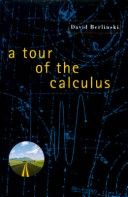
Nova: Exactly. And today, we're diving into two foundational texts that really bring this to life. First up, we'll explore 'A Tour of the Calculus' by David Berlinski, which isn't just a textbook, but a narrative about a revolutionary idea. Berlinski, a rather provocative and often controversial mathematician and philosopher, has a knack for making complex ideas sing with a certain literary flair. He's known for challenging conventional wisdom, and his writing often feels like a thrilling intellectual adventure rather than a dry academic exercise.
Atlas: Oh, I like that. A "provocative mathematician" sounds like someone who could definitely make calculus interesting. For those of us who might have, let's say, 'struggled' through high school math, that's a welcome approach. And then we have 'Chaos: Making a New Science' by James Gleick.
Nova: Gleick's book is a masterpiece of science communication. It introduced the groundbreaking field of chaos theory to a popular audience, winning numerous awards and becoming a bestseller. It's a fascinating look at how a small group of scientists, often working outside the mainstream, began to see patterns and predictability in systems previously thought to be random. It's widely acclaimed for its narrative quality and for making a truly complex subject accessible.
Atlas: So, we're essentially looking at how two different branches of mathematics help us decipher the universe's code. One gives us the tools to understand change, and the other shows us hidden order in what seems like randomness.
Nova: Precisely. We're going on an intellectual journey today, exploring how these mathematical foundations unveil order in apparent disorder, and what that means for anyone trying to make sense of a complex world.
Calculus as the Language of Change
SECTION
Nova: So let's start with Berlinski and 'A Tour of the Calculus.' Now, for many, calculus is just a series of intimidating formulas and rules. But Berlinski argues it’s so much more. It's a conceptual leap that fundamentally changed how we perceive motion, change, and the very fabric of the universe.
Atlas: I mean, when I think of calculus, I think of derivatives and integrals, and honestly, a lot of head-scratching. How did it revolutionize perception? What was the big 'before and after'?
Nova: That’s a great question, because it really gets to the heart of what Berlinski is saying. Before calculus, thinkers like Aristotle believed that motion was a series of tiny, discrete steps. You could describe where something was at one point, and then where it was at the next. But how did it get those points? How did its speed change? That was the philosophical and mathematical brick wall.
Atlas: So, they could describe the 'what' and the 'where,' but not the 'how' or the 'rate of change' in a continuous way. It’s like watching a flipbook versus a movie.
Nova: Exactly! Berlinski shows us that calculus provides the mathematical language to describe that 'movie' – the continuous, flowing nature of change. It gave us the tools to understand instantaneous velocity, acceleration, and the accumulated effect of tiny, continuous changes. Think about Newton watching an apple fall. Without calculus, he could describe the apple hitting the ground. With calculus, he could describe its exact speed at every millisecond of its descent, and predict its trajectory if it were launched into space.
Atlas: Wow. That's a profound shift. So, it wasn't just about solving equations; it was about a new way of seeing the world, as a place of constant, measurable flux. It’s like suddenly gaining the ability to zoom in infinitely on a moment of change.
Nova: Absolutely. And this wasn't just abstract. It had real-world implications, immediately. It allowed us to predict planetary orbits with unprecedented accuracy, design more efficient machines, and later, understand things like electrical currents or even population growth. Berlinski highlights how figures like Newton and Leibniz, working independently, essentially invented a language to talk to the universe about its dynamic processes.
Atlas: That makes me wonder, how did this 'new language' impact everyday understanding? I imagine it wasn't just brilliant scientists who felt the shift. Did it change how ordinary people thought about things like time or progress?
Nova: That's a subtle but important point. While ordinary people weren't solving differential equations at the dinner table, the of calculus permeated society. The industrial revolution, for instance, relied heavily on engineering principles that were underpinned by calculus. It fostered a belief in a knowable, predictable universe, governed by elegant mathematical laws. It shifted the philosophical landscape, moving from a static, fixed view of the cosmos to one that was dynamic and understandable through these powerful new tools. Berlinski emphasizes that it wasn't just a tool; it was a that permeated culture, even if indirectly.
Atlas: So, it's not just that calculus change, but it instills a confidence that change and even harnessed. It's empowering.
Nova: Precisely. And Berlinski, with his characteristic wit, doesn't just present the 'what' but the 'who' and the 'why.' He delves into the personalities, the rivalries, the intellectual struggles that led to this invention. It makes the story of calculus feel incredibly human, rather than just a dry historical account. He wants you to feel the thrill of the discovery, the sheer audacity of these minds.
Atlas: That’s a great way to put it. It sounds like he's inviting us to join the intellectual adventure, rather than just observe it. It also makes me think about how many complex systems we encounter daily, like traffic patterns or even our own thought processes, could be better understood if we applied this foundational understanding of continuous change.
Chaos Theory: Order in Apparent Disorder
SECTION
Nova: And that naturally leads us to a fascinating counterpoint, or perhaps a deeper layer of understanding, found in James Gleick's 'Chaos: Making a New Science.' While calculus gave us tools to predict and understand orderly change, chaos theory introduces us to systems that are deterministic—meaning they follow rules—yet are inherently unpredictable.
Atlas: Wait, so you're saying something can follow rules but still be unpredictable? That sounds like a contradiction. I always thought 'chaos' meant random, like dice rolls.
Nova: That's the common misconception, and Gleick brilliantly unpacks it. Chaos theory isn't about randomness; it's about. Think about the weather. It follows the laws of physics, right? It's not random. But try predicting it accurately three weeks out, and you'll quickly run into problems.
Atlas: You’re telling me! My weather app can barely get tomorrow right sometimes. So, what makes it deterministic but unpredictable?
Nova: The key concept is 'sensitive dependence on initial conditions,' often called the 'butterfly effect.' Gleick illustrates this with the story of Edward Lorenz, a meteorologist in the 1960s who was running early computer weather simulations. One day, he rounded off a number in his simulation, from 0.506127 to 0.506, expecting a negligible difference. But when he ran the simulation again, the weather pattern diverged wildly from the original.
Atlas: That's incredible. So, a tiny, almost imperceptible change in the starting conditions completely altered the outcome. It's like a butterfly flapping its wings in Brazil causing a tornado in Texas.
Nova: Exactly! And Gleick makes that very phrase famous. It's not that the system is random; it's that our ability to measure its initial conditions with infinite precision is impossible. Even the tiniest error or unknown factor gets magnified exponentially over time, leading to vastly different outcomes. And this applies to so many systems beyond weather: stock markets, fluid dynamics, even the dripping of a faucet.
Atlas: That gives me chills. It’s like we’re living in a world where everything is connected in ways we can barely comprehend. And it challenges that Newtonian, calculus-driven idea that if we just know all the inputs, we can predict all the outputs.
Nova: It absolutely does. Chaos theory doesn't invalidate calculus; it adds a layer of nuance and complexity. It shows us that even within deterministic systems, there are inherent limits to predictability. But here's the fascinating part: within this apparent chaos, there are often hidden patterns, or 'attractors.' These systems might never repeat the exact same state, but they tend to stay within a certain bounded region, tracing out beautiful, intricate, fractal-like patterns.
Atlas: So, it's not total anarchy. There's a kind of dance, an unpredictable but constrained movement. It's like a dancer improvising, never doing the same move twice, but always staying within the bounds of the stage.
Nova: That’s a perfect analogy. And Gleick’s genius is in making these abstract mathematical concepts tangible through vivid storytelling and profiles of the quirky, brilliant scientists who pioneered this field. He shows how they saw these patterns in everything from heart rhythms to dripping faucets, often using simple computer models long before supercomputers existed.
Atlas: It’s empowering to think that even in the face of such deep unpredictability, there's still a form of order to be uncovered. For someone like me, who is drawn to intricate systems, this perspective is incredibly valuable. It shifts our focus from trying to predict every single detail to understanding the underlying dynamic principles. And it also makes me think about the ethical implications of trying to control or intervene in such systems if we can't even predict the outcome of tiny changes.
Nova: Absolutely. It forces us to rethink our assumptions about control and perfect knowledge. Gleick essentially opens a door to a new way of understanding complexity, one that embraces the inherent limitations of our predictive power while still revealing deep, beautiful structures.
Synthesis & Takeaways
SECTION
Nova: So, bringing these two ideas together – Berlinski's elegant calculus and Gleick's chaotic beauty – what emerges is a much richer, more nuanced understanding of the universe. Calculus gives us the foundational language for change, allowing us to describe and predict many aspects of the physical world. Chaos theory then steps in to show us the limits of that predictability, revealing that even rule-bound systems can harbor profound unpredictability due to sensitive dependence.
Atlas: It’s like calculus provides the grammar and syntax for the universe’s language, and chaos theory reveals the surprising poetic license it often takes. It’s not just about what we can precisely calculate, but what we learn about the inherent nature of systems, even when we can’t calculate every last detail.
Nova: Exactly. These books push us to trust our innate curiosity when faced with complex systems. They invite us to look for the foundational principles, whether it's the continuous flow of change or the hidden attractors within chaotic behavior. It’s about grasping the essence, connecting those abstract ideas to the real world, and moving past surface phenomena to understand profound philosophical meanings.
Atlas: And it encourages us to connect abstract ideas to the real world, to see the math not just in textbooks, but in the weather, in traffic, even in our own thought patterns. It’s a quest for ultimate understanding, and recognizing that understanding isn't always about perfect prediction, but about appreciating the inherent elegance of the universe's mechanics, even when they're messy.
Nova: Ultimately, both Berlinski and Gleick, in their own ways, are showing us that mathematics isn't just a tool for engineers; it's a profound way of thinking about reality itself. It's the elegant language the universe speaks, whether it's describing the smooth arc of a planet or the unpredictable swirl of a storm. And by learning to listen, even a little, we gain a deeper appreciation for the intricate dance of everything around us.
Atlas: That’s actually really inspiring. It’s a reminder that even when things seem completely out of control, there might be a hidden order, a beautiful pattern waiting to be discovered. It makes you want to go out and look for those patterns everywhere.
Nova: Absolutely. And that's what makes these books so compelling. They don't just teach you math; they change how you see the world.
Atlas: This is Aibrary. Congratulations on your growth!