

The Hidden Power of Constraints: Unleashing Innovation Through Limits.
Golden Hook & Introduction
SECTION
Nova: Here’s a wild idea: What if boundless freedom, endless options, and zero limitations are actually the of creativity? What if the very things we crave, like infinite choices, are secretly sabotaging our ability to innovate?
Atlas: Whoa, Nova. That's a bold claim. Everything we're taught, everything we aspire to, is about breaking free, right? More choices, more possibilities, more ways to express ourselves. Are you really saying that's... wrong?
Nova: I am, Atlas. I’m saying it's not just wrong, it's often counterproductive. The conventional wisdom tells us that creativity thrives in an open field, but the truth is, it often wilts from the sheer overwhelming vastness of it all. It’s a paradox, and it's the hidden power we’re exploring today.
Atlas: Okay, you've piqued my interest. What brilliant mind or groundbreaking work is challenging this fundamental assumption?
Nova: We're diving into the profound insights of a concept I'm calling "The Hidden Power of Constraints: Unleashing Innovation Through Limits." It's a powerful framework that, in an age where we’re constantly bombarded with choices and the pressure to do, offers a refreshing and incredibly effective alternative. It's about how intentional boundaries don't stifle; they.
Atlas: So, it's not about having fewer ideas, but about making the ideas you have better, more focused? That feels incredibly relevant for anyone struggling with creative paralysis.
Nova: Precisely. It fundamentally challenges the notion that true originality needs total freedom. Instead, it argues that boundaries are powerful catalysts.
Deep Dive into Core Topic 1: The Counter-Intuitive Power of Constraints
SECTION
Nova: Think about it this way, Atlas. Imagine a chef with an unlimited pantry, every ingredient imaginable at their fingertips. Sounds like a dream, right? But the sheer number of combinations could be paralyzing. Now, imagine that same chef is told: "You can only use three ingredients, and one of them be a potato." Suddenly, the brain lights up. It's forced to connect disparate elements, to innovate within that tight box.
Atlas: That's a great analogy. So you're saying our brains are actually at problem-solving when the options are narrowed? But isn't the whole point of being creative to break free from the box, not build a smaller one?
Nova: It's less about building a smaller box and more about defining a playground. Our minds are incredible pattern-matching machines, but they need a frame of reference. Unlimited options can lead to decision fatigue, to a kind of creative blankness where every path seems equally viable, and thus, no path feels compelling. Constraints, on the other hand, provide structure. They force us to look deeper, to find ingenious connections we might otherwise overlook. They turn a vague problem into a specific challenge.
Atlas: Give me a concrete example. Where has a severe constraint visibly led to something undeniably better, something truly innovative, that might not have happened otherwise?
Nova: Oh, there are so many! Think about Dr. Seuss, the legendary children's author. His editor bet him he couldn't write a book using only 50 distinct words. Fifty words! Most picture books use hundreds. That was the constraint. The result? "Green Eggs and Ham." A masterpiece of simplicity and rhythm, one of the best-selling children's books of all time. Had he not been given that seemingly impossible limitation, would he have created something so incredibly focused and impactful? Probably not. It forced him to be incredibly inventive with language.
Atlas: Wow. "Green Eggs and Ham" is iconic. I never thought of it as a product of extreme constraint. That's actually pretty mind-blowing. So, it's not just about having a boundary, but about the mental gymnastics that boundary forces you into. It sounds like it shifts your perspective entirely.
Nova: Exactly. It's about a fundamental psychological shift. When you have unlimited resources or options, you tend to opt for the easiest, most obvious path. When you have a constraint, you're forced to dig deeper, to find non-obvious solutions, to combine existing elements in novel ways. It's not about working; it's about working and more inventively within a defined space. It applies to everything from writing a novel to designing a new app.
Atlas: So, it’s not just for grand, artistic projects. Even for someone trying to, say, overhaul their daily routine, a constraint could spark something? Like, "I only have 30 minutes to get ready in the morning?"
Nova: Absolutely! That’s a perfect everyday example. Instead of feeling rushed and chaotic, that 30-minute constraint forces you to optimize, to batch tasks, to find efficiencies you wouldn't bother with if you had an hour and a half. It makes you ingenious.
Deep Dive into Core Topic 2: Tactical Roadmaps for Embracing Limitations
SECTION
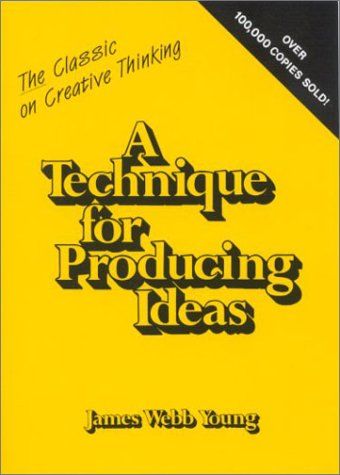
Nova: So once we accept that constraints are our friends, the next question is, how do we them? Luckily, brilliant minds have given us roadmaps. Let's look at James Webb Young, author of "A Technique for Producing Ideas." He outlines a five-step process for generating ideas. The core of it involves gathering raw material, then allowing your subconscious to combine and synthesize it. But here's the kicker: this process thrives when it's focused by.
Atlas: So you're saying it's not just about constraints, but about how you them? What does "gathering raw material" actually look like for someone trying to, say, write a blog post or design a new product, especially with a constraint?
Nova: Great question. Let’s imagine you're a designer tasked with creating a new logo for a sustainable coffee brand. The constraint: it has to be monochrome, use only geometric shapes, and appeal to both Gen Z and older millennials. That's a tight box! Young would say, first, gather the raw material related to coffee, sustainability, geometry, and those two demographics. Not just images, but words, feelings, cultural references, historical context. Then, step two, you digest it, you live with it. You let it swirl in your mind. The constraints act like a filter for this raw material, guiding what you pay attention to and what connections your subconscious starts making.
Atlas: So the constraints guide the for your subconscious, not just the output. That makes sense. It’s like giving your brain a very specific puzzle to solve, rather than just saying "be creative."
Nova: Exactly. The more specific the puzzle, the more directed and powerful the creative solutions. And then we have Seth Godin, from "The Practice." He champions a different kind of constraint: consistency. Godin argues that creativity isn't some ethereal talent that strikes like lightning; it's a practice, a muscle you develop. Imposing a regular schedule or specific project parameters—like writing 500 words every morning, or painting for an hour every day—is a powerful constraint that fosters consistent output.
Atlas: That sounds like discipline, not creativity. How does "showing up" when you don't feel like it actually make you creative? Isn't it just about grinding? I mean, for a lot of our listeners, they're probably thinking, "I barely have time to get my actual work done, let alone 'practice' creativity."
Nova: Well, many great artists and innovators swear by it. Take Stephen King, for example. He famously aims for 2,000 words a day, every day, even holidays. That's a self-imposed constraint. It’s not about waiting for inspiration; it’s about creating the conditions for inspiration to. When you commit to showing up, your brain knows it has to produce. It stops waiting for the perfect moment and starts actively seeking solutions within that regular, predictable time slot. It's the constraint of regularity that builds the creative muscle and makes breakthroughs more likely. It’s about building a habit around your ingenuity.
Atlas: So, it’s about making creativity a non-negotiable part of your day, rather than a luxury you indulge in when inspiration strikes. That’s a powerful shift. It turns creativity from a passive hope into an active commitment.
Nova: Which, in turn, makes you more consistently creative, and often, more innovative because you're constantly engaged with the material.
Synthesis & Takeaways
SECTION
Nova: So, what we've really been talking about today, Atlas, is a profound reframe: constraints aren't roadblocks; they are launchpads. They're the secret ingredient that forces focus, sparks ingenuity, and ultimately delivers more impactful, original work. It’s about choosing your cage, not just escaping one.
Atlas: That’s a fantastic way to put it: "choosing your cage." It moves from a negative connotation to an empowering one. So, what's one tiny step people can take to start playing with this idea today? For our listeners who are curious learners, always looking to apply new knowledge.
Nova: I love that. Here's a simple, tiny step: choose a current creative project—it could be anything from planning a dinner party to writing a report, or even pursuing a hobby. Now, intentionally introduce one new constraint. Maybe it’s a strict time limit, or you can only use materials you already have, or you narrow the theme to something incredibly specific. Then, just observe how that limitation influences your approach and the final outcome. You might be surprised at the ingenuity it unlocks.
Atlas: I'm curious to hear how our listeners grapple with this. What constraints have unexpectedly sparked your best work? I bet there are some incredible stories out there.
Nova: I have no doubt. It’s a liberating realization that less can truly be more when it comes to creativity. Embracing limits isn't about compromise; it's about unlocking a deeper, more focused form of innovation.
Nova: This is Aibrary. Congratulations on your growth!