

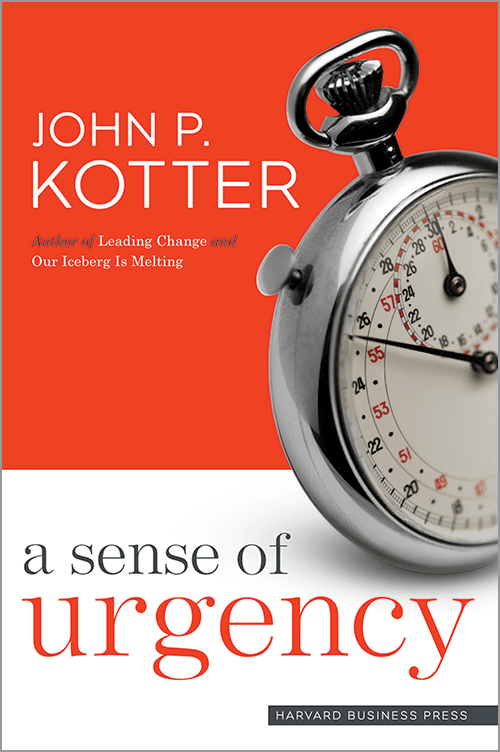
A sense of urgency
Introduction: The Silent Killer of Progress
Introduction: The Silent Killer of Progress
Nova: Welcome back to the show. Today, we are diving deep into a concept that sounds simple but is perhaps the most misunderstood and difficult element of organizational transformation: urgency. We're dissecting John P. Kotter's seminal work, "A Sense of Urgency."
Nova: : That's right, Nova. When you hear 'urgency,' you probably picture everyone running around frantically, emails piling up, maybe a little bit of panic in the air. But Kotter, the Harvard guru of change, argues that what most organizations experience isn't true urgency at all. It's often just noise.
Nova: Exactly. Kotter posits that complacency is the silent killer of progress. If people feel the status quo is 'fine,' or if they are too comfortable, no amount of vision casting will move them. Urgency, therefore, isn't just a nice-to-have; it's Step One in his famous Eight-Step Process for Leading Change. It's the ignition switch.
Nova: : It’s fascinating that he puts it first. Most people think you need the vision before you need the speed. But if you don't have that visceral, driving need to move, the vision just sits on a shelf gathering dust. What was the core finding that made him dedicate an entire book to this single step?
Nova: It boils down to perception. Kotter found that in most organizations facing massive change, only about 10 percent of employees feel a true sense of urgency. That means 90 percent are either complacent or actively resisting because they don't feel the heat. If you’re trying to shift an entire enterprise, 10 percent motivation is a recipe for failure.
Nova: : So, this book isn't just about setting deadlines; it's about fundamentally shifting the emotional and cognitive state of the workforce. It’s about making the for change feel immediate and personal to everyone, not just the executive suite.
Nova: Precisely. And the real meat of the discussion, which we'll get into, is how to separate the productive, focused drive from the destructive, anxiety-fueled chaos. Let's set the stage by exploring the enemy: complacency and its deceptive cousin, false urgency.
Why Status Quo is the Enemy
The Complacency Trap and the Need for Speed
Nova: Let's start with complacency. Kotter describes it as the feeling that the status quo is basically fine, or at least manageable enough not to warrant major disruption. Why is this so dangerous in today's environment?
Nova: : Because the environment fine, even if the quarterly numbers look okay. Kotter stresses that organizations are often internally focused. They look at their own processes, their own internal politics, and miss the massive shifts happening outside their walls—new competitors, disruptive technologies, changing customer expectations. They are looking in the rearview mirror while the road ahead is crumbling.
Nova: I remember reading that leaders often try to use data—the 'business case'—to shock people out of complacency. But Kotter suggests that often fails. Why does a spreadsheet full of declining margins not create enough heat?
Nova: : Because data is abstract. It doesn't trigger the emotional response needed for sustained behavioral change. People can look at a 5% decline and think, 'We've survived worse.' They need to the threat or the massive opportunity. Kotter emphasizes that urgency must be felt viscerally, not just understood intellectually.
Nova: It’s the difference between knowing you exercise and feeling the immediate shortness of breath on a steep hill. That physical, immediate feedback is what urgency provides.
Nova: : Absolutely. And this is where the concept of 'bringing the outside in' becomes critical. If you only talk about internal efficiency targets, you breed complacency. But if you bring in customer testimonials about how a competitor is solving their problem better, or if you show a video of a disruptive startup that’s eating your lunch, that external reality starts to penetrate the internal bubble.
Nova: So, the first step in building urgency is forcing the organization to look outward, to confront reality as it exists for the customer or the market, rather than how it exists in the boardroom minutes.
Nova: : Precisely. And this external focus must be constant. Kotter warns against the 'one-time presentation' approach. Urgency isn't a campaign you run for three months; it's a state of awareness you must maintain. If you don't keep showing them the external reality, people will revert to their natural state of comfort.
Nova: It sounds exhausting for the leaders, constantly having to be the bearer of slightly bad or challenging news.
Nova: : It is, but that's the price of leading change. If the leaders aren't visibly and consistently demonstrating that alertness, that focus, then the organization assumes everything is fine. The leader's daily behavior sets the tone. If the CEO is relaxed, the organization is relaxed. If the CEO is visibly engaged with external threats and opportunities, that energy trickles down, even if it’s just a small percentage initially.
Nova: So, before we even get to the grand vision, we need the organizational gut check. We need to make sure everyone agrees that the current path is unsustainable or suboptimal. It’s about creating that shared, uncomfortable awareness.
Activity is Not Progress
The Great Deception: True Urgency vs. False Urgency
Nova: This brings us to the most crucial distinction in the book, the one that separates successful transformation from organizational burnout: the difference between true urgency and false urgency.
Nova: : This is where so many companies go wrong. They mistake frantic activity for focused progress. Kotter defines false urgency as behavior driven by anxiety, fear, and often, anger. It’s characterized by endless meetings, last-minute scrambles, and a general atmosphere of panic.
Nova: Why is that panic so appealing to managers, though? It productive. If I’m working 70 hours a week and yelling at my team, surely we’re making progress, right?
Nova: : That's the deception. False urgency is often a symptom of poor planning or a lack of clear direction. People are busy fighting fires, but they aren't moving toward the strategic objective. They are expending massive amounts of energy, which burns people out, creates cynicism, and ultimately, they stop believing in the need for change because they’ve been through so many unproductive 'panics' before.
Nova: So, if false urgency is anxiety and chaos, what is true urgency? What is the feeling we are actually trying to cultivate?
Nova: : True urgency, according to Kotter, is a focused, determined, and persistent drive toward a clear, important objective. It’s not about being busy; it’s about being. It combines a sense of alertness with a deep resolve to win. It’s less about the frantic running around and more about the focused sprint toward the finish line.
Nova: That sounds like the difference between a disorganized mob running in different directions and a highly trained team executing a precise maneuver. The energy level might look similar on the surface, but the output is vastly different.
Nova: : Exactly. And a key indicator Kotter points to is how leaders handle skeptics. In a state of false urgency, leaders might ignore or punish the skeptics because they are seen as slowing down the panic. In true urgency, leaders actively engage the skeptics. They bring them in, show them the external data, and try to convert them, because they know that without buy-in, the effort is unsustainable.
Nova: So, if I walk into my office tomorrow and see everyone working late, but the conversation is dominated by blame, stress, and complaints about process, I should suspect false urgency.
Nova: : You should. True urgency is characterized by constructive dialogue about the and the, not just the of the situation. It’s about channeling that energy into productive pathways. If the activity level is high but the strategic movement is low, you have a false urgency problem that needs to be addressed before Step Two of the change model can even begin to work.
Nova: It’s a subtle but vital distinction. We need the engine running hot, but we need the steering wheel pointed in the right direction, not just spinning wildly.
Practical Tactics for Leaders
The Four Levers: How to Engineer True Urgency
Nova: Okay, we understand the goal: true, focused urgency. Now, let's get tactical. Kotter doesn't just diagnose the problem; he offers four specific levers leaders can pull to engineer this state organization-wide. What is the first one?
Nova: : The first lever is perhaps the most counterintuitive for internal-facing organizations: Bring the Outside In. As we touched on, most companies are navel-gazers. They need to actively seek out external stimuli that demonstrate the need for change.
Nova: This means more than just reading industry reports, right? It means direct exposure.
Nova: : Absolutely. It means having frontline staff regularly interact with unhappy customers, inviting key competitors to present their strategy to your leadership team, or even having employees spend a day shadowing a customer. The goal is to make the external reality undeniable and immediate.
Nova: That sounds like a powerful, albeit potentially uncomfortable, exercise. What's the second lever?
Nova: : Behave with Urgency Every Day. This is about leadership modeling. If leaders are constantly relaxed, taking long lunches, or treating strategic issues as optional side projects, the organization will mirror that. Urgency must be visible in the leader's schedule, their communication frequency, and their responsiveness.
Nova: : I’ve seen this in action. If a CEO responds to a critical market alert within an hour, even just to acknowledge receipt and set a follow-up time, that sends a massive signal. If they wait three days, the signal is, 'This isn't that important.'
Nova: It’s about setting the pace. If the leader is jogging, the organization is walking. If the leader is sprinting toward a goal, the organization has to pick up the pace just to keep up with the communication flow.
Nova: : Exactly. The third lever is Find Opportunity in Crises. This is brilliant because it reframes potential negative events. A crisis—a sudden market downturn, a major product failure—is a gift if you handle it right. It naturally breaks complacency.
Nova: So, instead of trying to a crisis, you leverage the one that naturally occurs to accelerate the change agenda.
Nova: : Yes. You use the crisis as the catalyst to push through changes that would otherwise be blocked by inertia. You say, 'This crisis proves we cannot afford to wait. We must implement the new system because of what just happened.' It provides the emotional justification for speed.
Nova: And finally, the fourth lever, which sounds like it deals with internal resistance: Deal with the 'NoNos.' What are the 'NoNos'?
Nova: : The 'NoNos' are the people who actively undermine the sense of urgency. They are the cynics, the obstructionists, the people who say, 'We tried this ten years ago, and it failed.' Kotter argues you cannot let these individuals poison the well. They must be managed, either by converting them through direct engagement or, if necessary, by removing them from positions where they can derail the effort.
Nova: : It’s tough medicine, but essential. If you allow the loudest naysayers to remain unchallenged, their skepticism becomes the default organizational posture, instantly killing any budding sense of urgency. It’s about protecting the fragile momentum you’ve built by exposing the outside world and modeling daily focus.
Sustaining Momentum Through the 8 Steps
Urgency in the Ecosystem: Beyond Step One
Nova: We’ve spent a lot of time on Step One, establishing urgency. But Kotter’s model is sequential. How does this initial urgency fuel the subsequent steps, like forming the guiding coalition or creating the vision?
Nova: : The urgency acts as the fuel and the filter. Without it, the guiding coalition you form in Step Two will be weak—it will be composed of people who are only moderately committed. True urgency attracts the right people; those who are already feeling the heat and are ready to act.
Nova: And when it comes to creating the vision in Step Three, urgency ensures that the vision isn't some abstract, five-year plan that nobody believes in. It forces the vision to be grounded in immediate, necessary action.
Nova: : Precisely. A vision created under true urgency is sharp, focused, and actionable. It’s not a laundry list of aspirations; it’s a clear path away from the current danger or toward the immediate, massive opportunity. Furthermore, urgency helps with Step Four: Communicating the Vision. If the organization the need for change, they are far more receptive to hearing the message.
Nova: It’s like trying to sell a raincoat during a sunny day versus selling it when the clouds are visibly darkening. The context changes the reception entirely.
Nova: : And think about Step Six: Creating Short-Term Wins. If you lack urgency, short-term wins are celebrated, and then everyone relaxes, thinking the hard part is over. But with true urgency maintained, those short-term wins are seen as proof points—evidence that the focused effort is working—which then fuels the set of actions.
Nova: So, in essence, the initial sense of urgency isn't just a starting gun; it’s the organizational metabolism that needs to be kept high throughout the entire transformation process, otherwise, the organization slips back into its comfortable, slow-moving state.
Nova: : That’s the key takeaway. Kotter’s research shows that organizations often fail in Step Seven, Consolidating Gains, because they declare victory too soon. They let the urgency dissipate after the first few wins. True urgency demands that you use those early successes to build momentum for the harder, deeper cultural changes required in Step Eight.
Nova: It’s a marathon that requires the pacing of a series of sprints, all fueled by that initial, well-engineered sense of necessity. It’s a constant balancing act between focused action and avoiding burnout.
Conclusion: Making Urgency Your Default Setting
Conclusion: Making Urgency Your Default Setting
Nova: We’ve covered a lot of ground today, moving from the danger of complacency to the four practical levers for engineering true urgency. If our listeners take away just one thing about Kotter's message, what should it be?
Nova: : It must be the distinction between activity and focus. Don't confuse stress with strategy. If your organization is busy but not moving toward a critical, externally validated goal, you are suffering from false urgency, and that is just as dangerous as total apathy.
Nova: True urgency requires leaders to be relentless in two areas: first, constantly exposing the organization to the external reality that necessitates change, and second, modeling the focused, determined behavior themselves. It’s about creating a culture where alertness is the norm.
Nova: : And remember those four tactics: Bring the Outside In, Behave with Urgency Daily, Find Opportunity in Crises, and Deal Decisively with the 'NoNos.' These are not abstract concepts; they are daily operational choices leaders must make.
Nova: It’s a powerful framework because it addresses the human element—the fear, the comfort, the cynicism—that so often derails brilliant strategic plans. Kotter gives us the emotional and behavioral tools to make the strategy stick.
Nova: : It forces us to ask ourselves, every single day: Are we running frantically because we’re scared, or are we running purposefully because we know exactly where we need to go and why we must get there now? That question is the essence of leading change effectively.
Nova: A fantastic deep dive into the engine room of transformation. Thank you for breaking down the critical first step of Kotter’s model with such clarity.
Nova: : My pleasure, Nova. Always great to explore the mechanics of real-world success.
Nova: That’s all the time we have for this episode. We hope this discussion has given you a renewed sense of focus for the changes ahead. This is Aibrary. Congratulations on your growth!