

Precision and Persuasion: Honing Your Argumentation Skills
Golden Hook & Introduction
SECTION
Nova: Atlas, I want you to imagine a scenario. You're trying to convince someone, perhaps a team member, a client, or even your significant other, of something you deeply believe in. You have all the facts, all the data, your logic is airtight. But... they just aren't getting it. They nod, they smile, but you can feel the disconnect. What's going on there?
Atlas: Oh man, Nova, that's practically my Tuesday morning. It's that moment where you feel like you're speaking a different language, even though you're using the same words. It's incredibly frustrating, like trying to push a rope. You know you're right, but you can't seem to make it.
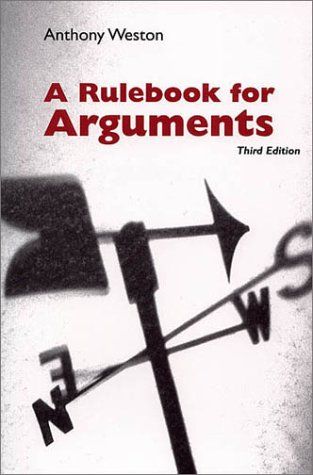
Nova: Exactly! And that common, frustrating experience is precisely what we're dissecting today, through the lens of two incredibly insightful books. First, we have 'A Rulebook for Arguments' by Anthony Weston, a concise guide that's practically a logical compass. And then, we pivot to the more artful side with 'Thank You for Arguing' by Jay Heinrichs, which dives into the timeless techniques of rhetoric.
Atlas: Oh, I like that pairing. So it's not just about being, but about being and? Because I think a lot of us, especially those of us who value accuracy and strategy, tend to lean heavily on the 'right' part and forget the 'heard' part.
Nova: Absolutely. Weston, for instance, isn't just some dry academic. He's a philosopher who has spent his career making complex ethical and logical reasoning accessible. His 'Rulebook' is so widely praised precisely because it strips away the jargon and gives you a practical toolkit for thinking more clearly and presenting your ideas with logical rigor. It's been a staple in universities for decades, not because it's flashy, but because it's profoundly practical.
Atlas: That makes perfect sense. Because if your foundation isn't solid, it doesn't matter how pretty your house is, right? It's going to crumble.
The Logic of Unassailable Arguments
SECTION
Nova: Precisely. Let's dive into that foundation. Weston’s core message is that mastering argumentation isn't about being confrontational; it's about presenting your ideas with such clarity and logical force that they become inherently persuasive. Think of it less as a debate, and more as an architect designing a structure that stand.
Atlas: Okay, so, what are some of the blueprints Weston gives us for this kind of logical construction? Because I imagine a lot of us make arguments daily without really knowing the 'rules.'
Nova: That's the beauty of it. He breaks down common fallacies – those sneaky errors in reasoning that undermine even the best intentions. Things like 'ad hominem' attacks, where you attack the person instead of the argument, or 'straw man' arguments, where you misrepresent someone's position to make it easier to attack.
Atlas: Oh, I know those! I've seen those in, well, let's just say, a lot of online discussions. And maybe, if I'm honest, I've accidentally used them myself when I'm feeling defensive.
Nova: We all have! But Weston teaches us to spot them, both in others' arguments and, crucially, in our own. He emphasizes that a strong argument isn't just about stating your point, but backing it up with reliable, relevant evidence. He's very clear: evidence isn't just 'stuff you found that supports you.' It needs to be sourced, credible, and directly applicable.
Atlas: So, it's about intellectual integrity. Not just you say, but you arrive at it and you use to support it. That sounds like it would cut through a lot of the noise we encounter everyday.
Nova: It absolutely does. Let me give you a quick example. Imagine a leader trying to roll out a new, somewhat unpopular company policy. They stand up and say, "We're implementing this new work-from-home policy because it's the right thing to do, and everyone else is doing it."
Atlas: Oh, I can feel the eye-rolls from here. "Everyone else is doing it" is not a compelling argument for a strategic shift.
Nova: Exactly. That's an appeal to popularity, a logical fallacy. It offers no why it's right for company, employees. Now, imagine the same leader, after having read Weston, says instead: "We're implementing this new work-from-home policy because internal data shows a 15% increase in productivity among those who piloted a hybrid model last quarter. Furthermore, a recent study from indicates that companies with flexible work arrangements report 20% higher employee retention, which directly addresses our current challenge with turnover."
Atlas: Wow. That's a night and day difference. The second leader isn't just stating a policy; they're building a case. They're connecting it to tangible benefits and addressing potential pain points like turnover. It feels less like an order and more like a well-reasoned proposal.
Nova: It moves from assertion to argument. And that's the power of Weston's 'Rulebook.' It's not about being clever; it's about being clear, logical, and rigorous. It forces you to think through your premises, the links between them, and the conclusions you draw. It’s about ensuring your argument is robust enough to withstand scrutiny, not just from others, but from yourself.
Atlas: I can see how that would lead to better decision-making, not just better communication. If you're forced to outline your core argument and identify three pieces of evidence, it makes you really scrutinize your own position before you even open your mouth. It's like a pre-flight check for your ideas.
Nova: A perfect analogy, Atlas. And once you've done that pre-flight check, once your logical aircraft is sound, then you're ready to learn how to fly it with flair and precision. Which brings us to the art of persuasion.
The Art of Persuasion and Rhetoric
SECTION
Nova: So, if Weston gives us the logical scaffolding, Heinrichs, with 'Thank You for Arguing,' shows us how to dress it up, how to make it compelling, and crucially, how to make people to listen and agree. He explores rhetoric, which isn't about manipulation, but about understanding human nature to influence and win arguments.
Atlas: Hold on, Nova. When I hear 'rhetoric,' sometimes I think of politicians, or used car salesmen. It can feel... a little manipulative, a little less about truth and more about winning at all costs. How does Heinrichs distinguish his approach?
Nova: That’s a fantastic distinction, and it's precisely what Heinrichs addresses. He argues that rhetoric, in its classical sense, is the art of influence, not deceit. It's about finding the appropriate means of persuasion in any given situation. He points out that we use rhetoric every day, whether we realize it or not – when we try to convince a friend where to go for dinner, or a child to eat their vegetables. He's reclaiming rhetoric from its negative connotations.
Atlas: So, it's about being effective, not just being right. And understanding the audience.
Nova: Exactly. Heinrichs dives into the three classic appeals: Logos, Pathos, and Ethos. Logos is logic, what we just talked about with Weston. Pathos is emotion, understanding and appealing to your audience's feelings. And Ethos is character, establishing your credibility and trustworthiness.
Atlas: That's interesting. So, even if my argument is logically perfect, if I don't establish my Ethos, or if I ignore the Pathos, it might still fall flat.
Nova: Precisely. Think of our earlier example of the leader with the new work-from-home policy. The second leader used Logos effectively with data. But what if the team is genuinely burned out and feeling unheard? Just data might not be enough. Heinrichs would suggest that leader also needs to address the Pathos – perhaps acknowledge the stress, express empathy, and frame the policy not just as a productivity booster, but as a commitment to employee well-being.
Atlas: So, something like: "We understand that recent months have been incredibly demanding, and we recognize the need for greater flexibility to support your well-being. This new policy is not just about efficiency; it's about creating a sustainable, supportive environment for all of us."
Nova: Boom! You just wove in Pathos. You connected with their emotional reality. And if that leader has a track record of listening and caring for their employees, that’s their Ethos at play, reinforcing that their words are sincere. Heinrichs' book is full of timeless techniques, many derived from ancient Greek orators, that teach us how to choose the right language, the right timing, and the right appeal for the situation. He makes a compelling case that precise and impactful language is not just about choosing the right words, but often about choosing words that resonate on a deeper, human level.
Atlas: That’s powerful. It’s like, you can have the most technically perfect blueprint, but if you don't know how to speak to the builders, or inspire them, it's just a piece of paper. It won't become a building.
Nova: A perfect analogy. It’s about moving from understanding to action. Weston gives you the tools to build an unassailable argument. Heinrichs gives you the tools to deliver that argument in a way that makes people want to embrace it.
Atlas: I can see how these two books complement each other so well. One builds the inner strength of your argument, the other sharpens its outer impact. It's about being both intellectually rigorous and emotionally intelligent in your communication.
Synthesis & Takeaways
SECTION
Nova: And that's where the magic happens. When you combine the precision and logical rigor of Weston with the persuasive art of Heinrichs, you stop just talking people and start truly connecting them. It moves beyond just stating facts; it's about fostering understanding and driving progress.
Atlas: That's a huge takeaway for anyone who needs to lead a team, influence a decision, or even just navigate complex conversations in their personal life. It's not about confrontation; it's about clarity and connection.
Nova: Exactly. It's about recognizing that every communication is an opportunity to build bridges, not walls. It's about respecting your audience enough to present your ideas with both logical integrity and empathetic understanding.
Atlas: So, for our listeners who are constantly articulating ideas, strategizing, and trying to unify their teams, what’s one tiny step they can take from this?
Nova: Before your next critical communication, take a moment. Outline your core argument, identify three pieces of evidence that support it, and then, here's the Heinrichs twist: consider a potential counter-argument or emotional resistance, and how you would address it with both logic and empathy.
Atlas: That's brilliant. It forces you to anticipate, not just react. It’s a proactive step towards more impactful communication.
Nova: Indeed. Because ultimately, mastering the art of argumentation and persuasion isn't just about winning. It's about fostering understanding, building consensus, and making your ideas not just heard, but truly embraced.
Atlas: That’s actually really inspiring. It frames communication not as a battle, but as an act of thoughtful leadership.
Nova: This is Aibrary. Congratulations on your growth!