

Igniting Your Entrepreneurial Spirit as a Mom
Golden Hook & Introduction
SECTION
Nova: What if the very things society tells you are distractions from your career are actually your biggest competitive advantage in business?
Atlas: Whoa. Hold on. Are we talking about... my endless to-do list? The constant context switching? The fact that I can seemingly conjure a healthy snack out of thin air while simultaneously answering an email and mediating a sibling squabble? Because if those are superpowers, I’m ready for my cape.
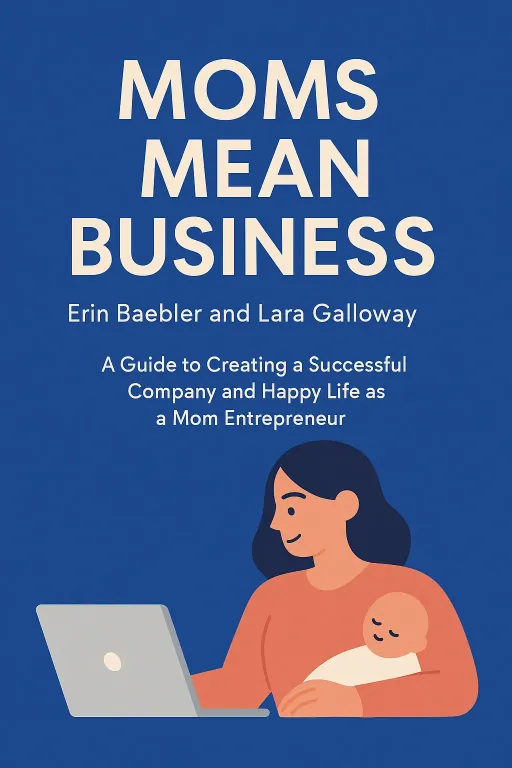
Nova: Absolutely, Atlas! Today, we're diving into precisely that. We're challenging the conventional narrative around motherhood and ambition, drawing powerful insights from two incredible books. First up, we have by the dynamic duo, Erin Baebler and Lara Galloway. These two aren't just authors; they’re real-world mompreneurs who built their businesses from the ground up, proving their strategies are road-tested and incredibly effective.
Atlas: And then we're also looking at by Louise Webster, which really takes that more holistic, personal development approach, focusing on helping mothers reconnect with their skills and ambitions. Webster, a renowned coach, offers a transformative guide for finding that inner spark again. It’s not just about business; it’s about rediscovering.
Nova: Exactly. Both books are wildly acclaimed for their fresh perspective, though some readers have found them polarizing – either deeply empowering or perhaps a little too demanding. But what they both unequivocally assert is that the unique skill set mothers cultivate daily isn't a hindrance to professional success; it's the hidden arsenal.
Atlas: So, we're not just talking about "balancing" work and family, are we? We're talking about actively the family part the work part. That’s a fundamentally different way of looking at it.
Reframing 'Mom Skills' as Entrepreneurial Superpowers
SECTION
Nova: Precisely. Let’s start there. For years, the narrative has been that motherhood pulls you away from your professional peak. You lose time, you lose focus, you lose your edge. But Baebler and Galloway, and Webster, flip that script entirely. They argue that skills like multitasking, problem-solving, emotional intelligence, and even negotiation, which you hone daily as a mother, are not just transferable; they are entrepreneurial superpowers.
Atlas: I mean, I can see multitasking. My brain feels like it has eight tabs open at all times. But how does that translate into a in a boardroom or building a new product? Isn’t everyone in business already good at multitasking?
Nova: That’s a great question, and it gets to the core of what makes mom skills unique. It's not just multitasking. It's high-stakes, emotionally charged, unpredictable multitasking. Think about Sarah, for example. She was a dedicated elementary school teacher for years before having her two children. When she decided to launch an online educational platform, she initially felt overwhelmed, like she was starting from scratch.
Atlas: I imagine a lot of our listeners who are considering a career shift or starting something new feel exactly that way. That sense of, "Do I even remember how to do this?"
Nova: Exactly! But what Sarah quickly realized, inspired by these books, was that her 'mom skills' were her secret weapon. When her platform launched, she had to juggle client inquiries, manage content creation, troubleshoot tech issues, handle marketing – often while a child was asking for a snack or needing help with homework. Her ability to seamlessly switch contexts, prioritize urgent needs, and maintain a calm demeanor under pressure wasn't something she learned in business school; it was forged in the fires of parenthood.
Atlas: So, it's not just doing multiple things, it's doing multiple things, often with emotional demands attached, and without a clear roadmap. That’s a very different kind of multitasking than, say, switching between spreadsheets.
Nova: Absolutely. And then there's problem-solving. As a parent, you're constantly innovating on the fly. A toy breaks, dinner plans fall through, a child has an unexpected meltdown – you don't have the luxury of a week-long committee meeting to find a solution. You adapt, you improvise, you find a creative workaround. This translates directly into agile business thinking, resourcefulness, and the ability to pivot quickly when a market trend shifts or a project hits a snag.
Atlas: That’s actually really inspiring. It frames the everyday chaos as a kind of high-level training. So, my ability to fix a broken toy with a paperclip and a prayer is actually me developing my entrepreneurial ingenuity? I like that.
Nova: Precisely! And let’s not forget empathy. Mothers are often finely tuned to the emotional needs of others. In business, this translates into a profound understanding of your customer’s pain points, the ability to build strong team relationships, and effective, compassionate leadership. Louise Webster really emphasizes this in, highlighting how nurturing qualities can be powerful tools for connection and influence, not just within the family but in any professional sphere.
Atlas: So, my ability to know exactly why my kid is having a tantrum, even when they can’t articulate it, could make me a better product developer or a more insightful market researcher. That’s a fascinating reframing. It almost feels like we've been underestimating ourselves all along.
Actionable Strategies for Overcoming Hurdles: Time, Doubt, and the 'Tiny Step'
SECTION
Nova: We absolutely have been. And that naturally leads us to the second key idea: if we have these superpowers, why do so many mothers still struggle to launch or grow their businesses? The answer often lies in two formidable hurdles: time management and self-doubt.
Atlas: Oh, the kryptonite! That’s going to resonate with anyone who struggles with feeling overwhelmed by choices or the sheer impossibility of carving out time for their own ambitions. It's one thing to say 'mom skills are superpowers,' but it's another to actually find the time to use them creatively when you're already stretched thin.
Nova: That's where the actionable strategies come in, and both books provide incredible guidance. offers very practical frameworks. For time management, it’s not about finding more hours in the day, but about radically rethinking how you use the hours you have. They champion strategies like 'time blocking' – dedicating specific, uninterrupted blocks of time to business tasks, even if it's just 60 minutes.
Atlas: Okay, but how do you protect that 60 minutes? Because I'm picturing that 60 minutes getting swallowed by a school pickup, an unexpected doctor’s appointment, or just the general demands of running a household.
Nova: That’s where the 'mom skills' come back in! It requires the problem-solving and negotiation skills you already possess. It might mean strategically outsourcing small tasks, like grocery delivery, or negotiating with your partner for dedicated 'focus time.' It’s about being as intentional about your business time as you are about your family's schedule. And Louise Webster adds another layer here: reconnecting with your ambition. She guides mothers to re-evaluate their 'why,' which fuels the discipline needed to protect those time blocks.
Atlas: That makes sense. If you’re deeply connected to your purpose, you’re more likely to fight for that time. But what about the self-doubt? That voice that says, "Who am I to do this? I've been out of the game too long. I'm just a mom." That can be more paralyzing than any scheduling conflict.
Nova: That self-doubt is a huge hurdle, Atlas, and it's something both books tackle head-on. Webster, in particular, focuses on the internal work needed to overcome this. She encourages mothers to acknowledge their past achievements, both professional and personal, and see them as a continuous growth trajectory, not separate chapters. It’s about recognizing that the resilience and resourcefulness you show daily as a mother are precisely the traits needed for entrepreneurial success.
Atlas: So, it's not about ignoring the doubt, but reframing it. Seeing those past experiences, even the 'mom' experiences, as building blocks for this new chapter.
Nova: Exactly. And this leads us to the most powerful, yet often overlooked, strategy: the 'tiny step.' Many aspiring mompreneurs get stuck because the mountain of starting a business feels too high. They envision the entire journey, get overwhelmed, and never take the first step.
Atlas: I totally know that feeling. You think about all the things you be doing, and then you do nothing because it feels too big. So, it's not about finding an extra eight hours a day, but about those small, consistent actions? Like, what's a tiny step for someone dreaming of, say, a freelance writing career?
Nova: A real tiny step could be spending 20 minutes researching one client niche they'd like to target. Or outlining three blog post ideas. Or simply creating a dedicated email address for their new venture. It’s not about writing a business plan or building a website initially. It’s about taking that moves you forward, no matter how small. Baebler and Galloway emphasize that momentum is built through these consistent, tiny actions. This aligns perfectly with the idea that 20 minutes daily, focused on a specific goal, can build incredible momentum over time.
Atlas: That’s brilliant. It feels less like climbing Everest and more like putting on your hiking boots. That’s something I can definitely get behind. It makes the overwhelming manageable.
Synthesis & Takeaways
SECTION
Nova: So, to bring it all together, what these insightful books reveal is a powerful truth: being a mother doesn't diminish your entrepreneurial potential; it enhances it. Your unique blend of multitasking, problem-solving, empathy, and resilience is a formidable asset in the business world.
Atlas: And the path to igniting that entrepreneurial spirit isn't about some grand, impossible leap. It’s about recognizing your inherent strengths, tackling those internal and external hurdles with smart, intentional strategies, and most importantly, embracing the power of the 'tiny step.' It's about aligning those daily actions with a deeper purpose, transforming overwhelm into purposeful productivity.
Nova: Absolutely. So, for our listeners, we want to offer a challenge inspired by these authors: Identify one small business idea or personal project you’ve always dreamed of. Just one. And then, for the next 20 minutes, brainstorm its. Not the whole journey, just that very first, manageable action. What’s something you can do today, right now, that moves you just a little bit closer?
Atlas: That’s a fantastic challenge. Because that small step isn't just about the task itself; it's about shifting your mindset. It’s about proving to yourself that you take action, that you have the time, and that your ambition is valid. It's the spark that ignites the fire.
Nova: It’s about building a new way, one tiny, powerful step at a time.
Atlas: This is Aibrary. Congratulations on your growth!









