

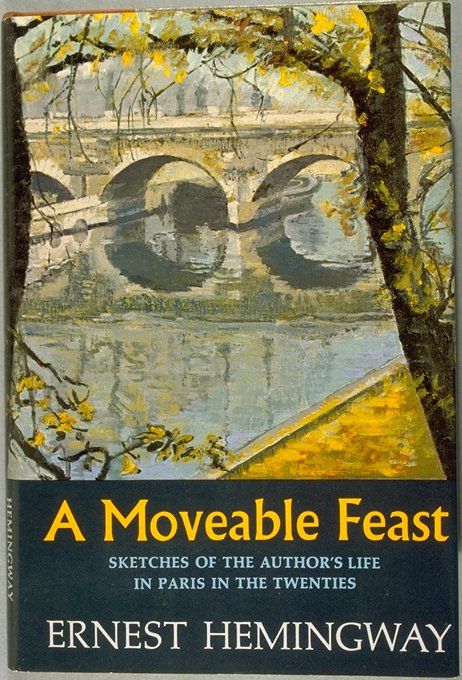
A Moveable Feast
Introduction
The City That Stays With You: Introducing 'A Moveable Feast'
Nova: Welcome to the show. Today, we are diving into a book that is less a memoir and more a shimmering, slightly bitter love letter to a time and place that never truly existed except in the amber of memory: Ernest Hemingway’s "A Moveable Feast."
Nova: That’s the hook! The title itself is the key. When Hemingway said, 'Paris is a moveable feast,' he meant that the experiences, the lessons, the hunger, and the joy of those early 1920s years in Paris would always be with him, no matter where he went later in life. It’s a portable feast of memory.
Nova: Often, it was scraps, Alex. Research shows that Hemingway and his first wife, Hadley, were notoriously poor. They lived on meager allowances, often going hungry. But that hunger, that constant, gnawing need, is presented as the crucible that forged his famous style. He writes about being hungry near cafes filled with the smell of delicious food, and how that very deprivation sharpened his focus on the craft.
Nova: Because, Alex, this book is a masterclass in discipline disguised as nostalgia. It’s about the sheer, daily labor of writing when no one cares if you succeed. It’s the story of how a legend was built, one perfectly constructed sentence at a time, fueled by cheap wine and the desire to write truly. We’re going to explore the magic, the meanness, and the mystery of this posthumous masterpiece.
Key Insight 1: The Writer's Routine
The Crucible of Craft: Hunger, Discipline, and Deceptive Simplicity
Nova: Let’s talk about the writing routine. Hemingway details his days meticulously. He’d write in the mornings, often at a café or in his cold apartment, stopping when he knew exactly what would happen next. This wasn't just a habit; it was a survival mechanism.
Nova: Absolutely. His style here is the distilled essence of what became known as the Iceberg Theory. The prose is direct, deceptively simple, almost journalistic, but underneath, there’s this massive weight of unstated emotion and context. He uses French words naturally, weaving them into the English, which gives the text an authentic, immediate texture, like you’re overhearing a conversation in a specific Parisian bar.
Nova: Exactly. And the research confirms this focus on fundamentals. He was obsessed with clarity. He saw writing as architecture. One source noted that he used metaphor and foreshadowing as powerful narrative strategies, but they were always hidden beneath that clean surface. It’s the difference between a beautifully carved wooden chair and a pile of lumber—the lumber is the raw material, but the chair is the finished, functional art.
Nova: It was the engine. The book is riddled with moments of self-doubt, which is shocking given his later fame. He worried constantly about whether he was good enough, whether he was wasting his time, whether he was truly a writer or just a journalist playing dress-up. He mentions the constant temptation to quit and just take an easy job.
Nova: That’s where the controversy starts to creep in, even in the early chapters. While he romanticizes the of the hunger—the sharp writing—he also details the physical misery. He talks about the cold in the apartment, the difficulty of getting warm, and the sheer, constant preoccupation with finding enough money for the next meal or the next drink. He was living on the edge, and that edge is what gave the writing its tension. It wasn't just an aesthetic choice; it was a necessity for survival in that environment.
Nova: Juicy is the perfect word. Get ready for the gossip, because the people he immortalized are often portrayed in a very specific, and sometimes cruel, light. We’re moving from the discipline of the self to the difficulty of friendship.
Key Insight 2: Portraying Contemporaries
The Unreliable Portraitist: Fitzgerald, Stein, and the Price of Memory
Nova: Notorious is right. Take F. Scott Fitzgerald. Hemingway portrays him as brilliant but deeply flawed, often drunk, paranoid, and utterly dependent on Zelda. There’s the famous scene where Fitzgerald is worried about his masculinity, and Hemingway, the rugged hero, has to reassure him. It’s a power dynamic laid bare.
Nova: That’s the core debate surrounding the book’s reliability. Many critics argue that Hemingway uses the memoir to settle old scores or to elevate his own status by diminishing others. Gertrude Stein, for instance, is depicted as someone who offered patronizing advice, and he certainly doesn't paint her as the generous mentor she often was to many expatriates.
Nova: That’s the fascinating tension. Hemingway himself was fascinated by the line between fact and fiction. He’s an unreliable narrator by design. He admits to manipulating details to serve the narrative truth he wants to convey. The emotional truth—the feeling of being young, ambitious, and broke in Paris—feels incredibly real, even if the specific dialogue or the timing of an event is skewed. It’s a subjective reality.
Nova: Precisely. And the book’s structure supports this. It’s not chronological; it’s a collection of moments, fragments held together by memory, as one analysis put it. He chooses the moments that best illustrate his development as a writer, often at the expense of historical accuracy or fairness to his subjects.
Nova: Indeed. But let’s not forget the other side of the coin. Hemingway also recounts moments of genuine camaraderie and mentorship. He talks about learning from Ezra Pound, and the sheer joy of discovering good, cheap wine. It’s a dual narrative: the harsh critic and the grateful student. It’s this complexity that keeps readers engaged, even when they’re shaking their heads at his ego.
Nova: It adds the final, crucial layer of mystery. We need to talk about the ghost editors—the people who shaped this feast long after Hemingway was gone. That’s where the debate over authenticity really heats up.
Key Insight 3: Editorial Interference
The Ghost Editors: Posthumous Publication and the Restored Edition
Nova: Hemingway died in 1961, but 'A Moveable Feast' didn't appear until 1964, curated by his fourth wife, Mary Welsh. This is crucial because Mary had her own relationship with Hemingway, and likely, her own narrative she wanted to preserve.
Nova: The consensus among scholars is that Mary heavily edited the manuscript. She reportedly cut sections she felt were too harsh on certain figures, or perhaps too revealing about Hemingway’s own struggles or his feelings about his first wife, Hadley. She was protecting his legacy, or perhaps, protecting herself from the fallout of his unvarnished recollections.
Nova: The goal was to get closer to the author’s final intent, using papers released later. Seán Hemingway aimed to put back the material Mary had cut, restoring chapters and passages that gave a different balance to the narrative. For example, the restored version often gives more weight to his time with Hadley, which Mary might have downplayed.
Nova: It’s a wicked literary problem, as one commentator put it. The 1964 edition is the classic, the one that defined Hemingway’s late-career image. But the 2009 Restored Edition offers a different flavor—perhaps rawer, perhaps more focused on the early poverty and the relationship with Hadley, which was arguably the happiest time for him creatively.
Nova: Exactly. And this editorial history mirrors the book’s own theme of memory being subjective. Hemingway himself was curating his past, and then his family curated his curation. It’s memory layered upon memory, with each layer adding or subtracting detail. It’s a testament to how much we care about the narrative of a literary giant.
Key Insight 4: Paris as the Protagonist
Rue Mouffetard and the Immortal Cityscape
Nova: While the people and the text are debatable, the city itself remains the constant. Hemingway’s Paris in the early 1920s—the Latin Quarter, the streets around Rue Mouffetard—is almost a character unto itself. It’s the backdrop against which all the hunger and ambition plays out.
Nova: He doesn't just name them; he imbues them with feeling. The Luxembourg Gardens, for example, isn't just a park; it’s where he goes to read and write, a place of quiet contemplation amidst the chaos of his life. The research highlights that he often describes the weather or the light in these specific locations with the same precision he uses for character dialogue.
Nova: He does. And the irony is that by writing about his poverty there, he made those cheap cafés and cold rooms legendary. Places like Shakespeare and Company, Sylvia Beach’s bookstore, become shrines because Hemingway sat inside them, struggling to write reviews or just trying to get a cup of coffee.
Nova: That’s a poignant question. Many of the specific haunts are gone, or they’ve been so modernized they’ve lost their soul. But the he captured—the feeling of being a young artist in a city that doesn't care about your past but is intensely interested in your future—that spirit is what endures. The book acts as a time capsule, preserving the atmosphere even if the physical structures change.
Nova: And that’s the ultimate takeaway from the context. Paris wasn't just a setting; it was the necessary catalyst. He needed that specific blend of cultural richness and personal hardship to produce the work that defined him. Without the hunger, there might not have been the feast of words that followed.
Conclusion
The Legacy of the Feast: Takeaways and Reflection
Nova: So, Alex, we’ve journeyed through the hunger, the harsh portraits, the editorial battles, and the immortal streets of Paris. What is the single most important thing a modern reader should take away from 'A Moveable Feast'?
Nova: I agree completely. And I’d add the lesson in perspective. He looks back on his poverty with a strange mix of pain and gratitude. He understood that the hardest times were the most formative. It’s a reminder that our current struggles are often the material for our future triumphs, provided we pay attention and record them honestly—or at least, honestly enough for the story to work.
Nova: A perfect synthesis. 'A Moveable Feast' is not just about Hemingway’s Paris; it’s about the universal, often painful, process of becoming an artist. It’s about finding beauty and sustenance in the struggle, and knowing that the best parts of that struggle will always be portable.
Nova: A wise choice. For all its glamour, the core of that book is about the work, not the party. Thank you for exploring this complex, beautiful, and sometimes mean-spirited memoir with me today.
Nova: This is Aibrary. Congratulations on your growth!