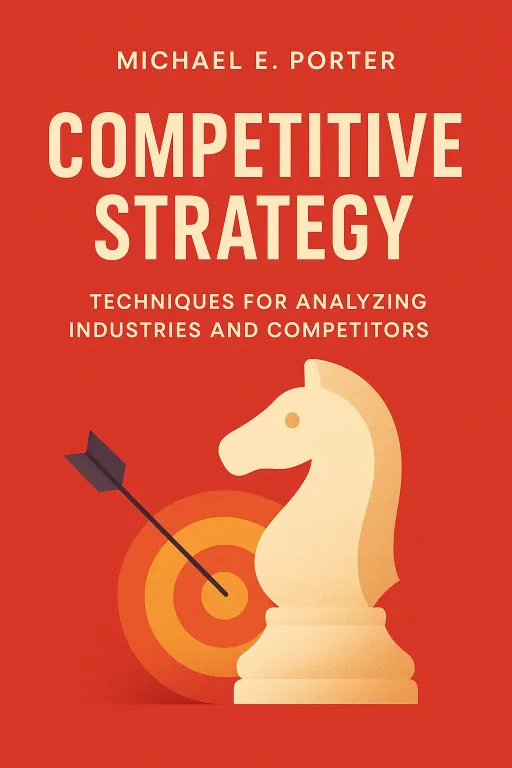
The 'Anxious Innovator's' Paradox: How Constraints Fuel Creativity.
Golden Hook & Introduction
SECTION
Nova: Alright, Atlas, five words. Give me your five-word review of today's paradox.
Atlas: Too many choices, brain just quits.
Nova: Ooh, sharp! Mine would be: Limits spark limitless breakthroughs, truly.
Atlas: That’s intriguing. So we’re really digging into 'The Anxious Innovator's Paradox' today, aren’t we? This idea that constraints can actually fuel creativity.
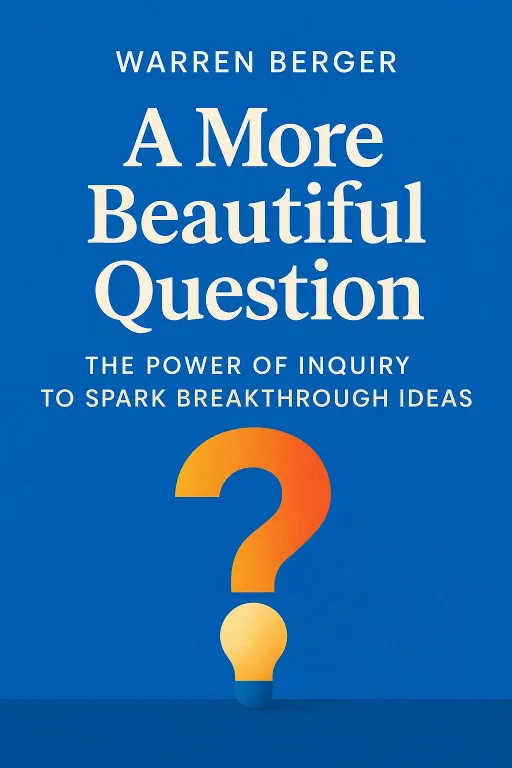
Nova: Exactly. And we're drawing heavily from insights by brilliant minds like Warren Berger, who wrote 'A More Beautiful Question,' and of course, Tom and David Kelley, authors of 'Creative Confidence.' Tom Kelley, for those who might not know, is a partner at the legendary design firm IDEO, which essentially pioneered design thinking. So these aren't just theories; they're battle-tested principles from the frontline of innovation.
Atlas: That’s a strong start. But Nova, for our listeners who are constantly pushing boundaries, who feel like their whole job is to limits for their teams, where does this 'paradox' even begin?
Nova: It starts with what we call 'The Blind Spot.'
The Blind Spot – Why Limitless Innovation Fails Us
SECTION
Nova: The blind spot is this deeply ingrained belief that innovation needs boundless freedom. We think, "If I just had more time, more budget, more people, I could be truly innovative." But often, the exact opposite happens. Imagine a painter given an infinite canvas, an unlimited palette, and no deadline. What do they paint? Often, nothing at all. Or a chaotic mess. The sheer vastness of possibility can be paralyzing.
Atlas: Wait, are you saying that giving a team freedom, budget, time... is actually for innovation? That goes against everything we're taught about empowerment and fostering a creative environment.
Nova: It sounds counterintuitive, I know! But it's about the of that freedom. When you have too many options, your brain gets overwhelmed. It's called the paradox of choice. Instead of inspiring creativity, it can lead to decision fatigue, second-guessing, and ultimately, inaction or diluted efforts. Think of a startup with unlimited venture capital versus one bootstrapping with a shoestring budget. The bootstrapped team often finds incredibly clever, innovative solutions because they to. They're forced to focus their energy.
Atlas: So it's like decision fatigue, but for creativity? For leaders trying to foster mindful innovation and prevent burnout from chasing every shiny idea, this is huge. How do you even begin to identify the kind of constraint versus just being just plain restrictive? Because there’s a big difference, right?
Nova: Absolutely. It’s not about arbitrary restriction; it’s about strategic boundaries. It's like a river. A river without banks is just a swamp. It needs those banks to give it direction, to give it power, to make it flow. And that's where 'The Shift' comes in, especially with 'beautiful questions.'
The Shift – Harnessing Constraints and Beautiful Questions
SECTION
Nova: Warren Berger, in 'A More Beautiful Question,' really illustrates this. He argues that great innovations don't start with great answers, but with great questions. These aren't just 'what if' questions, which can still lead to infinite options. They're 'why' questions that dig into the core problem, and 'how might we' questions that inherently set a boundary and point towards action.
Atlas: That’s actually really inspiring. For an empathetic leader, reframing a challenge like that feels less like a burden and more like an invitation to solve something meaningful. Can you give us an example? How does a 'beautiful question' actually work in practice?
Nova: Let's say a company is struggling with customer retention. The old approach might be, "How do we get more customers?" which is broad and often leads to generic marketing campaigns. A beautiful question might be, "How might we make our service so indispensable, so delightful, that our customers it when it's gone?" That question immediately introduces a constraint – it's not just about 'more,' it's about 'indispensable' and 'delightful.' It forces you to think about the, not just the transaction.
Atlas: I love that. It shifts the focus from a purely quantitative goal to a qualitative, human-centered one. It feels more aligned with building a sustainable, purpose-driven product or service.
Nova: Exactly! And this ties directly into Tom and David Kelley's work in 'Creative Confidence.' They show that creativity isn't some innate talent reserved for a lucky few; it's a learnable skill. And often, that skill is sparked by embracing a beginner's mindset and reframing challenges as opportunities for design thinking. When you have a 'beautiful question' providing the frame, that beginner's mindset has a clear direction.
Atlas: So, it's about giving yourself a 'sandbox' to play in, rather than an infinite desert? And that sandbox helps cultivate a beginner's mindset, even for seasoned visionaries, preventing burnout from endless possibilities and fostering more mindful innovation?
Nova: Precisely. It transforms innovation from this daunting, unguided process into a focused, question-driven journey that thrives within thoughtful boundaries. It’s about channeling your creative energy, not just unleashing it. It's the difference between a powerful laser beam and a scattered flashlight.
Synthesis & Takeaways
SECTION
Nova: So, the paradox is clear: true creative freedom often comes from embracing structure. From the boundaries, the 'banks' of the river, that give your ideas direction and power.
Atlas: I’m curious then, for our listeners, the strategic builders and resilient visionaries out there, what's one 'beautiful question' they could ask themselves right now about their current biggest innovation challenge, to start reframing it? A question that embodies this shift we've been talking about.
Nova: I think a powerful one, especially for those building for longevity and purpose, would be: "How might we achieve our audacious goal, using only half the resources we we need?"
Atlas: Wow. That's a fantastic challenge. It forces immediate, creative constraint. It's about building for longevity and scale with purpose, not just throwing everything at the wall and hoping something sticks. That's a powerful way to make an impact.
Nova: It is. It's about finding that sweet spot where constraints don't stifle, but instead, ignite your most brilliant ideas.
Atlas: Brilliant. That’s a powerful way to end it.
Nova: This is Aibrary. Congratulations on your growth!