

Cultivating Inner Stillness in a Hectic World
Golden Hook & Introduction
SECTION
Nova: You know, Atlas, there’s a phrase that’s thrown around a lot: “The harder you work, the luckier you get.” And it sounds great, right? It’s the mantra of our modern, always-on world. But what if that relentless pursuit of 'more' is actually making us less effective, less happy, and ultimately, less successful in the long run?
Atlas: Hold on, Nova. Are you challenging the very foundation of ambition? Because that's a bold claim. I mean, for so many of our listeners, the drive to achieve, to constantly improve, that's what gets them up in the morning. It's almost ingrained. What are you suggesting instead, that we all just… meditate our way to success?
Nova: Not quite! But I am suggesting that the conventional wisdom about striving needs a serious rethink. We’re talking about finding a different kind of strength, one that doesn't rely on constantly grinding. Today, we’re diving into two brilliant minds who offer paths to cultivate inner stillness in what feels like an increasingly frantic world.
Atlas: Oh, I like that. Inner stillness. That's a concept I imagine many of our listeners, the curious navigators and balanced seekers among us, are deeply interested in. We’re all looking for that anchor in the storm.
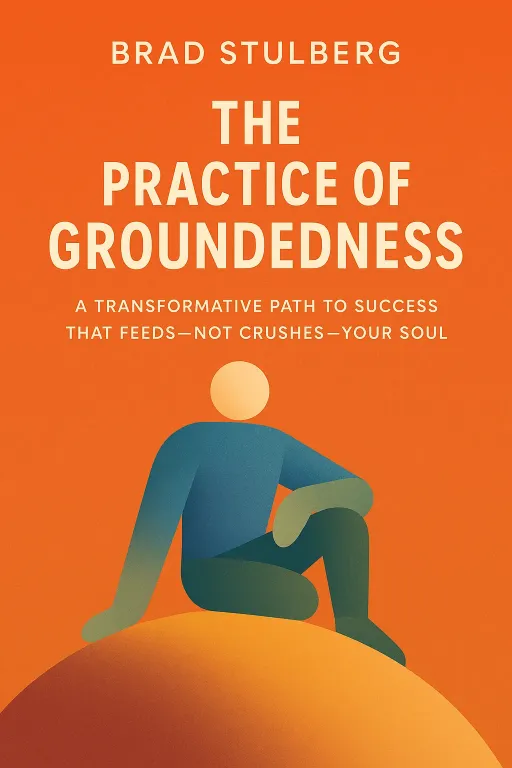
Nova: Exactly. First up, we’ll explore Brad Stulberg’s insightful book, "The Practice of Groundedness," which is a powerful counter-narrative to the hustle culture. Stulberg, a former elite endurance athlete and now a prominent performance coach and writer for publications like The New York Times, offers a profound perspective on sustainable excellence. He actually started his career in high-performance settings, so he understands the allure and pitfalls of that relentless drive.
Atlas: That's fascinating, a performance coach telling us to slow down? That's a twist. I’m already intrigued.
Nova: And then, we'll pivot to the ancient, yet surprisingly modern, wisdom found in William B. Irvine’s "A Guide to the Good Life." Irvine is a professor of philosophy who doesn't just teach Stoicism; he actively practices it, making this ancient philosophy incredibly accessible and practical for today’s anxieties. He really brings it down from the ivory tower into our everyday lives.
Atlas: So, we're talking about a blend of modern psychological insights and timeless philosophical wisdom. This sounds like exactly what many of us need to make sense of our core values and find some mental clarity.
Sustainable Excellence: Groundedness Over Relentless Striving
SECTION
Nova: Let’s start with Stulberg’s "Groundedness." He argues that our society has become obsessed with what he calls the "relentless pursuit of more." More money, more followers, more achievements, more, more, more. And this often leads to burnout, anxiety, and a feeling of being perpetually unfulfilled. He proposes that true, sustainable excellence comes from cultivating 'groundedness.'
Atlas: Okay, but what does 'groundedness' actually look like? Because for a lot of people, that drive for 'more' is what pushes them to achieve great things. It's how they structure their aspirations. Is he saying ambition is bad?
Nova: Not at all. It’s about you pursue that ambition. Groundedness isn't about apathy or giving up on goals. It's about finding an authentic footing amidst the chaos. Stulberg identifies core principles like radical presence, humility, and durable self-awareness. Think of it like this: a skyscraper that reaches for the clouds isn't just about its height; it's about the deep, stable foundation that allows it to stand firm against any storm.
Atlas: That’s a great analogy. So, the foundation is the groundedness. But what does 'radical presence' mean when my phone is constantly buzzing and my to-do list is a mile long? For someone in a high-stakes environment, being radically present might feel like a luxury they can't afford.
Nova: That’s where the 'radical' part comes in. It’s not just about being; it’s about being here. It means deeply engaging with the task at hand, the person in front of you, or the moment you're experiencing, without the constant pull of distractions or future worries. Stulberg suggests that when we are radically present, our work quality improves, our relationships deepen, and our mental well-being flourishes. It's counterintuitive, but by focusing on one thing, you actually become more effective overall, not less.
Atlas: I can definitely see how that would lead to better work. I imagine a lot of our listeners struggle with that constant mental ping-pong. How does humility fit into this 'grounded' excellence? Because often, we associate excellence with confidence and a certain self-assuredness.
Nova: That’s a sharp observation. Stulberg defines humility not as meekness, but as a realistic assessment of oneself. It’s knowing your strengths your limitations. It’s being open to learning, acknowledging that you don't have all the answers, and being willing to adapt. This durable self-awareness, knowing who you are and what truly matters to you, prevents you from being swayed by external validation or the latest trends. It’s about building a core identity that isn’t dependent on constant external achievements.
Atlas: That makes sense. It’s like, instead of chasing every shiny object, you’re rooted in your own purpose. I imagine that would be incredibly liberating for someone trying to understand their core values. I still struggle with that myself, the feeling that if I'm not constantly doing, I'm falling behind.
Stoic Wisdom: Ancient Tools for Modern Calm
SECTION
Nova: And that naturally leads us to our second key idea, which offers an ancient, yet remarkably effective, framework for achieving that inner calm: William B. Irvine’s exploration of Stoicism. What’s truly fascinating is how these ancient philosophers, living thousands of years ago, developed techniques that are perfectly suited to tackle our modern anxieties.
Atlas: That makes me wonder, how does ancient philosophy, often perceived as very academic or even a bit grim, translate into practical advice for finding inner calm today? I mean, when I hear 'Stoicism,' I picture people enduring hardship without complaint, which sounds more like grim resignation than inner peace.
Nova: That’s a common misconception, and Irvine does an incredible job of dispelling it. He shows that Stoicism isn't about suppressing emotions or being indifferent to life. It’s about developing a profound sense of tranquility and contentment by focusing on what you control and wisely managing your desires. One of the most powerful and counterintuitive Stoic techniques he highlights is called "negative visualization."
Atlas: Negative visualization? That sounds a bit… depressing. Aren't we supposed to be positive thinkers, manifesting our dreams? What do you mean by that?
Nova: It’s the opposite of what you might expect, but incredibly effective. Negative visualization means intentionally contemplating the loss of things you currently value. Imagine, for a moment, that you lost your job, or your home, or a loved one. Not in a morbid way, but as a mental exercise.
Atlas: Whoa. That sounds rough. Why would anyone want to actively think about losing what they care about? That feels like it would anxiety, not reduce it.
Nova: Well, the Stoics understood human psychology deeply. We tend to take what we have for granted. We adapt to our blessings, and they become invisible. Then, we start desiring. By mentally practicing the loss of something, even for a few minutes, you achieve two powerful things. First, you dramatically increase your appreciation for what you have. That ordinary morning coffee, your health, your relationships – they suddenly become precious again.
Atlas: So, it's about re-sensitizing yourself to gratitude, almost? Like, "I was today years old when I realized my morning commute isn't the worst thing ever, because at least I a car."
Nova: Exactly! And the second, equally important benefit, is that it inoculates you against the fear of loss. If you’ve already mentally rehearsed losing something, the actual event, should it occur, becomes less devastating. You’ve built a mental resilience, a psychological fortress. Irvine argues this technique is a direct path to reducing anxiety about life’s uncertainties and appreciating the present moment. It's not about being pessimistic; it's about being prepared and profoundly grateful.
Atlas: That's actually really inspiring. For anyone who feels overwhelmed by the constant pressure to achieve and acquire, this sounds like a powerful way to re-center. It's like a mental superpower for appreciation. How would someone actually practice this? Just sit down and think about terrible things?
Nova: Irvine suggests dedicating just 15 minutes daily to quiet reflection, perhaps journaling your thoughts on this. You don’t dwell on the negative for long; you briefly imagine the loss, then pivot to profound gratitude for its current presence. It’s a tiny step, but it can profoundly shift your perspective from craving to contentment. It helps you understand your core values by highlighting what you'd truly miss.
Synthesis & Takeaways
SECTION
Nova: So, whether we look at Stulberg's modern approach to 'groundedness' or Irvine's revival of ancient Stoic techniques like negative visualization, the message is remarkably consistent. True strength isn't about an endless, frantic sprint towards 'more.'
Atlas: No, it's about finding your authentic footing and inner calm amidst the chaos, as you said earlier. It’s about building a robust internal world that can withstand external pressures.
Nova: Precisely. It’s the difference between a tree that’s constantly reaching for the sun, but with shallow roots, and one that grows steadily, deeply rooted, able to weather any storm and still bear fruit. Both books remind us that sustainable well-being and genuine fulfillment come from within.
Atlas: That gives me chills. It’s such a hopeful way to look at it, especially when the world often tells us we need to be louder, faster, and bigger. So, for our listeners who are feeling that overwhelm, who are seeking wisdom and mental clarity, what’s that tiny step they can take right now?
Nova: Choose one area of your life where you feel overwhelmed. Perhaps it's your career, or your financial situation, or even a relationship. Then, take a few minutes to apply a Stoic technique like negative visualization. Briefly imagine what it would be like if that one thing wasn't there. And then, pivot. Feel the profound appreciation for its current presence. It’s a powerful way to appreciate what you have and reduce that underlying anxiety.
Atlas: That’s a concrete, actionable step that anyone can try. It reframes the whole idea of striving, bringing it back to a place of inner peace and gratitude. This isn't about giving up; it's about gaining a deeper, more resilient kind of strength.
Nova: Absolutely. It’s about embracing the journey and understanding that not all paths are clear, and that’s okay. The path to inner stillness is a journey of self-discovery, not a destination of constant acquisition.
Atlas: What a powerful thought to leave us with. This is Aibrary. Congratulations on your growth!









