

The Startup Empire: Forging Your Moat with the 7 Powers
Golden Hook & Introduction
SECTION
Nova: Susan, as a Chief Growth Officer at a startup, you live and breathe the 0-to-1 journey. But here's the billion-dollar question: what separates a startup that has a great launch from one that builds an empire? Why did Netflix win, while Blockbuster became a museum piece? It’s not just about having a better product. It’s about having.
Susan: That's the question that keeps every founder and growth leader up at night. It's one thing to get that initial traction, that first wave of excitement. It's another thing entirely to build something that endures, something that has a gravity of its own. You see so many promising companies just... plateau.
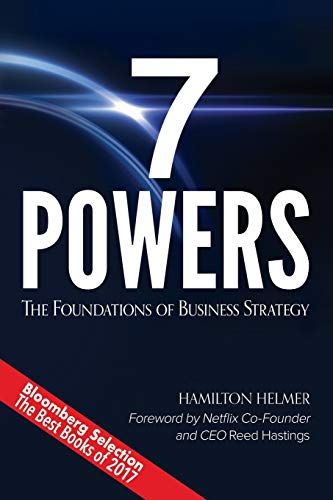
Nova: Exactly. And that's why I'm so excited to talk about Hamilton Helmer's "7 Powers" with you today. Because he argues that true strategy isn't about mission statements or five-year plans; it's about the deliberate creation of a fundamental, durable competitive advantage. A "Power." And for anyone building from zero, this is the blueprint.
Susan: I love that framing. It cuts through the noise. It's not about the tactics of the week; it's about the underlying physics of the business.
Nova: The physics of the business—perfect. So today, we're going to dive deep into this from two powerful perspectives, especially relevant for a disruptor like your company. First, we'll explore Counter-Positioning, the art of using an incumbent's strengths against them. Then, we'll discuss Network Economies, the secret sauce that creates unstoppable momentum in tech. Ready to build an empire?
Susan: Let's do it. I'm ready to take notes.
Deep Dive into Core Topic 1: Counter-Positioning
SECTION
Nova: Alright, so let's start with that first, incredibly potent strategy for a challenger: Counter-Positioning. The simple definition is that you create a new, superior business model that the established players, the Goliaths, copy without seriously damaging their existing, profitable business.
Susan: It’s a strategic trap. If they imitate you, they lose. If they ignore you, they also lose.
Nova: Precisely. And the classic, perfect story Helmer uses to illustrate this is the birth of Vanguard. So, picture the 1970s. The investment world is dominated by big firms like Fidelity. Their whole world is built around star fund managers, guys who supposedly have the magic touch to beat the market. And for this magic, they charge hefty fees, like 2% of your assets every year. Their entire sales force, their marketing, their brand is built on this idea: "We're smarter than the market, and we're worth the price."
Susan: The classic "expert" model. It's very compelling, psychologically.
Nova: Totally. Then along comes this guy, Jack Bogle. He has a simple, almost heretical idea. He says, "Actually, most of these star managers beat the market over the long term, especially after you subtract their huge fees. So what if we just stopped trying? What if we created a fund that simply buys stock in the S&P 500 and just holds it?" This was the first index fund. And because there's no star manager to pay, no expensive research team, he could offer it for a fraction of the cost—like 0.2% instead of 2%.
Susan: A ten-times cost reduction. That's not an incremental improvement; that's a different species of product.
Nova: Exactly. Now here's the Power. Why didn't Fidelity just launch their own low-cost index fund and crush Vanguard? They certainly had the money and the brand.
Susan: Because it would have been an admission that their entire existing business was a bad deal for the customer.
Nova: You got it. Imagine the internal meeting at Fidelity. A young exec says, "Hey, we should launch an index fund!" The CEO would have to say, "Great idea, Johnson. So you want us to market a product whose entire premise is that our highly-paid, famous fund managers are a waste of money? A product that would cannibalize our 2% fee funds and replace them with 0.2% fee funds? You're fired." They were trapped. Their own success, their own business model, made it impossible to fight back effectively. That is Counter-Positioning.
Susan: That story resonates so deeply. As you were telling it, I was just mapping it directly onto the edtech space.
Nova: I was hoping you would! Tell us, how do you see that playing out?
Susan: Well, you have the massive, established incumbents—the traditional universities. Their "power" is brand prestige, beautiful campuses, and the tenured faculty model. That's their high-fee, "star fund manager" equivalent. We're an AI-native company. Our model is a hyper-personalized, adaptive learning path for every single student, delivered online, at a fraction of the cost of a university degree.
Nova: So, could a Harvard or a Stanford just launch their own "AI-native" platform?
Susan: They can and they try, but they're trapped, just like Fidelity was. Their business model is tied to physical space, to lecture halls that need to be filled, to a faculty structure that is resistant to being "automated" by an AI tutor. If they were to offer a truly equivalent digital-first, AI-driven degree for, say, one-tenth the price, they would be undermining the very value of their $80,000-a-year on-campus experience. They can't fully embrace the new model without destroying the old one, which is still incredibly profitable for them.
Nova: So their strength—their beautiful campus, their famous professors—becomes a liability when trying to compete with you.
Susan: It becomes an anchor. And it's not just universities. Even older, first-wave edtech companies are counter-positioned. Many of them built their businesses around selling massive digital content libraries to institutions. Their whole sales process and product is built on that model. Our model, which is about individual learner outcomes driven by AI, is a completely different business. For them to switch would mean re-architecting their entire company. It's a powerful place to be as a challenger.
Nova: That is a crystal-clear example of using an incumbent's weight against them. A true judo move. But okay, that gets you in the door. It creates your opening. But what happens when you start to succeed? How do you make sure that your lead just gets wider and wider over time?
Susan: Ah, now we're talking about building the moat.
Nova: Exactly. And this brings us to our second Power, and it's the engine of the entire modern digital world: Network Economies.
Deep Dive into Core Topic 2: Network Economies
SECTION
Nova: So, Network Economies. We've all heard the term, but Helmer's definition is very precise. It's a Power that arises when a product or service becomes progressively more valuable to each user as more people use it. It creates this incredible, self-reinforcing loop.
Susan: The classic example being the telephone. The first telephone is a paperweight. The second one makes it a communication device. The millionth one makes it an essential piece of global infrastructure.
Nova: Perfect. And the modern version of that, the case study that defines our era, is Facebook. Let's go back in time again. Imagine being the tenth user on Facebook. It's 2004. The platform is empty. It's just you and Mark Zuckerberg and maybe a few of his Harvard friends. It's kind of useless, right? You poke them, they poke you back. The value is minimal.
Susan: Right. It’s a ghost town.
Nova: Now, fast forward. Your cousin joins. Then your friends from high school. Then your colleagues from work. People start uploading photos from that party last weekend and tagging you. They create events for birthdays. They share news articles. With every single person who joins, and with every single piece of content they add, the platform doesn't just get a little bit better for you, it gets better. It becomes the social directory, the calendar, the photo album for your entire life.
Susan: It becomes the source of truth for your social life. And the cost of being on it starts to go up. You miss event invites, you don't see the photos, you're out of the loop.
Nova: That's the lock-in! The gravity becomes immense. So when competitors like Google+ or MySpace tried to fight back, it was almost impossible. Even if Google+ had a technically superior feature, like better photo organization, it didn't matter. Why? Because all your friends were on Facebook. The product wasn't the software; the product was the network. Facebook didn't have a product, it a network. And that's a Power that is incredibly difficult to assail.
Susan: So the question for any tech company is, "What is our network, and how does it create value?"
Nova: Exactly. So I'll throw it to you, Susan. In the world of AI edtech, what does that network look like? Is it just about having the most students?
Susan: That's the surface-level answer, but it's not the real Power. The real network, for us, is the data. We call it the "data flywheel," and it's the absolute core of our strategy.
Nova: Unpack that for us. What is the data flywheel?
Susan: Okay, so think of it like this. A student starts using our platform to learn, say, calculus. As they interact with the material, our AI is watching. It sees which explanations click, where they get stuck, what kind of problems they excel at, and what kind of hints help them get unstuck. That's Data Point 1.
Nova: Okay, so you're learning about that one student.
Susan: Right. But now, multiply that by 10,000 students. Our AI starts to see patterns. It learns that a specific video explanation for 'derivatives' has a 95% success rate for visual learners, but a different, text-based explanation works better for others. It learns to predict which students are at risk of falling behind, just based on their first three hours of interaction.
Nova: Wow. So the AI is learning from the network of students.
Susan: Precisely. And here's the flywheel. The more data we get from more students, the smarter our AI becomes. A smarter AI creates more effective, more personalized learning paths. These better learning paths lead to better student outcomes—higher grades, better comprehension. Better outcomes are the most powerful marketing tool in education. That attracts more students to our platform. And what do more students bring?
Nova: More data.
Susan: More data. And the wheel spins faster. The platform gets smarter. The outcomes get better. The growth accelerates. A competitor starting today can't just copy our software; they would have to replicate the millions of hours of learning data that has made our AI what it is. The network isn't just the people; it's the collective intelligence we build from their interactions. That's our moat.
Nova: That is fascinating. So your network economy isn't just user-to-user value, like on Facebook. It's user-to-system-to-user value. Each user makes the central AI brain smarter, which in turn benefits every other user.
Susan: You've got it. It's a compounding advantage written in code and data.
Synthesis & Takeaways
SECTION
Nova: So, when you put these two together, it's such a powerful story for a startup. You use Counter-Positioning as your sharp spear to pierce the armor of a big, slow incumbent. You find that new model they can't copy.
Susan: That's your entry point. Your beachhead.
Nova: Exactly. And then, once you're on the beach, you start building your fortress with Network Economies. You create that data flywheel or that user network that makes your position stronger and stronger with every new customer you win, so that by the time the incumbent realizes you're a real threat, the moat is already too wide to cross.
Susan: And ideally, the two powers feed each other. Your superior, counter-positioned model attracts the initial users needed to kickstart the network effects. And the strengthening network effects make your counter-positioned model even more attractive and defensible. It's a virtuous cycle.
Nova: A virtuous cycle. I love that. It's the difference between just running on the hamster wheel of growth tactics and actually building an engine. So, to bring this home, Susan... you're in a unique position. You're building a company from 0 to 1, a massive, long-term project. And you're also a new mom to a 9-month-old baby, which is the ultimate 0-to-1 project.
Susan: That is a very accurate comparison. Both involve a lot of inputs, unpredictable outputs, and not a lot of sleep.
Nova: As you think about building things that last, both at work and at home, and having absorbed these ideas from "7 Powers," what's the one question you'll be asking yourself this week?
Susan: That's a great question. You know, it's easy, in both startups and parenting, to get obsessed with short-term metrics. Did we hit our user goal this week? Did the baby gain enough weight this month? Those are important, but they're not the whole story. I think the question Helmer's work inspires me to ask is: "Is this action building a structure of enduring strength, or is it just a short-term fix?"
Nova: I love that.
Susan: Yeah, so for my startup, it's "Is this marketing campaign just getting us downloads, or is it attracting the right kind of user who will contribute to our data flywheel and strengthen our network?" And for my son... it's not just about getting him to sleep through the night tonight. It's about building the routines, the trust, the secure attachment that will make him a resilient, happy person in the long run. It's about building his "Power." In both cases, it's a shift from just focusing on the 'what' to focusing on the 'why' and the 'how'—building the underlying system that creates durable, long-term value. And joy.
Nova: Building the system that creates durable, long-term value and joy. I can't think of a more powerful takeaway than that. Susan, thank you so much for sharing your insights today.
Susan: This was fantastic, Nova. Thank you. It's given me a lot to think about.