

3 Steps To Find Meaning in a Chaotic World
To Anyone Feeling Lost and Hopeless
Golden Hook & Introduction
SECTION
Daniel: Welcome back to “Make It Meaningful!” — the only game show where the prize is existential clarity and the consolation prize is, uh, knowing why you still don’t have it. Sophia: Wait, hold up. I thought there were snacks. You told me there would be snacks. Daniel: Snacks for the soul, my friend. Today you’re playing for the ultimate jackpot: purpose. Sophia: Great. Because my student loans definitely accept “purpose” as payment. Daniel: Tonight’s challenge: finding meaning in a chaotic world. You’ll be facing five brutal bosses — Frankl, Becker, Peterson, Kahneman, and Holiday. Only one rule: you can’t find meaning. You have to make it. Sophia: Fantastic. So it’s a game show and a trap. Daniel: Exactly! Welcome to life. Sophia: Okay, hit me with round one before my will to live times out.
Dive into key insights and ideas
SECTION
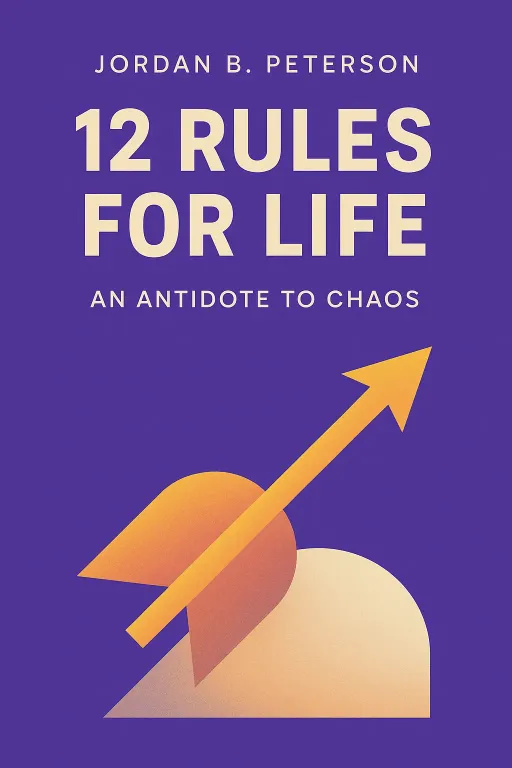
Daniel: Round One — The Meaning Marathon! In this round, you’ll confront the question Viktor Frankl wrestled with in Man’s Search for Meaning: can life still matter when everything falls apart? Sophia: Oh, great, starting light. Daniel: Frankl survived Auschwitz. He realized something shocking — that even in a concentration camp, stripped of everything, people could still choose how to face it. “Everything can be taken,” he said, “but one thing: the freedom to choose one’s attitude.” Sophia: So you’re saying meaning isn’t about circumstances — it’s about response. Daniel: Exactly. Frankl called it logotherapy — the idea that humans are motivated not by pleasure or power, but by purpose. Sophia: I like that, but it sounds like something you’d embroider on a throw pillow in a therapist’s office. How do you actually do that when life’s on fire? Daniel: That’s where Ryan Holiday barges in from The Obstacle Is the Way. His Stoic spin: every obstacle hides an opportunity. He quotes Marcus Aurelius — “The impediment to action advances action.” You don’t find meaning by waiting for life to be perfect; you forge it in resistance. Sophia: So meaning’s a gym membership for your soul. You build it under pressure. Daniel: Exactly. Meaning is metabolic — it’s created in use. When Frankl imagined lecturing about his suffering one day, that vision gave his suffering meaning in the moment. Sophia: That’s… actually pretty wild. So maybe the problem isn’t chaos — it’s our fantasy that life should be smooth. Daniel: Precisely. The more we expect meaning to show up pre-packaged, the more we miss how it’s constantly being made by how we respond. Sophia: Okay, but if I’m constantly “making meaning,” when do I rest? Daniel: When you start seeing meaning as motion, not a destination. Sophia: Great. Existential cardio. My Apple Watch is gonna hate this. Daniel: You’re doing great. Round Two! Round Two — The Chaos Challenge! Straight from Jordan Peterson’s 12 Rules for Life. Your task: bring order to chaos before chaos eats you. Sophia: Can I just vacuum my apartment and call it a day? Daniel: Honestly, yes. That’s the point. Peterson argues that meaning starts small — by cleaning your room, by taking responsibility for something concrete. It’s moral muscle training. Sophia: So the universe is falling apart, and his advice is “buy storage bins”? Daniel: In a way, yes. Because chaos isn’t out there — it’s in here. Meaning grows when we voluntarily face the mess instead of outsourcing it. Sophia: I get that. If I don’t deal with my mess, someone else ends up living in it — emotionally or literally. Daniel: Exactly. Peterson ties it to myth — every hero’s journey begins with confronting the dragon of chaos. But unlike Hollywood, real dragons are bills, deadlines, or depression. Sophia: So you’re saying meaning’s not cosmic — it’s domestic. Daniel: Meaning’s embodied. It’s you waking up, doing something difficult that you didn’t have to, and aligning yourself with what’s good, not what’s easy. Sophia: You know what’s weird? That actually sounds like the Stoics again — except with more cleaning supplies. Daniel: And a hint of existential panic, yes. But think about it: Frankl found meaning by reframing suffering. Holiday found it by transforming obstacles. Peterson finds it by voluntarily shouldering responsibility. All three say the same thing: meaning is made through action. Sophia: Okay, but how do I know if the meaning I’m making is the right kind? What if I’m just building a Pinterest board of delusions? Daniel: That’s where Kahneman crashes the party. Sophia: Oh no. The behavioral economist? Daniel: Thinking, Fast and Slow. Round Three — The Cognitive Gauntlet! You must make ten life choices in ten seconds. Ready? Sophia: I already hate this. Daniel: Cat or dog? Sophia: Dog. Daniel: City or nature? Sophia: City. Daniel: Security or freedom? Sophia: Uh— Daniel: Time’s up! Sophia: See, this is why I can’t do escape rooms. Daniel: Exactly Kahneman’s point. Our brains use two systems: System 1 — fast, intuitive, emotional; and System 2 — slow, deliberate, logical. We make most choices fast, then justify them later. Sophia: So meaning might be less “made” and more “post-rationalized.” Daniel: Sometimes, yeah. Kahneman shows that we think we’re rational architects, but we’re more like improvising jazz musicians. We’re constantly editing our life story to make it sound coherent. Sophia: That’s actually comforting — like, “Congratulations, your confusion is neuroscience-approved.” Daniel: Exactly. But here’s the twist: when you become aware of those mental shortcuts — confirmation bias, hindsight bias, loss aversion — you get the power to reshape the story. You start seeing how meaning is built by attention, not accident. Sophia: So awareness is like editing your own myth in real time. Daniel: Beautifully said. Kahneman meets Peterson there — consciousness as responsibility. Sophia: So I’m both the writer and the unreliable narrator. Daniel: Welcome to humanity. Sophia: Great, when’s intermission? Daniel: After the next round: Death — The Ultimate Bonus Level! Sophia: Oh, good. Finally something cheerful. Daniel: Our final boss, Ernest Becker, from The Denial of Death. He argues that everything we do — love, work, art, politics — is secretly about trying to escape the terror of mortality. Sophia: So all of civilization is a panic attack in slow motion. Daniel: Exactly. Becker says we create “immortality projects” — religions, legacies, families, careers — to trick ourselves into thinking part of us will live forever. Sophia: So even my Instagram is an immortality project? Daniel: Absolutely. It’s a tiny shrine to your existence, curated and filtered. But here’s Becker’s warning: when we forget that our hero projects are symbolic, they become dangerous. People kill and die for them. Sophia: That’s bleak, but kind of accurate. History’s basically a highlight reel of people trying to outrun death by being remembered. Daniel: And Frankl would jump in here: instead of running from death, face it. Because the awareness of finitude sharpens meaning. Sophia: So death’s not the opposite of life — it’s the highlighter. Daniel: Yes. The ultimate frame. When you realize time’s limited, every choice gains weight. Becker calls that “the gift of terror.” Sophia: Wow. So meaning isn’t this cozy blanket — it’s more like a live wire. Daniel: Exactly. Meaning burns because it’s alive. Sophia: So what’s the moral of our twisted little game show? Daniel: That the prize isn’t hidden behind a curtain. It’s made every time you act with intention — when you take Frankl’s freedom, Holiday’s resilience, Peterson’s order, Kahneman’s awareness, and Becker’s mortality, and use them to create something only you can. Sophia: You’re saying meaning’s a verb, not a noun. Daniel: Perfect. It’s the doing that defines it. Sophia: So if I stop searching for meaning and start making it, I win? Daniel: You already did. You just didn’t realize the scoreboard was your life. Sophia: Great. And my prize is…? Daniel: The unbearable lightness of being slightly less confused. Sophia: I’ll take it. Beats a toaster.
Key takeaways
SECTION
Daniel: Before we sign off, let’s ground this in real life — three ways to keep making meaning. Sophia: You’re giving homework, aren’t you? Daniel: Always. First, reframe obstacles as raw material. Every frustration is a forge — Holiday 101. Sophia: So next time my boss emails me at midnight, I’ll say, “Ah yes, an opportunity for Stoic transcendence.” Daniel: Exactly. Second, take one small responsibility and master it. Peterson’s wisdom — order one corner of chaos and watch it ripple outward. Sophia: Like doing your laundry as a spiritual practice. Daniel: Precisely. Third, notice your mental stories. Kahneman reminds us that self-awareness rewrites bias. Ask yourself, “What’s the story I’m telling right now?” Sophia: And Becker would say — remember you’re mortal, so tell a good one. Daniel: Perfect. And Frankl would add — live as if your current struggle might someday help someone else survive theirs. Sophia: Okay, I’ll admit it. For a game show, that got deep fast. Daniel: Meaning tends to do that. Sophia: So what did we learn tonight? Daniel: That meaning isn’t found in a cave, or a book, or even a podcast. It’s made in motion — in the choices, the challenges, the consciousness of being alive. Sophia: And apparently, in vacuuming. Daniel: Especially in vacuuming. Sophia: Then I guess that’s it. No cash prize, no enlightenment, just the ongoing mess of trying. Daniel: And that’s the point. Meaning’s not a mystery to solve — it’s a practice to live. Sophia: Well, thanks for playing along, listeners. May your chaos be meaningful and your dragons politely confused. Daniel: This is Aibrary signing off.









