

The Mind's Blueprint: How Our Thoughts Shape Our Health and Impact
Golden Hook & Introduction
SECTION
Dr. Celeste Vega: You've just finished a healthy meal, you feel good, and you swear this is the new you. But then, two hours later, you find yourself staring into the fridge, reaching for that slice of cake you know you shouldn't have. Why does that happen? It's not a lack of willpower. It's a cognitive trap.
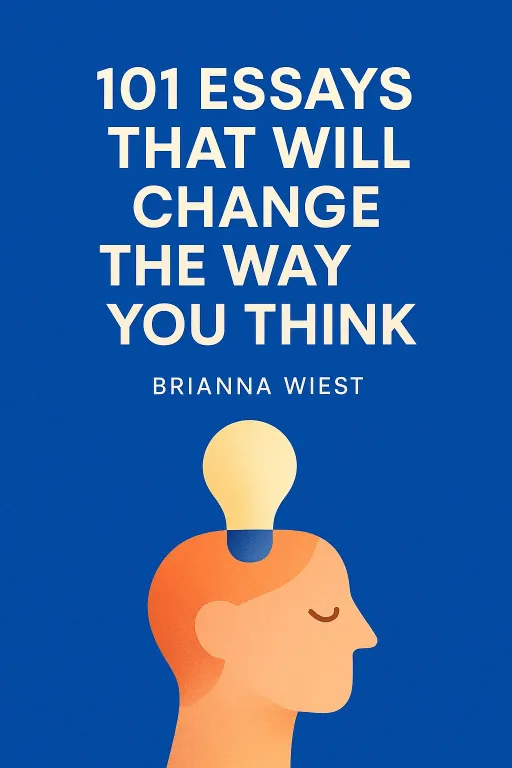
Dr. Celeste Vega: Welcome to "Mind & Matter," the podcast where we dissect big ideas that change how we live and work. Today, we're diving into Brianna Wiest's fascinating book, "101 Essays That Will Change The Way You Think," to understand the roots of this kind of self-sabotage. And to help us connect these ideas to real-world impact, we have nutrition researcher Simon Mungai Kinyanjui with us. Welcome, Simon.
Simon Mungai Kinyanjui: Thanks for having me, Celeste. It's a topic that's at the very heart of my work.
Dr. Celeste Vega: I can imagine. Today we'll dive deep into this from two perspectives. First, we'll explore the 'Comfort Trap'—the psychological reason we know what's good for us but struggle to act. Then, we'll discuss how to use our emotions as data, turning feelings like anxiety and frustration into a powerful compass for growth.
Deep Dive into Core Topic 1: The Comfort Trap
SECTION
Dr. Celeste Vega: So let's start there, Simon. As a nutrition researcher focused on community health, how often do you see this gap between knowing and doing?
Simon Mungai Kinyanjui: Celeste, it's the single biggest challenge. We can give people all the information in the world—perfectly balanced meal plans, data on long-term health outcomes—but knowledge alone rarely translates into sustained behavior change. There's a powerful internal resistance, and understanding that resistance is the key to creating interventions that actually work.
Dr. Celeste Vega: That's the perfect entry point. Wiest argues in her book that this resistance isn't a moral failing; it's a feature of our brain's operating system. She explains that our brain can't really differentiate between what's objectively 'good' or 'bad' for us. It only knows 'comfortable' and 'uncomfortable.' And its primary job is to keep us in a state of comfort.
Simon Mungai Kinyanjui: So it's a survival mechanism, essentially. It prioritizes the familiar and predictable over the unknown, even if the unknown is better for us.
Dr. Celeste Vega: Exactly. And this is where it gets tricky. The book introduces this brilliant idea that "familiar discomfort" can feel the same to our brain as "comfort." Let me paint a picture. Imagine a man named John who has been in a dead-end, soul-crushing job for ten years. He knows it's making him miserable—that's a very real, chronic discomfort. But the of quitting, updating his resume, going to interviews, and starting a new career path is completely unfamiliar. It’s a huge, scary, unknown. So, his brain, seeking the path of least resistance, defaults to the misery it already knows. The familiar discomfort of the bad job feels safer than the unfamiliar discomfort of change.
Simon Mungai Kinyanjui: That is a perfect analogy for what we see in nutrition. The 'familiar discomfort' for many people is chronic low energy, joint pain, or the knowledge that their diet is harming them. But the 'unfamiliar discomfort' is the process of change: learning to cook new meals, giving up foods that are tied to social rituals, or navigating a grocery store differently. The brain will almost always choose the devil it knows.
Dr. Celeste Vega: It's a powerful trap. You know you're not happy, but the alternative seems even more daunting.
Simon Mungai Kinyanjui: It is. So, from the book's perspective, if our brains are wired this way, what's the first step to rewiring them? How do we break out of that trap?
Dr. Celeste Vega: The solution Wiest proposes is a shift in perception. You can't just will yourself to find change comfortable. Instead, you have to consciously and deliberately make the idea of more painful than the idea of action.
Simon Mungai Kinyanjui: You have to raise the stakes of staying the same.
Dr. Celeste Vega: Precisely. Instead of focusing on the fear of starting a new diet, you focus on the deep, visceral regret you'll feel in ten years if you don't. You visualize the health problems, the missed experiences. You make the pain of staying in the rut so acute that the discomfort of change starts to look like a welcome relief. It’s about changing the emotional calculation.
Simon Mungai Kinyanjui: That's a powerful reframe. It's not about finding more motivation; it's about re-directing your aversion. You're leveraging the brain's own mechanism—avoiding discomfort—to work for you instead of against you.
Deep Dive into Core Topic 2: Emotional Data
SECTION
Dr. Celeste Vega: And that leads us perfectly to our second point. Because to make inaction feel more uncomfortable, we need to learn how to listen to the signals our body and mind are already sending us. The book argues that's the true purpose of our emotions.
Simon Mungai Kinyanjui: So, not just things to be suppressed or ignored.
Dr. Celeste Vega: Not at all. In the essay "10 Things Emotionally Intelligent People Do Not Do," Wiest makes the point that feelings aren't facts, but they are. A bad feeling doesn't mean you have a bad life; it's an alert, a check-engine light.
Simon Mungai Kinyanjui: I like that. A data point.
Dr. Celeste Vega: Let's use another story to illustrate. Imagine a woman, Sarah, who just got a big promotion she's worked years for. Logically, she she should be ecstatic. But instead, she feels a deep, persistent anxiety. The old narrative of 'passion' says to just push through, that it's just nerves. But the emotionally intelligent approach that Wiest advocates for asks a different question: What is this anxiety you?
Simon Mungai Kinyanjui: What is the data pointing to?
Dr. Celeste Vega: Exactly. Maybe the anxiety is a signal that the new role involves public speaking, which terrifies her. Or maybe it requires a level of ruthless competition that goes against her core values. The feeling isn't the problem; it's a symptom. The anxiety is a data point telling her there's a misalignment somewhere that needs to be investigated.
Simon Mungai Kinyanjui: This reframes everything. In community health, we often focus on the 'what'—eat this, don't eat that. But this suggests we should be teaching people to ask 'why' they feel a certain way. Why do you crave certain foods when you're stressed? That stress isn't a character flaw; it's a data point. The craving is a signal about an unmet emotional need.
Dr. Celeste Vega: Yes! And the book says a bad feeling doesn't equate to a bad life. So for someone starting a new health regimen, feeling deprived and angry isn't necessarily a sign to quit. It's a signal to investigate. Is the diet too restrictive? Is it cutting out an important source of social joy? The emotion is the key to finding a solution, not a reason to abandon the goal.
Simon Mungai Kinyanjui: This is a paradigm shift from a model of 'compliance' to a model of 'inquiry.' It’s about empowering individuals to become researchers of their own well-being. It's far more sustainable because it's not a rigid, one-size-fits-all plan, but a responsive, personal system. You're teaching people to read their own internal dashboard.
Dr. Celeste Vega: A responsive system. That's the perfect way to put it. You're not fighting your feelings; you're collaborating with them.
Synthesis & Takeaways
SECTION
Dr. Celeste Vega: So, to bring it all together, it seems we're constantly fighting this 'Comfort Trap' that's hardwired into our brains, but we also have a built-in, highly sophisticated navigation system—our emotions—if we just learn how to read them as data instead of noise.
Simon Mungai Kinyanjui: I think that's it exactly. It's about moving from being a passive recipient of advice, whether it's from a doctor or a self-help book, to becoming an active participant in our own well-being. It's about developing the self-awareness to ask, "What is this feeling telling me, and what is my desire for comfort costing me?"
Dr. Celeste Vega: That's a question everyone could benefit from asking. The book is filled with these kinds of powerful perspective shifts, but if there's one actionable takeaway for our listeners today, it's a simple question the author poses. She says instead of asking the overwhelming question, "What am I doing with my life?"... just ask... "What am I doing with?"
Simon Mungai Kinyanjui: That's powerful. Because changing your health, or your community's health, doesn't happen in a decade. It happens with the choice you make for your next meal. It happens with the decision to go for a walk instead of staying on the couch. It happens today.
Dr. Celeste Vega: A perfect final thought. Simon Mungai Kinyanjui, thank you so much for bringing your expertise and insight to this conversation.
Simon Mungai Kinyanjui: It was my pleasure, Celeste. A truly thought-provoking discussion.









