

Nourishing Your Network: Career Conversations for the Modern Healthcare Professional
Golden Hook & Introduction
SECTION
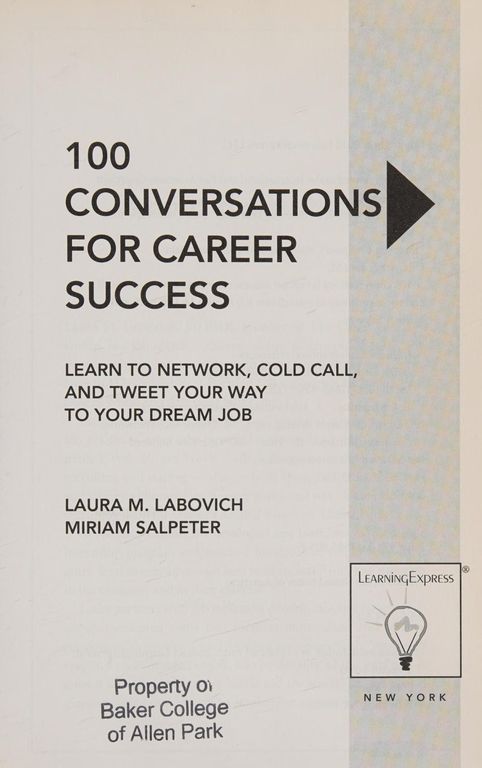
Dr. Roland Steele: Think about the last time you looked for a job. You probably polished your resume, uploaded it to a dozen online portals, and waited in that agonizing silence we call the digital black hole. But what if the most powerful tool in a healthcare professional's toolkit isn't a flawless resume or a clinical certification, but a simple, structured conversation? Welcome to the show. I'm Dr. Roland Steele, and today we are dissecting Laura M. Labovich's brilliant book,. We're looking at this through a very specific lens today, joined by dietitian Büşra Bayıroğlu, to explore how early-career healthcare professionals can bypass the traditional, exhausting job hunt and build a thriving career through the power of connection. Büşra, it is wonderful to have you here.
Büşra Bayıroğlu: Thank you, Roland! It's great to be here. You know, when I first read the title of Labovich's book, I immediately started thinking about how we, as healthcare professionals, are trained to communicate with patients. We ask open-ended questions, we listen actively, and we build trust. But when it comes to our own careers, we often forget those exact skills! We treat job hunting like a cold, clinical transaction instead of a relationship-building process.
Dr. Roland Steele: That is such a profound point to start with. From an economic perspective, the traditional job market is plagued by what we call information asymmetry. Employers don't know if you're a good fit, and you don't know if their clinic culture is healthy. Labovich's book is essentially a guide to reducing that transaction cost through direct, human-to-human dialogue. Today, we're going to tackle this from three key angles. First, we'll explore how to shift from transactional networking to relationship-first conversations. Second, we'll map out the precise anatomy of an informational interview within the clinical and wellness space. And finally, we'll discuss how to build digital credibility to attract mentors and opportunities organically.
Büşra Bayıroğlu: I love that roadmap, Roland. Especially for someone like me, who is in the first year of their career, the idea of 'networking' can feel incredibly intimidating. But when you reframe it as a series of structured, curious conversations, the anxiety just melts away. It becomes about learning and connecting, which is what we caregivers love to do anyway!
Deep Dive into Core Topic 1
SECTION
Dr. Roland Steele: Exactly! Let's dive into that first pillar: shifting from transactional networking to relationship-first connections. Labovich talks about this concept of "conversational currency." In the market, currency is what we exchange to get what we want. But in career development, your currency isn't just your credentials; it's your genuine curiosity and your ability to offer value before you ask for anything in return.
Büşra Bayıroğlu: Yes, and that's where many people get it wrong. They reach out to a senior dietitian or a clinic manager and immediately ask, "Are you hiring?" Or, "Can you look at my resume?" That is a high-friction request. It puts the other person on the spot. In nutrition, we talk about bio-individuality—every patient needs a tailored approach. The same goes for networking. You have to understand the other person's professional pain points before you can offer value.
Dr. Roland Steele: Let's look at a case study from the book to illustrate this. Labovich shares the story of a job seeker named Sarah, who wanted to transition into healthcare administration but had zero direct connections. Instead of blast-emailing her resume, she identified three local clinic directors. She didn't ask them for a job. Instead, she sent a brief message saying she admired how their clinics managed patient flow during peak hours and asked if she could buy them a fifteen-minute cup of coffee to learn about their operational philosophy.
Büşra Bayıroğlu: That is brilliant because it appeals to their professional pride! People love talking about their expertise and their challenges. By asking about patient flow, Sarah showed she had done her homework. She wasn't just looking for any job; she was interested in specific way of doing things.
Dr. Roland Steele: Precisely. And economically speaking, she lowered the barrier to entry. A fifteen-minute coffee chat is a low-cost investment for a busy director. But the return on investment for Sarah was massive. One of those directors was so impressed by her targeted questions that when an administrative role opened up three weeks later, Sarah's name was at the top of his mind. No job board required.
Büşra Bayıroğlu: It makes total sense. In my field, if I want to work in a multidisciplinary clinic alongside doctors, physiotherapists, and psychologists, I need to understand how they collaborate. If I reach out to a physiotherapist and say, "I'm a dietitian, I want to learn how nutritional status impacts muscle recovery in your rehab patients," that starts a collaborative dialogue. It's not "give me a job." It's "let's talk about how our fields intersect to improve patient outcomes." That is relationship-first networking.
Dr. Roland Steele: That is a masterclass in incentive alignment, Büşra! You are aligning your desire to learn with their desire to provide excellent care. You're creating a shared intellectual space.
Büşra Bayıroğlu: Exactly. It's about finding that common ground where both parties feel energized by the conversation.
Deep Dive into Core Topic 2
SECTION
Dr. Roland Steele: Now, let's move to our second pillar, which is the actual execution of this strategy: the anatomy of the informational interview. Labovich provides a very specific blueprint for these meetings. She emphasizes that you must be the driver of the conversation, even though you are the one asking the questions. You are the interviewer, but you must keep it conversational, not interrogative.
Büşra Bayıroğlu: This is where my analytical side really appreciates Labovich's structure. She breaks down the informational interview into clear phases: the warm-up, the deep dive, and the wrap-up. For a healthcare professional, this is very similar to a patient consultation. You don't just jump into prescribing a diet; you build rapport first, then gather data, and then establish a follow-up plan.
Dr. Roland Steele: Let's break down those phases. The warm-up is all about setting the tone. You acknowledge their time, reiterate the purpose of the meeting, and ask a broad, engaging question. For example, "How did you transition from clinical dietetics into private practice?"
Büşra Bayıroğlu: Right, and that leads beautifully into the deep dive. This is where you ask targeted questions that reveal the realities of the industry. I might ask something like, "What are the biggest lifestyle challenges your clients face that clinical guidelines don't prepare you for?" Or, "How do you balance evidence-based science with the trendy nutrition myths your clients bring in?" These questions show that you understand the nuances of the profession.
Dr. Roland Steele: And they invite the mentor to share their wisdom, which is highly satisfying for them. But the most critical part of Labovich's blueprint—and the one most people skip—is the wrap-up. Specifically, the "double referral" question.
Büşra Bayıroğlu: Oh, tell me more about that, Roland. How does that work?
Dr. Roland Steele: At the end of the fifteen minutes, you say, "Thank you so much for your time. Based on our conversation today, is there anyone else in your network you think I should speak with to learn more about this area?" And then, "What is the best way for me to stay in touch with you as I progress?" This does two things. First, it organically expands your network through a trusted introduction. Second, it establishes an ongoing relationship rather than a one-off transaction.
Büşra Bayıroğlu: That is incredibly powerful. It's like a referral system in healthcare. If a primary care doctor refers a patient to a dietitian, there's an automatic level of trust. If a senior professional refers you to a colleague, that colleague is almost guaranteed to take your call. It bypasses the cold-calling friction entirely.
Dr. Roland Steele: It absolutely does. You are leveraging social capital. And social capital, in the professional world, is often more valuable than financial capital when you're starting out.
Büşra Bayıroğlu: I can see how that would build momentum so quickly. If you do just one of these interviews a week, by the end of a few months, you have a robust web of professional connections who are actively rooting for your success.
Deep Dive into Core Topic 3
SECTION
Dr. Roland Steele: Now, let's transition to our third pillar: digital presence and micro-networking. In today's market, your physical network is only half the battle. The other half is your digital footprint. Labovich dedicates a significant portion of the book to showing how platforms like LinkedIn, and even Twitter or Instagram, can be used to "tweet your way to your dream job." Büşra, as a dietitian, how do you view the role of digital platforms in your career development?
Büşra Bayıroğlu: Honestly, I think it's a game-changer, but it has to be approached with a lot of care. In the nutrition world, there is so much misinformation online. As qualified dietitians, we have a responsibility to share evidence-based science. But from a career perspective, sharing that science online is also how you build your professional brand. It's how you show potential employers, mentors, and clients how you think.
Dr. Roland Steele: Yes, it's about demonstrating your expertise in public. Labovich talks about "micro-networking"—which is engaging with other professionals' content online in a meaningful way. It's not just liking a post; it's leaving a thoughtful comment that adds value to the discussion.
Büşra Bayıroğlu: Exactly. For example, if a prominent researcher posts a new study on the gut-brain connection, I shouldn't just comment "Great post!" I should write a brief paragraph sharing how this research might practically apply to dietary counseling for patients with high stress. That shows I'm not just consuming content; I'm actively analyzing it and thinking about clinical application.
Dr. Roland Steele: That is a perfect example of micro-networking. You are signaling your competence to everyone who reads that comment thread, including the original poster and their entire network. It's a highly efficient way to build visibility.
Büşra Bayıroğlu: And it feels very natural for my personality type. As a caregiver, I want to help people understand nutrition. Sharing clear, accessible, science-backed tips online—like how to read a food label or how to prep balanced meals on a budget—allows me to help a wider audience while simultaneously building my professional credibility. It's a win-win.
Dr. Roland Steele: It really is. You are essentially creating a digital portfolio of your thinking style. When a clinic director looks you up—and believe me, they will—they won't just see a static resume. They will see an active, engaged professional who is passionate about her field and capable of communicating complex ideas clearly.
Büşra Bayıroğlu: It takes the pressure off the formal interview, too, because they already feel like they know you and trust your expertise before you even walk through the door.
Synthesis & Takeaways
SECTION
Dr. Roland Steele: We have covered some incredible ground today, Büşra. From shifting our mindset to relationship-first networking, to mastering the structured informational interview, and finally, leveraging digital platforms for micro-networking. It's clear that career success isn't about luck; it's about intentional, structured communication.
Büşra Bayıroğlu: Absolutely, Roland. If I had to synthesize the biggest takeaway from Laura M. Labovich's book for my fellow healthcare professionals, it's this: don't wait for opportunities to be posted on a job board. Create them through curiosity. Treat every professional connection not as a transaction, but as a relationship to be nourished.
Dr. Roland Steele: Beautifully said. And for our listeners today, we want to leave you with a practical challenge. This week, identify one professional in your field whose work you genuinely admire. Reach out to them—either via LinkedIn or email—and ask for a fifteen-minute virtual coffee chat. Don't attach your resume. Just ask one insightful question about their work. You might be surprised at how quickly a single conversation can transform your career trajectory.
Büşra Bayıroğlu: I love that challenge, Roland. It's simple, actionable, and incredibly powerful. Thank you so much for this wonderful conversation today.
Dr. Roland Steele: Thank you, Büşra. And to our listeners, go out there, start those conversations, and nourish your network. We'll see you next time.