The Mindful Edge: Cultivating Calm and Clarity in Leadership
Golden Hook & Introduction
SECTION
Nova: Atlas, five words. If you had to describe the feeling of modern leadership in five words, what would they be?
Atlas: Oh man, that's a challenge. Constant juggle. Stress. Lost. Need. Calm.
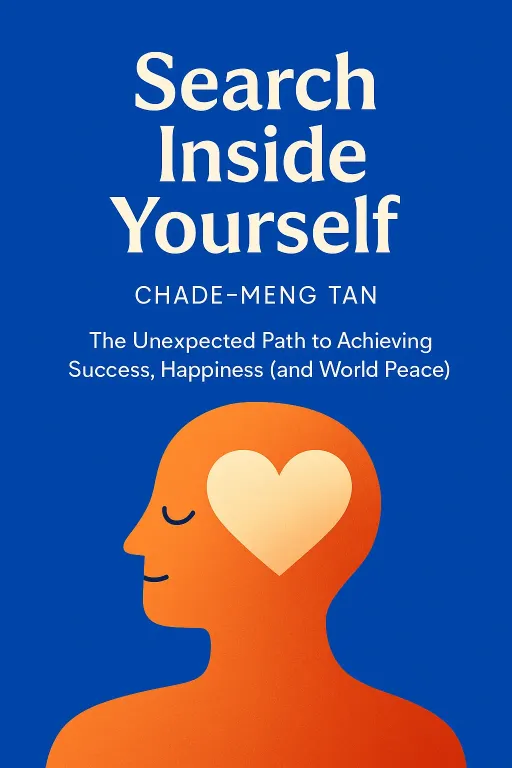
Nova: Exactly! And that's precisely what we're tackling today with "The Mindful Edge: Cultivating Calm and Clarity in Leadership." It's not a traditional book in the sense of a single author, but rather a powerful distillation of profound insights from highly acclaimed authors like Chade-Meng Tan, who famously developed Google's renowned "Search Inside Yourself" program, and Dan Harris, the skeptical journalist who found peace and focus through meditation. These aren't gurus, they're practitioners who made this real.
Atlas: Oh, I like that. "The Mindful Edge." It already sounds like it's challenging the idea that leadership has to be a constant state of frantic activity. For a lot of our listeners, especially those in high-stakes, fast-paced environments, the idea of "calm" might feel... well, a bit out there. Like a luxury they can't afford.
Nova: Right? And that's the core of our first deep dive.
The Strategic Necessity of Calm
SECTION
Nova: We're exploring why cultivating a calm center isn't just a personal preference, it's a strategic necessity for sustained impact. Think about it: leadership today feels like you're constantly juggling chainsaws while riding a unicycle on a tightrope. The sheer volume of decisions, the relentless pace, the pressure from every angle. It's a recipe for burnout and a loss of focus.
Atlas: I totally know that feeling. I imagine a lot of our listeners feel that constant pull in a million directions. But how does inner calm actually translate into better strategy or better outcomes? It sounds a bit abstract. What's the real-world application for someone building teams or navigating complex projects?
Nova: That's a great question, and it's precisely what Google recognized early on with Chade-Meng Tan's "Search Inside Yourself" program. Meng, as he's known, was an early software engineer at Google, which isn't exactly the kind of background you'd typically associate with mindfulness. He saw the intense pressure and the toll it was taking on Google's brilliant minds. His insight was that emotional intelligence and mindfulness weren't 'soft skills' to be tacked on; they were fundamental to enhancing productivity and well-being in a hyper-competitive tech culture.
Atlas: So, Google, famously data-driven, actually invested in this? That's actually really inspiring. I would have assumed they'd just push for more hours.
Nova: Exactly! It wasn't about pushing harder; it was about optimizing the human element. Meng championed a program that combined mindfulness practices with emotional intelligence training. It started as an internal course, almost a grassroots movement, but it quickly became one of Google's most popular internal programs. The results were undeniable: better collaboration, reduced workplace conflict, enhanced innovation, and leaders who could navigate complexity with more clarity. They weren't just making less reactive decisions; they were fostering more empathetic teams, which directly impacts project success and employee retention. It became a global phenomenon precisely because it delivered tangible benefits, not just warm fuzzy feelings.
Atlas: That makes me wonder, how does self-awareness and compassion, which sound very internal, actually translate to concrete leadership outcomes? Like, what does an 'empathetic team' look like in practice, and how does mindfulness build that?
Nova: Well, it starts with self-awareness. When a leader is mindful, they're better able to notice their own emotional state, their biases, their reactions. This means they can respond thoughtfully rather than react impulsively. For an empathetic team, it means a leader who can truly listen, who can understand the unspoken concerns, and who can create an environment where psychological safety thrives. This directly leads to teams that are more creative, more resilient, and ultimately, more effective because people feel truly seen and heard. It's about leading with presence and clarity, not just authority.
Practical Pathways to Mindful Leadership
SECTION
Nova: Now, while Google's program is incredibly inspiring, many might feel like, "Okay, that's great for Google, but what about? I don't have a dedicated mindfulness guru at my company." That's where someone like Dan Harris comes in, offering a remarkably relatable path.
Atlas: Oh, I've been there. I totally know that feeling. The skepticism. Especially when you hear about mindfulness, sometimes it's presented in a way that feels very esoteric or time-consuming. For someone who thrives on strategy and building, it needs to be practical, right?
Nova: Absolutely. Harris, a well-known journalist for ABC News, had a very public panic attack on live television. That was his wake-up call. He then embarked on a journey to understand meditation and mindfulness, but he approached it with deep journalistic skepticism. He wasn't looking for enlightenment; he was looking for a way to quiet the incessant chatter in his own head and manage his anxiety. His book, "10% Happier," is his relatable, often humorous, account of debunking the myths and finding practical, evidence-based methods. It became a widely read book because it resonated with so many who were initially wary of meditation, showing it wasn't about becoming a monk, but about small, achievable gains.
Atlas: That's a great way to put it. "10% Happier" sounds like such a realistic goal, especially for busy people. What's the key takeaway from his journey for our listeners who want to integrate this, but feel they have no time? What's the smallest step they could take?
Nova: Harris breaks it down into simple, actionable steps that don't require hours of practice or a spiritual retreat. The central idea is that even small changes, even just a few minutes a day, can lead to significant improvements in calm and focus. He talks about how simply noticing your breath, without judgment, for even five minutes, can be a profound anchor. It's about building a habit, a muscle, for awareness. It's about understanding that your mind will wander, and the practice is simply bringing it back. It's a continuous, gentle redirection, not a battle to silence your thoughts.
Atlas: So, it's not about achieving some Zen master state, but more about acknowledging the chaos and gently steering your attention back. That makes so much more sense. That's a perfect example of how to make this accessible for someone who's constantly on the go.
Nova: Exactly. It's about giving yourself that small healing moment. That five minutes of simply noticing your breath, without judgment, can ground you. It brings a moment of calm into your busy day, and over time, these small acts accumulate, building resilience and enhancing your ability to lead with presence and clarity. It's the micro-practice that builds the macro-skill.
Synthesis & Takeaways
SECTION
Nova: So, what we've really explored today is that calm isn't just a personal luxury; it's a strategic imperative for leaders, as shown by Google's data-driven approach. And cultivating that calm is far more accessible than many might think, thanks to pioneers like Dan Harris who demystified the process.
Atlas: I can definitely relate to that. It feels like these insights perfectly align with the idea of trusting your inner wisdom and practicing active listening, which are crucial for building genuine human connection and effective collaboration. You can't truly listen or tap into that wisdom if your mind is constantly scattered.
Nova: Absolutely. The mindful edge isn't about escaping the demands of leadership; it's about equipping yourself to meet them more effectively, with greater presence and clarity. Even a five-minute pause can make a monumental difference.
Atlas: That’s actually really inspiring. So for our listeners who are ready to cultivate their own mindful edge, I'd say try that five-minute breath exercise today. Just notice your breath, without judgment. See what happens. Share your experience with us.
Nova: And remember, even a small shift in perspective can lead to significant impact, not just for you, but for your entire organization. This is Aibrary. Congratulations on your growth!