

Finding Your Anchor: Grounding Through Mindfulness
Golden Hook & Introduction
SECTION
Nova: You know, Atlas, I’ve been thinking about this idea of finding your anchor, especially when the world feels like a relentless tide pulling you in a thousand directions. What if I told you that the secret to staying grounded isn't about building a bigger, stronger boat, but about learning to surf the waves with a surprising sense of calm?
Atlas: Hold on, Nova, surfing the waves of chaos sounds less like grounding and more like… well, more chaos. My brain immediately goes to those high-stakes environments where every decision feels like a make-or-break moment. How do you find calm when the waves are actively trying to capsize your entire operation?
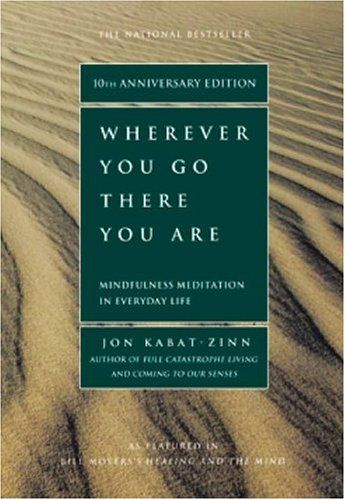
Nova: Exactly! That's the beautiful paradox we're diving into today. We’re exploring the profound yet deceptively simple world of mindfulness, drawing insights from two seminal works: Jon Kabat-Zinn’s classic "Wherever You Go, There You Are: Mindfulness Meditation in Everyday Life" and Dan Harris's refreshingly skeptical take in "10% Happier."
Atlas: Oh, I like that. Kabat-Zinn is practically the godfather of modern mindfulness, bringing it from ancient traditions into hospitals and boardrooms. And Harris, a journalist who approaches it with a healthy dose of cynicism, that's a perfect counterpoint for anyone who thinks mindfulness is just for gurus. It’s a compelling contrast.
Nova: Absolutely. Kabat-Zinn, a molecular biologist, essentially pioneered what's now known as Mindfulness-Based Stress Reduction, or MBSR, back in the late 70s. He took these ancient practices and stripped away the mystical, making them accessible and scientifically verifiable. His work isn't just theory; it's rooted in clinical application for people dealing with chronic pain and stress.
Atlas: So, it’s not just fluffy self-help, but something with a real, tangible impact. That makes a lot of sense for our listeners who are always looking for practical applications, not just abstract ideas. It also ties into that desire for connection, because chronic pain and stress are universal human experiences.
The Art of Being Present
SECTION
Nova: Precisely. And that leads us to our first core idea: the art of being present. Kabat-Zinn’s book, "Wherever You Go, There You Are," has this wonderfully direct title that encapsulates his entire philosophy. It’s about recognizing that wherever you are, whatever situation you’re in, your mind is always there with you. The challenge, and the opportunity, is to actually there, fully.
Atlas: Right, like, how many times am I physically in a meeting, but mentally planning dinner or replaying an argument from yesterday? It’s a constant battle for attention. So, how does Kabat-Zinn suggest we actually that, be present, when our minds are so adept at wandering?
Nova: He emphasizes non-judgmental awareness. It’s not about forcing your mind to stop thinking, which is a common misconception. Instead, it’s about observing your thoughts, emotions, and sensations as they arise, without getting caught up in them or labeling them as "good" or "bad." It’s like watching clouds pass by in the sky. You notice them, but you don't cling to them.
Atlas: That sounds incredibly difficult. My inner critic has a megaphone. If I'm supposed to just observe my thoughts without judgment, I can already hear it saying, "You're doing this wrong, you're not calm enough, you're still thinking about that email you forgot to send!"
Nova: Nova’s Take, as we like to call it, is that mindfulness isn't about emptying your mind; it's about observing it with kindness and curiosity. Dan Harris, in "10% Happier," perfectly illustrates this. He was a skeptical, high-stress news anchor who had a panic attack on live television. That event was his anchor point, pushing him to explore meditation not as a spiritual quest, but as a practical tool to manage his racing mind.
Atlas: And he's coming from a place that many of our listeners can relate to—someone driven, successful, but also burning out. It highlights that this isn't just for people seeking enlightenment, but for those trying to survive the daily grind. So, he's saying you don't need to become a monk; you just need to dial down the internal noise a little?
Nova: Exactly. Harris's journey makes the concept of non-judgmental awareness incredibly relatable. He talks about the "voice in my head," that constant internal commentator, and how meditation helped him create a little distance from it. He didn't eliminate the voice, he just stopped letting it completely run the show. It’s about not getting swept away by every thought, every emotion.
Atlas: It’s like learning to distinguish between the weather and the climate. The weather might be stormy, but the underlying climate of your awareness can remain steady. That's a powerful distinction, especially for someone who thrives on intellectual stimulation but also needs to ground it.
Begin Your Practice
SECTION
Nova: And that brings us to our second core idea: how to begin your practice. Because it’s one thing to understand the concept, and another entirely to integrate it into a busy life. Both Kabat-Zinn and Harris emphasize tiny, manageable steps.
Atlas: Okay, so this is where the rubber meets the road. "Tiny Step" sounds appealing. What’s the absolute smallest entry point for someone who feels like they don't have a spare second in their day?
Nova: Kabat-Zinn would say, dedicate just five minutes each morning to simply observe your breath without judgment. Find a quiet spot, sit comfortably, and just notice the sensations of your breath as it comes in and goes out. Your mind will wander, and that’s okay. The practice is gently bringing your attention back to your breath, again and again. That’s the "muscle" you're building.
Atlas: Five minutes. That’s doable. It’s not an hour-long retreat; it’s a coffee break. It makes me think of someone trying to learn a new language. You don't start with Shakespeare; you start with "hello" and "thank you."
Nova: It’s precisely that. Harris, coming from his skeptical perspective, found that even these small, consistent efforts made a tangible difference. He wasn't transformed overnight, but he noticed a "10% happier" shift—a slight reduction in reactivity, a bit more calm under pressure. He’s not promising enlightenment, just a noticeable improvement in your daily experience.
Atlas: That’s a much more grounded promise. For someone who values practical application, a 10% improvement in stress management is a huge win. It’s not about achieving some ethereal state, but about making your everyday life more manageable.
Nova: Exactly. And a "Healing Moment" practice builds on this. Allow yourself to fully experience one small sensory detail today. The taste of your coffee, the sound of rain, the warmth of the sun on your skin. Let it be a moment of pure presence. No multitasking, no evaluating, just pure, unadulterated sensation.
Atlas: That’s a fascinating reframe. Instead of trying to presence, you're essentially it by focusing intensely on one sensory input. It’s almost like a mini-meditation embedded in the fabric of your day. So, the idea is to sprinkle these small moments throughout your day, rather than waiting for a dedicated hour?
Nova: Yes, it's about weaving mindfulness into the tapestry of your life, rather than treating it as a separate, isolated activity. It transforms mundane moments into opportunities for grounding. Kabat-Zinn often talks about how every moment is an opportunity to practice, from washing dishes to waiting in line. The goal is to bring that non-judgmental awareness to whatever you're doing.
Atlas: I can see how that would deepen an understanding of human nature, too. If you're more present in your own experience, you're likely more present for others, fostering that connection and empathy we often seek. It’s not just about self-improvement; it’s about improving your engagement with the world around you.
Synthesis & Takeaways
SECTION
Nova: So, what we're really exploring today is how mindfulness, far from being some esoteric practice, is a fundamental skill for navigating the complexities of modern life. It’s about building an internal anchor, not by fighting the currents, but by learning to observe them with a steady gaze. It’s a profound shift from being tossed about by every thought and emotion to experiencing them with a sense of inner stability.
Atlas: That’s a powerful distinction. It’s not about eliminating the challenges, but about changing your relationship with them. For anyone who feels overwhelmed by the constant demands, this offers a tangible path to not just cope, but to actually thrive, even if it's just 10% happier.
Nova: And it’s a journey of discovery, a continuous practice. As both Kabat-Zinn and Harris show, it’s not about achieving perfection, but about the consistent, gentle effort of returning to the present moment. It's about cultivating a kindness towards your own mind, even when it’s at its most chaotic.
Atlas: The idea that you don't need to be perfect, just persistent, is incredibly liberating. It makes this whole concept feel much less intimidating and more like a tool that anyone can pick up and use, especially those of us who are always seeking to sharpen our perception and ground our expansive minds.
Nova: Absolutely. And if you're curious about diving deeper, pick up "Wherever You Go, There You Are" by Jon Kabat-Zinn for the foundational principles, or "10% Happier" by Dan Harris for a more contemporary, relatable entry point.
Atlas: These books really offer a fantastic starting point for anyone looking to bring more presence and calm into their daily lives. It's about finding that anchor, one breath, one sensory moment at a time.
Nova: This is Aibrary. Congratulations on your growth!