

Stop Guessing, Start Building: Your Blueprint for Financial Freedom
9 minGolden Hook & Introduction
SECTION
Nova: What if the biggest financial mistake you're making isn't about how much you earn, but how you think about the money you already have?
Atlas: Oh man, that's a question that probably hits home for a lot of people feeling that constant tug-of-war with their bank account. It certainly resonates with me. We're all trying to figure out how to make our money work for us, not the other way around.
Nova: Exactly. Because for so many, money feels less like a tool and more like a source of chronic stress. It’s this overwhelming, chaotic monster that constantly demands attention. But what if we told you there’s a blueprint, a step-by-step plan, to transform that financial chaos into calm, and build a sturdy foundation for your biggest goals?
Atlas: I'm listening. Because I imagine a lot of our listeners, the strategic seekers and practical planners out there, are tired of guessing and ready to start building. Where do we begin when it comes to laying that kind of foundation?
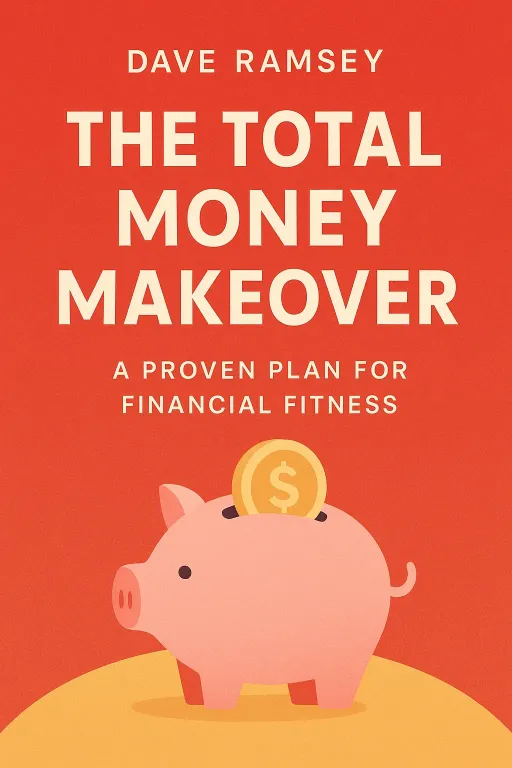
Nova: Well, a fantastic starting point, and one that has dramatically reshaped millions of financial lives, comes from a book that’s both widely acclaimed and, at times, a bit polarizing: "The Total Money Makeover" by Dave Ramsey. Ramsey, who famously overcame his own personal financial ruin, built an entire empire around a very straightforward, no-nonsense approach to money, which he codified into what he calls the "baby steps." It's incredibly influential, and for good reason.
The Power of the Baby Steps: Conquering Debt and Building Emergency Funds
SECTION
Atlas: Oh, the baby steps! I’ve heard about them. For some people, they’re practically gospel. But for others, they might seem a bit… rigid? What’s the core philosophy behind Ramsey’s approach that makes it so effective for turning chaos into calm?
Nova: That’s a great way to put it, Atlas. He’s definitely got a very specific method. The core philosophy is all about psychological wins. Think of someone drowning in credit card debt, a car loan, student loans – it feels insurmountable, right? Ramsey says, forget trying to tackle the biggest debt first, which is often the logical choice. Instead, he advocates for the "debt snowball."
Atlas: Wait, the debt snowball? So you’re not talking about the highest interest rate first? That sounds a bit out there. Isn’t that just adding to the interest you pay overall?
Nova: That’s the common skepticism, and it’s a valid point mathematically. But Ramsey argues, and countless success stories confirm, that personal finance is 80% behavior and 20% head knowledge. The debt snowball isn’t about math; it’s about momentum. You list all your debts smallest to largest, regardless of interest rate. You pay minimums on everything except the smallest one, which you attack with everything you’ve got.
Atlas: So, you’re saying you get that small debt paid off quickly. What then?
Nova: Exactly! That first debt is gone. You get a quick win. You see actual progress. And that psychological boost, that feeling of "I can do this," is incredibly powerful. You then take the money you were paying on that first debt, and you roll it into the next smallest debt. Suddenly, you’re paying even on the second debt, making it disappear faster. It’s like a snowball rolling downhill, picking up size and speed. This fuels further progress, turning what felt like an impossible mountain into manageable hills.
Atlas: I can see how that would be incredibly motivating. That sense of accomplishment, that quick win, it's like a shot of adrenaline for someone who’s felt defeated by debt. It transforms the overwhelming into a series of achievable goals. It makes sense for the practical planner in all of us. And then the emergency fund comes into play?
Nova: Absolutely. The very first baby step is actually saving a starter emergency fund of $1,000. It's not a full emergency fund, but it’s enough to cover those inevitable small crises without going back into debt. It’s about creating that initial buffer, that first layer of financial security, before you even fully tackle the debt snowball. It’s a powerful one-two punch: immediate protection, then aggressive debt elimination.
Money as Life Energy: Redefining Value and Intentional Spending
SECTION
Nova: And that naturally leads us to a fascinating, yet often overlooked, aspect of financial freedom that often acts as a profound philosophical underpinning to all this tactical work. Because once you’re out of debt, or even while you’re getting there, you still have to decide what money means to you. Have you ever felt like your money just disappears, even when you're earning well, and you're not quite sure where it all went, or if it really made you happier?
Atlas: Oh, I know that feeling. It’s like it has a mind of its own sometimes. You work hard, the paycheck comes in, and then poof! It’s gone. It’s a common frustration for people trying to build something meaningful.
Nova: That’s precisely where "Your Money or Your Life" by Vicki Robin and Joe Dominguez comes in. This groundbreaking book, published decades ago, really laid the philosophical groundwork for the entire Financial Independence, Retire Early, or FIRE, movement. It challenges us to redefine our relationship with money, not just as currency, but as something far more valuable: "life energy."
Atlas: Life energy? That’s a captivating way to put it. What exactly do they mean by that? Is it just a fancy way of saying "your time"?
Nova: It’s more profound than just time, though time is a huge component. They urge you to view money as the energy you exchange for your life. Think about it: you spend a certain amount of your finite life energy—your time, your effort, your focus—to earn a dollar. So, when you spend that dollar, you're not just spending money; you're spending a piece of your life. They encourage you to calculate your hourly wage.
Atlas: Okay, so how do you calculate your true hourly wage? Because I'm imagining it's not just your salary divided by 40 hours.
Nova: Exactly! It’s a deep dive. You track all work-related time: commuting, getting ready, decompressing from work, even the emotional labor. Then you factor in all work-related expenses: your work wardrobe, lunches out, gas, even the therapies or stress-relief activities you might need of your job. You add all those hidden costs and hours, and then divide your take-home pay by that total time. What emerges is often shockingly lower than your official hourly rate.
Atlas: Whoa. That’s a bit of a gut punch. So, if your true hourly wage is, say, twenty dollars an hour, and you buy a $200 pair of shoes, you’re not just spending $200. You’re spending ten hours of your life energy. That puts a whole new spin on every purchase. It redefines value.
Nova: Absolutely. It makes you ask, "Is this purchase truly worth ten hours of my life? Does it align with my deepest values?" This isn't about deprivation; it's about intentionality. If that $200 purchase brings you immense joy and aligns perfectly with your values, then it’s a conscious, empowering choice. But if it’s a thoughtless purchase, driven by impulse or societal pressure, you suddenly see the true cost. It transforms money from a burden to a powerful lever for intentional living. For the purposeful builder, this is about building a life that truly reflects what you value.
Synthesis & Takeaways
SECTION
Atlas: So, we have Ramsey giving us the tactical, step-by-step blueprint for debt elimination and security, and Robin and Dominguez giving us this profound philosophical reframe, seeing money as life energy. It feels like these two approaches, while different, actually complement each other beautifully. One gives you the how, the other gives you the why.
Nova: They absolutely do. Ramsey gets you out of the hole and builds a solid foundation. Robin and Dominguez then teach you how to build the house on that foundation with purpose and intention. They help you ensure that the life you're building with your hard-earned money is truly the life you want, not just one dictated by unconscious spending habits or societal expectations. It's about stopping the guessing game and starting to build with clarity and control.
Atlas: I love that. It brings it all back to that core desire for clarity and control that our strategic seekers are looking for. So, for someone who’s listening right now, feeling inspired, what’s one tiny step they can take this week to start applying these powerful insights?
Nova: This week, take a tiny step: calculate your true hourly wage. Track all your work-related time and expenses, then compare that true hourly wage to your spending habits. See where your life energy is truly going. It’s a powerful, eye-opening exercise.
Atlas: That’s a fantastic, tangible step. It's not about judgment, it's about awareness and empowerment. I'm actually curious to do that myself! For everyone out there ready to stop guessing and start building their financial blueprint, we encourage you to try that exercise and see what insights emerge. Share your reflections with us on social media – we love hearing how these ideas impact your life.
Nova: Because understanding your money, on both a tactical and philosophical level, is truly a superpower. It’s an investment in the most valuable asset you have: your life.
Nova: This is Aibrary. Congratulations on your growth!









