The Power of Myth: Shaping Cultures and Ourselves
8 minGolden Hook & Introduction
SECTION
Nova: So Atlas, if I say "myth," what's the first thing that springs to mind?
Atlas: Oh, easy. My Uncle Bob's tales about how he single-handedly survived a week in the wilderness with only a spork. Definitely a myth.
Nova: That's a good one! And a very common perception, I think. We often relegate "myth" to the realm of tall tales, legends, or just plain falsehoods. But what if I told you that dismissing myths in that way is actually one of the biggest intellectual blind spots we have as a society?
Atlas: Huh. I'm curious. You're saying my Uncle Bob's spork adventure might actually hold profound cultural truths?
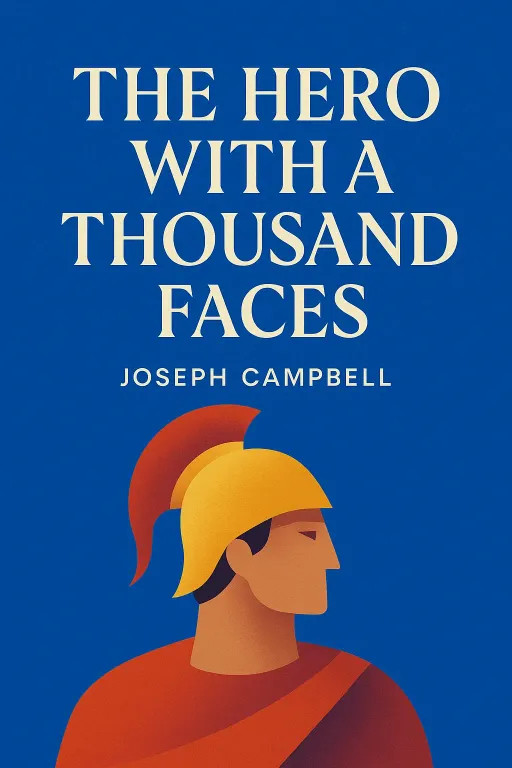
Nova: Well, maybe not Uncle Bob's specifically, but the of myths. Today, we're diving into the profound world of mythology, drawing inspiration from seminal works like Joseph Campbell's "The Power of Myth" and his earlier groundbreaking "The Hero with a Thousand Faces," as well as Stephen Fry's wonderfully witty "Mythos." Campbell, whose ideas gained widespread recognition after his interviews with Bill Moyers became a hugely popular PBS series, really showed us how these ancient stories are far more than just fables. And Fry, a celebrated polymath and storyteller, brought the Greek myths to a new generation, demonstrating their enduring cultural weight.
Atlas: So, you're suggesting these aren't just dusty old books for academics, but keys to understanding ourselves and our world? I can see Campbell's name pop up in so many places, but I've always wondered about the actual 'power' part. What makes them so potent?
Nova: Exactly. What makes them powerful is precisely what we often overlook. That's our first core idea: the profound blind spot we have when it comes to myths.
The Blind Spot: Why We Dismiss Myths (and Shouldn't)
SECTION
Nova: We've been conditioned to think of myths as the opposite of truth, something primitive people believed before science came along. But Campbell and Fry, each in their own way, illustrate that myths are not lies; they are fundamental truths expressed symbolically. They’re not historical facts, but they reveal universal psychological and societal patterns.
Atlas: Okay, but isn't a story about, say, a god turning into a swan a lie? How is that a "fundamental truth"?
Nova: It's a great question, and it gets to the heart of the misunderstanding. Think about the ancient Greek myth of Icarus. His father, Daedalus, crafts wings of wax and feathers. He warns Icarus not to fly too close to the sun, nor too close to the sea. Icarus, in his youthful exuberance, ignores his father's caution, flies too high, the wax melts, and he plunges to his death.
Atlas: That's a classic cautionary tale. Don't be so arrogant, listen to your elders.
Nova: Absolutely. But it's more than just a simple warning. It's a myth about the dangers of hubris, the limits of human ambition, the tension between freedom and restraint, and the timeless struggle between youthful impulse and seasoned wisdom. It provides a cultural framework for understanding risk, consequence, and the human condition itself. It's a symbolic narrative that helps us navigate complex aspects of life.
Atlas: So you're saying that Icarus isn't just about a kid falling out of the sky. It's about a society's deep-seated values regarding ambition and humility, encoded into a narrative.
Nova: Precisely. And when we dismiss these stories as mere fables, we're missing a crucial operating manual for human behavior and societal values. We're effectively ignoring the very frameworks that shape our understanding of purpose, meaning, and even our collective identity. For our listeners who are constantly analyzing complex systems, understanding these underlying narratives is like uncovering the source code of human culture.
Atlas: I can see how that would make sense. It's like the "self-made millionaire" myth in modern society. We know it's often an oversimplification, but it still drives a lot of our cultural narratives around success, hard work, and individual achievement. It's a story we tell ourselves to explain how the world works, even if the details are debatable.
Nova: Exactly! That modern myth, whether entirely true or not, provides a powerful framework for meaning and purpose in many people's lives. It dictates aspirations, defines success, and influences choices. And that naturally leads us to the second key idea, which shows us just how deeply embedded these mythic structures are, whether we acknowledge them or not.
The Monomyth & Cultural Operating Systems: Universality and Relevance
SECTION
Nova: Joseph Campbell, after decades of studying myths from around the world, uncovered something truly remarkable. He found a universal pattern, a kind of master story that appears in cultures across time and geography. He called it the 'monomyth,' or the hero's journey.
Atlas: So basically you're saying that from ancient Greece to a galaxy far, far away, we're all just retelling the same fundamental story?
Nova: In essence, yes! The hero's journey has distinct stages: the call to adventure, the refusal of the call, meeting a mentor, crossing the threshold into the unknown, facing trials and tribulations, experiencing a profound transformation or "abyss," and finally, the return with a boon for the community.
Atlas: Okay, give me an example that really brings this to life. Something everyone knows.
Nova: Absolutely. Think about Luke Skywalker in. He’s a farm boy on a desert planet, yearning for more—that’s the ordinary world. The call to adventure comes with the message from Princess Leia and the murder of his aunt and uncle. He meets the wise mentor, Obi-Wan Kenobi. He crosses the threshold from Tatooine into the vast unknown of space, faces trials like the Death Star, experiences the "abyss" of facing Darth Vader and discovering his lineage, and ultimately returns as a transformed Jedi Knight, bringing hope back to the galaxy.
Atlas: Wow. That's a perfect fit. I'd never really broken it down that way, but it's undeniable. And it's not just, is it? You see it everywhere once you know what to look for.
Nova: You do. From ancient epics like the to modern blockbusters, even narratives in our own lives, the monomyth resonates because it taps into our deepest human experiences of growth, challenge, and transformation. Stephen Fry, with his retelling of the Greek myths, shows us how even these ancient tales, full of gods, monsters, and human folly, laid foundational groundwork for Western thought and art. They provided the archetypes for heroes, villains, lovers, and leaders that we still recognize today.
Atlas: So, the Greek pantheon isn't just a collection of wild stories, but a complex tapestry that defined a civilization's understanding of power, love, war, and morality?
Nova: Exactly! These myths are powerful cultural operating systems. They offer frameworks for meaning, purpose, and understanding the human condition across diverse historical contexts. They are the unconscious blueprints that guide our individual and collective narratives. For our listeners who are navigating their own complex personal or professional journeys, understanding these mythic structures can be incredibly empowering. It helps us find meaning in our own challenges, recognize the patterns in leadership, or even craft more compelling stories in our own lives.
Atlas: That’s actually really inspiring. It frames our own struggles not as isolated events, but as part of a much larger, timeless human narrative. It gives them meaning.
Synthesis & Takeaways
SECTION
Nova: So, what we've discovered today is that myths are far from mere fables. They are fundamental truths, symbolic narratives, and powerful cultural operating systems that shape our values, our understanding of the world, and our very sense of self. Joseph Campbell and Stephen Fry, through their brilliant work, remind us that ignoring these profound stories means missing a key to unlocking the deepest patterns of human behavior and the enduring search for meaning. To dismiss myth is to overlook the very blueprints of our collective and individual reality.
Atlas: It makes you think about all the stories we tell ourselves, both personally and culturally. Which enduring myth or story, from history or even from your own life, resonates most deeply with your values today? It's a question worth pondering.
Nova: Absolutely. And that's all for this episode of Aibrary.
Atlas: This is Aibrary. Congratulations on your growth!