The Creative Paradox: Why Constraints Fuel True Innovation
9 minGolden Hook & Introduction
SECTION
Nova: Most people believe true creativity, real innovation, springs from boundless freedom. Give an artist an empty canvas, infinite time, endless resources, and they'll create their masterpiece, right? Well, what if that's completely, utterly, beautifully wrong?
Atlas: Whoa, hold on. Are you saying that giving someone … actually leads to? Because my gut reaction, and I imagine a lot of our listeners would agree, is that constraints are, by definition, limiting. They’re obstacles, not launchpads. Why would we intentionally box ourselves in?
Nova: Precisely the paradox we're diving into today, Atlas. We're exploring "The Creative Paradox: Why Constraints Fuel True Innovation." It's a concept that challenges our deepest assumptions about how groundbreaking work truly emerges, drawing wisdom from across the creative spectrum. It’s not just a theory; it's a fundamental principle that master creators have intuitively understood for centuries.
Atlas: That's fascinating. As someone who's always looking for the underlying principles and patterns, I'm intrigued by the idea that our intuition about something as organic as creativity could be so off-base. What's the philosophical bedrock here? Why does our natural inclination toward freedom sometimes backfire in the creative process?
Nova: It’s because boundless freedom can be paralyzing. Think about it: an empty page is often more terrifying than one with a few words already on it. When you have infinite options, decision fatigue sets in. Constraints, on the other hand, provide a framework. They force you to think, not just broadly. They channel your energy, turning a vast, overwhelming ocean into a focused, powerful river.
Deep Dive into Core Topic 1: The Remix Culture & Embracing Influence
SECTION
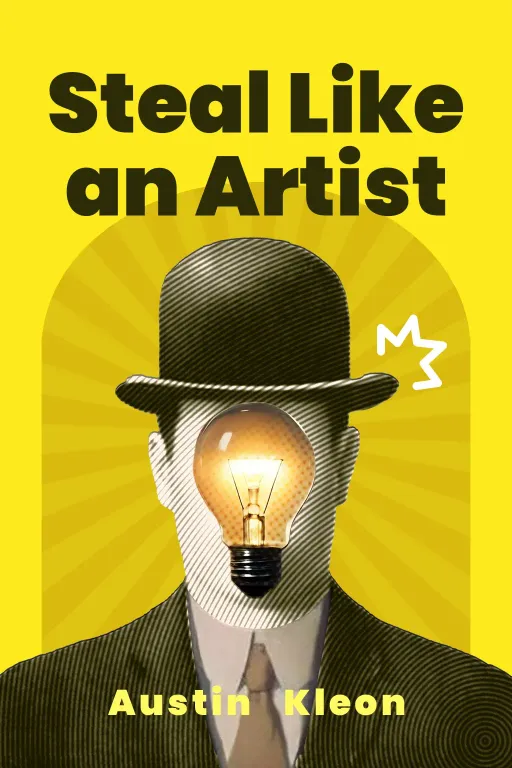
Nova: And one of the most compelling voices on this is Austin Kleon, with his book. He argues that original ideas rarely come from a vacuum. Instead, true originality is often a remix, a transformation of existing ideas. This is a form of constraint – you're not inventing from nothing; you're working a universe of existing material.
Atlas: Okay, but isn't that just… copying? For listeners who value authenticity and originality, the idea of "stealing" might feel like a shortcut, or even a lack of integrity. Where's the line between embracing influence and just plain intellectual appropriation?
Nova: That's a brilliant question, and it's where the nuance lies. Kleon isn't advocating for plagiarism. He's talking about a conscious, deliberate engagement with the work that inspires you. Think of it like a chef. They don't invent "cooking" from scratch. They learn techniques, they study recipes, they understand ingredients. Then, they take those established elements and combine them in a way that reflects their unique palate, their experiences, their personal touch. The "constraint" here is the established culinary tradition itself.
Atlas: So, the existing body of work acts as a set of ingredients or rules that you then consciously choose to break or combine in new ways. It's a framework rather than a free-for-all. Give me a concrete example. How does this play out in a tangible creative field?
Nova: Absolutely. Consider the world of music. Sampling, for instance, was once controversial, but it's become a cornerstone of entire genres. A hip-hop artist might take a drum beat from a 70s funk track, a vocal snippet from a forgotten soul record, and a synth line from an 80s pop song. Each of those elements is a "constraint" – a pre-existing piece. But by meticulously selecting, manipulating, and combining them, they create something entirely new, something that couldn't have existed without those specific "stolen" parts. The constraint of using existing sounds forces them to be incredibly inventive with how they arrange and process them.
Atlas: That makes sense. It’s like the limitation of a finite palette for a painter, or a specific set of instruments for a composer. The boundaries push you to explore the depths of those chosen elements rather than superficial breadth. It forces a deeper engagement.
Nova: Exactly. It’s about working defined structures, embracing influence, and then remixing those influences into something truly new and personal. Originality, in this view, isn't spotless invention; it's unique recombination. It’s a powerful constraint that guides rather than restricts.
Deep Dive into Core Topic 2: Intentional Shaping & Deliberate Choices
SECTION
Nova: And that naturally leads us to the second key idea we need to talk about, which often acts as a counterpoint to the idea of just "remixing." This comes from one of the most revered figures in music production, Rick Rubin, and his profound work,. Rubin emphasizes the importance of intention and self-imposed rules not just for what you, but for what you.
Atlas: Rick Rubin is legendary. I'm curious how his philosophy of listening to an "inner voice" translates into a systematic application of constraints. For someone who approaches problems analytically, "listening to your inner voice" can sound a bit amorphous. How does that translate into a concrete, deliberate choice that acts as a constraint?
Nova: That's a great point. Rubin’s method isn't about blind intuition. It’s about stripping away everything that isn't essential. He guides creators to find the core essence of their work, and then to make focused, deliberate choices to serve only that essence. The constraint is the. For instance, if the intention for a song is pure vulnerability, then any element that feels performative or overly complex becomes a distraction and is removed. That act of removal, of focusing on a single, clear intention, is a powerful self-imposed constraint.
Atlas: So, it's not about what you do, but what you do because it doesn't serve the core purpose. It's almost a negative constraint, a process of elimination that clarifies the path forward. Can you give us an example of how this plays out in his work?
Nova: Think about some of the iconic albums he’s produced. He often pushes artists to simplify, to reduce instrumentation, to focus on the raw emotion of a vocal or a single guitar line. For Johnny Cash's, Rubin constrained the entire project to just Cash's voice and acoustic guitar, recorded in intimate settings. No huge orchestras, no elaborate production. That radical constraint, that deliberate choice to strip everything away, amplified Cash's incredible storytelling and vulnerability, creating an album series that redefined his legacy and became a cultural touchstone.
Atlas: Wow. That's powerful. It wasn't about limiting Cash's talent, but limiting the through which that talent expressed itself, forcing a laser focus. It’s about shaping the work through deliberate choices, not random exploration. I can see how that would lead to something incredibly distinctive and powerful, as your initial summary mentioned. It’s a way of ensuring that every element serves a precise purpose, eliminating noise.
Nova: Precisely. By consciously choosing and embracing these constraints, whether they're external influences or internal intentions, we channel our creative energy more effectively. This leads to outcomes that are not only more distinctive but also resonate more deeply because they are so focused and intentional.
Synthesis & Takeaways
SECTION
Nova: So, bringing it all together, Atlas, what we learn from thinkers like Kleon and masters like Rubin is that our initial assumption about creativity is often backwards. It’s not about infinite possibilities; it’s about strategic limitations.
Atlas: It’s a profound insight, really. As a philosopher, I'm drawn to how it challenges our very understanding of freedom. True freedom, in a creative sense, might not be the absence of boundaries, but the freedom to your boundaries, to sculpt your own creative arena. So, for our listeners, the analysts and humanists who want to apply this systematic thinking to their own lives, what's the tiny step they can take right now?
Nova: That’s the beauty of it. The next time you approach a creative project, instead of staring at a blank page or an open-ended brief, consciously choose three strict limitations you even begin. Maybe it's the medium you'll use, a tight time limit, a specific theme you must incorporate, or even a specific color palette. These aren't meant to stifle you; they're meant to spark you.
Atlas: So, instead of saying, "I can do anything," you're saying, "I can do anything," and that focus actually ignites novel solutions. It's like a puzzle where the pieces are given to you, and the challenge is to create something new with them. That resonates with the systematic approach many of our listeners appreciate. It transforms a daunting task into a focused experiment.
Nova: Exactly. It's about turning challenges into unique opportunities for intellectual and artistic breakthroughs. So, embrace those boundaries, choose your constraints wisely, and watch your true innovation emerge.
Atlas: That's a truly empowering perspective, Nova. It flips the script on what we thought we knew about creativity.
Nova: Absolutely. This is Aibrary. Congratulations on your growth!