The Creative Flow: How to Unlock Ideas and Sustain Artistic Output
11 minGolden Hook & Introduction
SECTION
Nova: Alright, Atlas, quick question for you. When you think about creativity, what's the first image that pops into your head? Is it a lone genius, struck by a lightning bolt of inspiration, scribbling furiously in a dimly lit attic?
Atlas: Oh man, you nailed it. Absolutely. Or maybe it's the tortured artist, wrestling with some profound inner daemon, finally emerging with a masterpiece after weeks of agony. That's the narrative we're fed, right?
Nova: Exactly! It's this romanticized, almost mystical idea. But what if I told you that notion is actually... a bit of a creative trap? That creativity isn't about waiting for lightning to strike, but more like consistently showing up to the gym?
Atlas: Hold on. You're telling me my inner genius isn't just going to descend from the heavens when I'm least expecting it? That feels a bit like telling me Santa Claus isn't real. My whole creative process, or lack thereof, might be built on a lie.
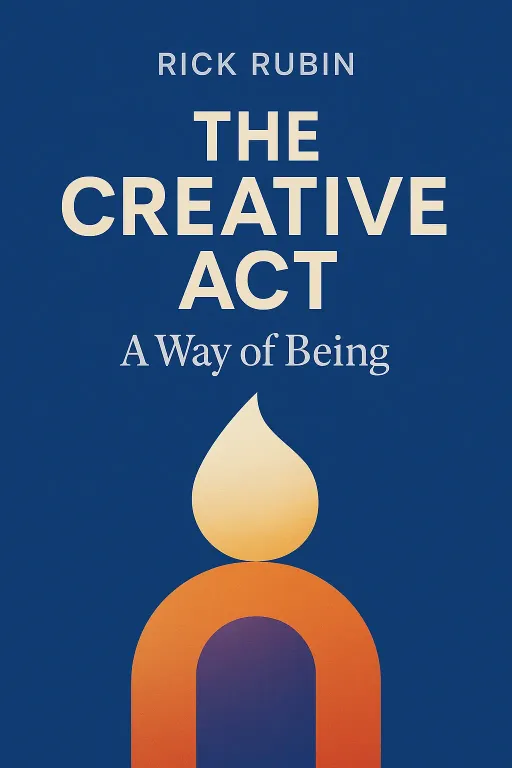
Nova: Well, not a lie, but perhaps a very unhelpful misconception. And that's precisely what we're dissecting today, pulling back the curtain on how to truly unlock ideas and sustain artistic output. We're diving into some profound insights from two giants in the field: Rick Rubin's transformative book,, and Elizabeth Gilbert's wonderfully liberating.
Atlas: Oh, I love that. Rick Rubin, the legendary music producer who's worked with everyone from Johnny Cash to Adele. It's fascinating how someone so deeply embedded in the music industry offers wisdom that transcends any specific art form, almost like a spiritual guide for creatives.
Nova: Absolutely. His insights are incredibly universal. And then there's Elizabeth Gilbert, who, after the global phenomenon of, could have easily rested on her laurels. Instead, she gifted us, a deeply personal philosophy on how to live a creative life the immense pressure and suffering often associated with artistic pursuits. It's a refreshing call for curiosity and joy.
Atlas: So we're talking about shifting from this idea of creativity as an elusive muse to something more... accessible and repeatable? That's going to resonate with anyone trying to build something lasting, whether it's a product, a system, or a community.
Redefining Creativity: From Muse to Muscle
SECTION
Nova: Precisely. The cold, hard fact is that creativity isn't a mysterious gift; it's a disciplined practice. Many believe ideas strike like lightning, but consistent, structured effort is what truly cultivates impactful work. It's about bringing your unique vision to life, day after day.
Atlas: That's a huge mindset shift, especially for those of us who tend to wait for that perfect, unadulterated moment of inspiration. So, how does Rick Rubin, someone who's literally shaped the sound of generations, explain this "state of being" for creativity?
Nova: Rubin really pushes back against the idea that creativity is something you or something you. For him, it's a fundamental, accessible to all. It’s about being present, open, and intentional. Think of it not as a wild, untamed forest where you occasionally stumble upon a rare gem, but more like a cultivated garden. You prepare the soil, you tend to it daily, you understand the seasons, and then, almost magically, beautiful things grow, not just by chance, but by design.
Atlas: That sounds wonderfully Zen, but for someone trying to build a robust system or cultivate a vibrant community, how do you 'be' creative on demand? It's not like you can just meditate your way to a new organizational structure.
Nova: That's the beauty of it, Atlas. It’s about creating an environment where creativity can flourish consistently, rather than waiting for it to strike. Imagine an artist Rubin is working with, let's call her Sarah. Sarah comes into the studio, stressed, blocked, waiting for "the song" to hit her. She's tried everything – late nights, forcing ideas, feeling like a failure. Rubin doesn't tell her to write; he tells her to. He encourages her to walk in nature, to pay attention to the subtle rhythms, to silence the internal critic. He's guiding her to shift her internal state from one of anxious striving to one of receptive presence.
Atlas: So it's less about the frantic search and more about tuning into what's already there?
Nova: Exactly. He helps Sarah understand that the ideas aren't external entities she needs to hunt down; they're often already within her, waiting to be noticed, waiting for the right conditions to emerge. It’s like clearing the static on a radio to hear the clear signal. The breakthrough often comes when she stops so hard to creativity and instead focuses on creative – being open, being present, being curious. The music then flows her, not a forced effort.
Atlas: That's a powerful reframing. I can see how that would apply to an architect of systems. You're not just trying to force a solution; you're creating the conditions, the framework, the culture, where innovative solutions can naturally emerge from your team. It's about setting the stage for brilliance.
Nova: And that's where the discipline comes in. It's the daily practice of presence, of intentionality, of clearing the mental clutter. It’s not always glamorous, but it builds that creative muscle, making you more receptive, more resilient.
Atlas: I guess that makes sense. We often think of discipline as rigidity, but here it sounds like discipline is actually what gives you the freedom to be truly creative, rather than just reactive.
Cultivating the Creative Flow: Sustainable Practice for Lasting Impact
SECTION
Nova: And that naturally leads us to Elizabeth Gilbert, who gives us a wonderfully refreshing take on how to actually with that creative impulse without the pressure cooker. If Rubin focuses on the internal state, Gilbert offers a practical, fearless approach to the external dance with ideas.
Atlas: Oh, I love. It felt like a permission slip for anyone who's ever felt the weight of creative expectation. So, how does she encourage this fearless approach, especially for those who are driven by creating lasting value?
Nova: Gilbert encourages us to view ideas almost as living entities, floating around, seeking human collaboration. It's a whimsical but incredibly liberating concept. She says ideas are looking for a dance partner, and if you're not available or too afraid, they'll just move on to someone else. The key is to approach creativity with curiosity, not with suffering.
Atlas: That's such a hopeful way to look at it. The common narrative is that you have to bleed for your art, that genius requires immense struggle. Gilbert seems to be saying, "Nah, just show up and play."
Nova: Exactly! Imagine someone, let’s call him David, who has this brilliant idea for a new sustainable housing model. He’s an architect, driven by lasting value and building robust systems. But he’s terrified. What if it fails? What if it's not perfect? What if someone else has a better idea? He’s paralyzed by the fear of judgment and the pressure to create a masterpiece immediately. Gilbert would say, "Hey, idea! You found David, but David is too busy agonizing. Maybe you should go find someone else."
Atlas: That’s kind of heartbreaking, actually. So many potentially world-changing ideas might just pass us by because we're too scared to engage.
Nova: Right. Gilbert would encourage David to just. Dedicate 15 minutes to sketching, to researching, to brainstorming, without any judgment on the outcome. She calls it "dating your creativity" rather than "marrying" it. You don't have to commit your entire life, your entire identity, to this one idea from day one. You can explore it lightly, playfully. This takes the immense pressure off. For David, that might mean allowing himself to sketch imperfect designs, to explore unconventional materials without immediately worrying about scalability or funding.
Atlas: So, if ideas are just floating around, how do you 'catch' the right ones that will actually contribute to building something robust, not just a whimsical distraction? For someone focused on sustainable growth and foundational impact, it can't just be about chasing every shiny object.
Nova: That's a crucial point. Gilbert emphasizes that the joy and curiosity the sustainable fuel. When you approach an idea playfully, without the burden of perfection or immediate success, you're more likely to stay with it longer, to explore its true potential. And paradoxically, that consistent, joyful engagement is what leads to the lasting value. When David allows himself to play with his housing model idea, he’s not just having fun; he's building a deeper relationship with the problem, discovering nuances, and developing resilience to setbacks because the process itself is rewarding.
Atlas: So, the "fearless approach" isn't just about being brave; it's about being smart for long-term engagement. It's about designing a creative process that you sustain, day in and day out, which is exactly what someone building robust systems needs. It's a foundational approach to creativity itself.
Nova: Exactly. It's seeing creativity as a muscle to be trained, rather than a muse to be courted. This empowers you to consistently produce meaningful work, whether you're designing a new product, cultivating a community, or simply innovating in your daily life.
Synthesis & Takeaways
SECTION
Nova: So, bringing it all together, Atlas, what we're really talking about is a profound shift: moving past the myth of the lone, suffering genius, and embracing creativity as an accessible, disciplined, and even joyful practice. Rubin shows us how to cultivate an internal state of being that welcomes ideas, and Gilbert teaches us how to fearlessly engage with those ideas in a sustainable way.
Atlas: That's actually really inspiring. For anyone who seeks concrete solutions and lasting value, this reframing is essential. It's not about waiting for inspiration; it's about building the system—both internally and externally—that allows creativity to flourish consistently. It's about trusting your intuition, as our growth recommendations suggest, and that intuition is honed by this very disciplined, consistent creative practice.
Nova: Absolutely. That daily dedication, however small, builds resilience and intuition. It's how you process the wins and the lessons, as your journaling recommendation suggests. It’s the foundational work that underpins all sustainable growth and human connection.
Atlas: So, the "Tiny Step" from our reading really becomes the cornerstone for everything. Dedicate 15 minutes today to a creative practice, however small, without judgment. Just begin.
Nova: Just begin. It's not about the masterpiece on day one; it's about showing up, tending your creative garden, and allowing the magic to unfold through consistent, intentional effort.
Atlas: I love that. It's about building a creative habit, not just waiting for a creative moment. That’s a lesson that applies to so many areas of life.
Nova: This is Aibrary. Congratulations on your growth!