The Illusion of Certainty: Embracing Uncertainty for Innovation in Agent Engineering.
9 minGolden Hook & Introduction
SECTION
Nova: Atlas, I was today years old when I realized that trying to make everything perfectly stable in Agent engineering might actually be the riskiest thing we could do.
Atlas: Whoa, that's a bold statement, Nova. Riskiest? My first instinct as an architect is always to minimize risk, especially when we're talking about complex Agent systems.
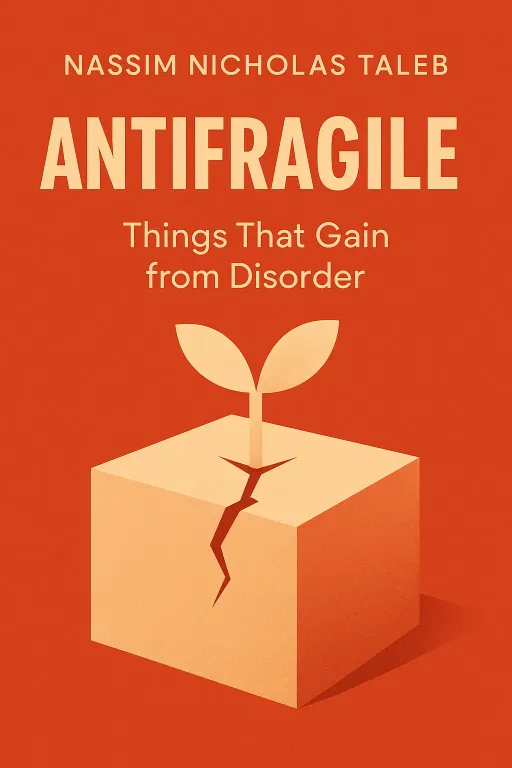
Nova: Exactly! And that's our blind spot. Today, we're diving into the profound ideas from Nassim Nicholas Taleb, particularly from his seminal works, "Antifragile" and "The Black Swan."
Atlas: Ah, Taleb. The former options trader and risk analyst who basically told the world that our understanding of risk was fundamentally flawed. He certainly didn't pull any punches.
Nova: He absolutely didn't. Taleb brought a unique, street-smart perspective to probability and uncertainty, challenging deeply held beliefs about how the world works and how we should approach risk. He wasn't just theorizing; he was living it in high-stakes environments.
Atlas: And his insights are incredibly relevant for anyone building intelligent systems, where the unexpected is practically the norm.
Nova: Precisely. We're going to explore how his thinking can fundamentally shift our mindset to design Agent engineering solutions that don't just survive challenges, but actually grow stronger from them.
Deep Dive into Core Topic 1: The Blind Spot
SECTION
Nova: So, let's start with this "Blind Spot." Our natural inclination, as humans and as engineers, is to seek stability, to eliminate risk. We build robust systems, we create redundancies, we try to predict every possible failure point.
Atlas: That makes sense. We're trying to create value, ensure uptime, guarantee performance. For a full-stack engineer or architect, stability and scalability are paramount. Failure in critical Agent systems can have massive consequences.
Nova: It can. But Taleb argues that this very pursuit of absolute certainty, this desire to eliminate risk, can actually stifle true breakthrough innovation. It can make our systems brittle, paradoxically.
Atlas: Brittle? How can trying to make something secure and stable make it brittle? That sounds like an engineer's nightmare.
Nova: Think of it this way: if you design an Agent system for a perfectly predictable, stable environment, say, a chatbot trained only on polite, well-structured queries. It performs flawlessly in that controlled setting.
Atlas: Right, 99.9% accuracy, low latency, happy users.
Nova: Until it encounters a truly novel data stream, or a user who's intentionally adversarial, or even just a common human misunderstanding it wasn't explicitly programmed for. That perfectly stable system can crash spectacularly because it has no mechanism to learn or adapt to the unforeseen. It's like a child who's never stumbled trying to run a marathon.
Atlas: So, the very act of trying to make something "perfectly safe" and predictable can make it incredibly vulnerable to the truly unexpected. That's a bit counterintuitive. It's like we're optimizing for known risks, but ignoring the unknown unknowns.
Nova: Exactly. Taleb vividly illustrates this with what he calls the "Turkey Problem." The turkey is fed every day by the farmer. Every single day reinforces its belief that the world is stable, predictable, and benevolent. Its confidence grows with each passing day.
Atlas: Until Thanksgiving.
Nova: Until Thanksgiving. The turkey's prolonged stability and predictability made it extremely fragile to a 'Black Swan' event – an unpredictable, rare event with extreme impact. It had no mechanism to adapt or even perceive the true risk because its entire experience pointed to the opposite.
Atlas: Wow. That's a powerful, if grim, analogy. So, an Agent system that's been performing flawlessly in a controlled environment might be like that turkey, completely unprepared for a truly novel data stream or an adversarial attack that falls outside its training data. We're building systems that are robust to stressors, but fragile to the.
Nova: And in the fast-evolving world of Agent engineering, the unexpected isn't just a possibility; it's a guarantee. Trying to eliminate all risk can blind us to the greatest opportunities for innovation, because innovation often emerges from environments of high uncertainty.
Deep Dive into Core Topic 2: The Antifragile Agent
SECTION
Nova: So, if the turkey problem highlights our vulnerability, what's Taleb's solution? He introduces the concept of "antifragility."
Atlas: Okay, so it's not just "robust" – that's what we usually aim for. A robust system resists shocks. It survives the punch.
Nova: Antifragile goes beyond that. An antifragile system doesn't just resist shocks; it when exposed to volatility, randomness, and stressors. It actually from disorder. Think of the human body building muscle through stress, or a forest ecosystem thriving on natural disturbances like fires that clear out old growth for new.
Atlas: Oh, I love that. A robust system endures; an antifragile one gets stronger. But how do you an Agent system to be like that? That sounds almost magical for an architect trying to ensure stability and predictability. I mean, how do you intentionally make something that benefits from chaos?
Nova: It's a fundamental shift in design philosophy. Instead of trying to predict every single failure and prevent it, we design for discovery and adaptation. Here are a few principles for antifragile agents: First, Instead of one monolithic, perfectly optimized agent, you have multiple, independent agents or modules. If one fails or acts unexpectedly, the others can compensate or even learn from its failure without crashing the whole system.
Atlas: So, not putting all your eggs in one perfectly engineered basket. That makes sense from a resilience perspective, but it often feels less efficient in initial design.
Nova: True, but it builds in optionality. Second, Instead of aiming for zero defects, design agents to learn from minor failures and adapt. Each small error becomes a learning opportunity, a data point for improvement, rather than a catastrophic event to be avoided at all costs.
Atlas: That means shifting our metrics, too. From "error rate must be zero" to "how quickly and effectively does the system learn from its errors?" That's a significant mindset change for a value creator focused on flawless execution.
Nova: Absolutely. And third, Regularly expose your agents to novel, unexpected, or even slightly adversarial inputs in a controlled way. Think of it as 'stress-testing' for learning. This isn't about breaking the system, but about building its adaptive capacity and resilience.
Atlas: So, instead of trying to predict every possible edge case and build against it, we focus on building agents that can from the unpredictable, almost like an immune system for our code. That's a fundamental shift. It almost sounds like we should introduce some chaos, which goes against every instinct for a value creator wanting stable, predictable outcomes.
Nova: Exactly! It's about designing for discovery, not just delivery. Taleb often talks about the importance of 'optionality'—having many small bets, many ways to experiment, so that when a 'Black Swan' opportunity arises, you're positioned to benefit, even if you couldn't have predicted it. Imagine a self-improving AI that uses unexpected data points to discover new, more efficient algorithms for a specific task.
Atlas: That's incredibly powerful. It redefines what 'success' means from "never fail" to "learn and grow from every failure." For an architect, that means building systems that are not just scalable but.
Synthesis & Takeaways
SECTION
Nova: So, the core shift for us today is moving beyond just building robust systems. It's about designing Agent systems that are truly antifragile. It's about recognizing that trying to eliminate all risk can make us blind to opportunities and vulnerable to the truly unexpected.
Atlas: And instead, actively designing our Agent engineering solutions to grow stronger and more adaptable with each challenge, transforming disruption into a source of evolutionary power. That's a game-changer for anyone wanting to create lasting value.
Nova: So, the deep question for our listeners, especially those building the next generation of Agent systems, is: How might you design your next Agent system to be truly antifragile, not just robust? How can it learn from unexpected inputs and challenges, and even gain from disorder?
Atlas: It’s about cultivating a mindset of 'designed evolution,' where every unexpected input, every challenge, becomes a data point for growth. Embrace the volatility, because that's where the breakthroughs live.
Nova: And remember, for our value creators and architects, this isn't just about technical resilience; it's about creating systems that continually generate by being open to the unpredictable. That's the ultimate competitive advantage.
Atlas: That's a powerful thought to end on. If you've been inspired to rethink your approach to Agent engineering, we want to hear from you. Share your thoughts on how you're embracing antifragility in your projects. What small, controlled chaos are you introducing to make your systems stronger?
Nova: We love hearing how these ideas spark reflection and real-world application. Engage with the Aibrary community.
Atlas: This is Aibrary. Congratulations on your growth!