Unleash Your Inner Architect: Crafting Enduring Creations with Purpose
9 minGolden Hook & Introduction
SECTION
Nova: What if the very act of 'building' or 'creating' something amazing, what we're all driven to do, is actually where we often lose our way, leaving us with something technically brilliant but emotionally hollow?
Atlas: Oh, I know that feeling. It's like you've poured your heart and soul into a project, achieved all the milestones, and then you're left wondering... "Is that all there is?" It’s a strange kind of success, isn't it?
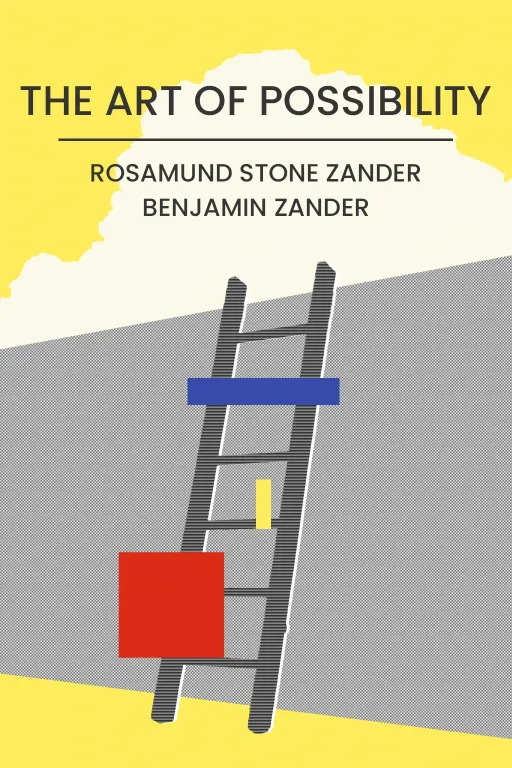
Nova: Exactly! It's that nagging blind spot. And today, we're diving into two incredible books that fundamentally shift how we approach creation, purpose, and impact. We're talking about by Rosamund Stone Zander and Benjamin Zander, and by James Carse.
Atlas: Those titles alone sound like they're going to bend my brain in the best possible way. Tell me more about these authors.
Nova: Well, Benjamin Zander, one of the authors of, is a world-renowned conductor of the Boston Philharmonic Orchestra. His approach to music, and indeed to life, isn't just theoretical; it's rooted in decades of fostering potential in others, from musicians to corporate leaders. He's famous for his belief in "possibility" as a driving force.
Atlas: That’s fascinating. A conductor leading an orchestra, but also guiding people to find their purpose. So, these aren't just academic texts, they're born from real-world application. How do they tackle that 'hollow feeling' we just talked about?
Nova: They get right to the heart of it. Today, we're going to explore how to move beyond creation for its own sake, first by reframing our challenges, and then by understanding the profound difference between playing to win versus playing to continue. It’s about crafting truly enduring creations.
The Blind Spot of Unintended Creation & The Power of Reframing Possibility
SECTION
Nova: So, let's start with that "blind spot." We often pursue creation, build amazing things, launch innovative products, but we overlook the profound impact of intention and genuine connection. This can lead to work that, despite its technical brilliance, simply lacks resonance. It doesn't sing.
Atlas: That resonates deeply. For anyone who's ever led a team or built a startup, you can hit all your KPIs, exceed expectations, but if the 'why' isn't there, or if it's purely transactional, it just doesn't feel right. It’s like building a perfect house that no one wants to live in.
Nova: A perfect analogy. And this is where comes in. It's not just about positive thinking; it's about a radical reframing of reality. One of their most famous concepts is "giving an A."
Atlas: Giving an A? Like, a grade? Before anything even happens?
Nova: Exactly! Benjamin Zander, in his teaching, would give every student an 'A' at the very beginning of the semester. But there was a catch. They then had to write an essay dated for the end of the year, explaining, from that future perspective, how they that A. How they became the person who earned that A.
Atlas: Wow. So, instead of starting from a place of "I need to prove myself," it's "I am already excellent, now how do I act like it?" That's a complete flip. For our listeners who are managing high-pressure teams, it sounds almost counterintuitive. Results are king, right? How do you maintain that 'A' mindset when you're knee-deep in technical debt or market shifts?
Nova: That's the brilliance of it. It fundamentally shifts the creative process from one of proving worth or struggling against limitations, to one of embodying potential. You're not trying to an A; you're operating the assumption that you an A. It's about seeing life as a story you are co-creating, fostering a mindset of infinite possibilities. Challenges aren't roadblocks; they're opportunities for innovation, for living into that 'A'.
Atlas: That's actually really inspiring. It’s about aligning intention first. So, it's less about the external measurement and more about the internal commitment to a higher standard, right from the start. That's going to resonate with anyone who struggles with the pressure to constantly perform. You're saying, "Start by performing, internally."
Nova: Precisely. It’s a shift from a scarcity mindset—what's missing, what needs fixing—to an abundance mindset—what's possible, what can we create. It transforms obstacles into pathways for co-creating a more compelling future.
Infinite Play: Crafting Enduring Purpose Beyond Finite Goals
SECTION
Nova: And speaking of enduring and compelling futures, that naturally leads us to a book that fundamentally redefines what 'winning' even means in the context of creation: James Carse's.
Atlas: I'm intrigued. I've always thought games were about winning. Isn't that the point?
Nova: Well, Carse argues there are two kinds of games. Finite games, which we're all familiar with, are played to win. They have clear beginnings and ends, fixed rules, and defined victors and losers. Think of a quarterly earnings report, a sports match, or a political election. The goal is to triumph over an opponent.
Atlas: Right, that's pretty much every competitive scenario in business and life. What's the alternative?
Nova: The alternative is the infinite game. These are games played not to win, but to. The goal is perpetuation, not victory. The rules are flexible, the players change, and the boundaries are constantly shifting. Think of a lifelong learning journey, a marriage, or building a sustainable community. There's no ultimate 'win,' only the continuation of the game itself.
Atlas: Oh, I see! So, a finite game player might be obsessed with market share this quarter, while an infinite game player is obsessed with market and continuous evolution for as long as possible. That's a huge difference! But how do you, as a leader, convince your team to play an 'infinite game' when all the metrics, all the incentives, are screaming 'finite' and 'win now'?
Nova: That's the core challenge, and it's where true creative purpose lies. Carse argues that when we treat infinite games as if they were finite, we lose sight of the larger purpose. A company focused solely on quarterly earnings might 'win' that quarter, but by neglecting long-term innovation or employee well-being, it risks obsolescence. An infinite game company, on the other hand, thrives by adapting, evolving, and continuously adding value, ensuring its perpetuation.
Atlas: That makes me think about legacy. It’s not just about building product; it’s about building product that enables a new way of living, a new kind of interaction. The goal isn't necessarily to beat the competition, it's to keep evolving the field itself, to remain relevant. Is that what you mean by contributing to a 'larger, more enduring narrative'?
Nova: Absolutely. It's about recognizing that every stroke, every decision, every line of code, every strategic choice, contributes to this larger, unfolding, and enduring narrative. It's about designing for perpetuation, not just a single launch or a single win. It's asking yourself: what larger story does your current project contribute to, and how can you make that story more compelling, not just for today, but for decades to come?
Atlas: That’s such a powerful reframe. It transforms what could be a series of stressful, finite sprints into a meaningful, continuous journey. It gives purpose to the 'messy middle' we talked about earlier.
Synthesis & Takeaways
SECTION
Nova: When you combine these two ideas—the 'A' mindset from Zander, which helps us start with empowered purpose, and Carse's infinite game, which gives us the framework for sustaining that purpose—you unlock a whole new dimension of creative potential.
Atlas: So, it's about starting with the end in mind, but not a end. It's about starting with a grand vision for continuous evolution, for building a movement that outlasts any single project. For our listeners, especially those who are strategic builders and visionary leaders, this is about asking: is my project designed to 'win' a single battle, or is it designed to perpetually contribute to a larger, unfolding story?
Nova: Exactly. It forces you to define your core value, not just your core product. It challenges you to think beyond the immediate win and consider the long-term impact, the enduring narrative you're crafting.
Atlas: That question cuts through all the noise. It’s about building a movement, not just a momentary success. I imagine a lot of our listeners are driven by exactly that: purpose and lasting impact.
Nova: It’s an invitation to shift your perspective from simply 'creating' to 'co-creating' a future that genuinely resonates.
Atlas: What a powerful way to look at our work and our lives. Thank you, Nova, for bringing these profound insights to light.
Nova: My pleasure, Atlas. And to all our listeners, we hope this conversation sparks a deeper reflection on the larger story your creations are telling.
Atlas: We encourage you to pick up and and dive into these ideas yourself. Let us know what 'infinite games' you're playing!
Nova: This is Aibrary. Congratulations on your growth!