Unlocking Your Inner Innovator: The Art of Seeing What Others Miss
9 minGolden Hook & Introduction
SECTION
Nova: Atlas, five words. What's the most innovative thing you've seen this week?
Atlas: Hmm. My cat opening the fridge. She used her paw to hook the handle, then her body weight to pull. Pure genius.
Nova: That counts! Absolutely. Clearly, a master of remixing existing technology for personal gain. That's actually a perfect, albeit furry, segue into what we're talking about today.
Atlas: Oh, I like that. The feline innovator. So, what grand human innovation are we dissecting today?
Nova: Today, we’re dissecting the ideas behind "Unlocking Your Inner Innovator: The Art of Seeing What Others Miss." It's not a traditional book in the sense of a single author's treatise, but a powerful synthesis of concepts, drawing from brilliant minds like Austin Kleon and the Kelley brothers from IDEO.
Atlas: Ah, IDEO. The design thinking legends.
Nova: Exactly. This work is aimed at showing us that innovation isn't just for a select few, but a mindset anyone can develop. It’s especially for those of us who connect dots, who synthesize complex ideas, and who are driven to build for impact in a dynamic world. We're going to explore how we can all unlock our inner innovator by reframing creativity as a learnable art of connection and a skill to be confidently cultivated.
Atlas: That sounds like a powerful reframe. Because honestly, for a lot of people, myself included sometimes, innovation feels like this elusive, almost mystical thing. Like you either have 'it' or you don't.
Nova: Exactly! And that's the first myth we're going to tackle head-on.
The Art of Creative Remixing: Stealing Like an Artist
SECTION
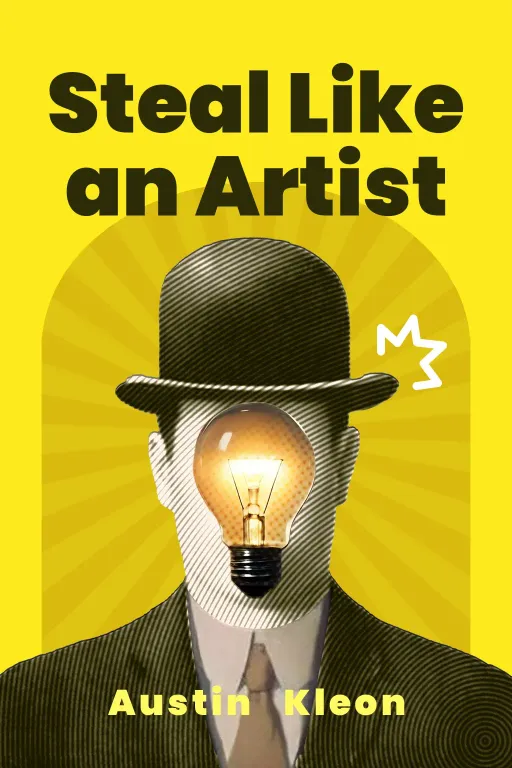
Nova: The art of seeing what others miss fundamentally starts with understanding that innovation rarely, if ever, comes from a vacuum. It’s about connections. It’s about remixing. Austin Kleon, in his brilliant work "Steal Like an Artist," makes this incredibly clear.
Atlas: "Steal Like an Artist." That's a provocative title. It almost sounds like a license for plagiarism.
Nova: That’s the initial reaction, right? But Kleon isn't endorsing intellectual theft in the malicious sense. He's illuminating a fundamental truth about creativity: everything new is essentially a mashup or a remix of one or more previous ideas. Think of it like this: a DJ samples a beat, a chef combines ingredients from different cuisines, a fashion designer reinterprets historical silhouettes. They're all "stealing" in a way, but they're transforming it, adding their unique perspective, and creating something new.
Atlas: So you're saying originality is an illusion? That feels a bit… unsettling, especially for those of us who pride ourselves on unique strategies and foresight.
Nova: Not an illusion, but a different kind of originality. True originality often lies in the and of existing elements. Imagine the invention of the automobile. It wasn't conjured from thin air. It combined the wheel, the carriage, and the internal combustion engine. Each element existed, but the innovative leap was in their novel synthesis. Or consider the smartphone: a phone, a camera, a computer, a music player – all remixed into one device.
Atlas: Okay, I can see that. It's about finding those unexpected connections, the adjacent possibilities. But how does a growth strategist, for example, actively 'steal' or collect ideas in a way that leads to powerful foresight, not just copying competitors?
Nova: That’s the key. It's not about mindlessly copying. It's about diligent observation, deep learning, and then purposeful experimentation. Kleon encourages us to collect ideas like a magpie collects shiny objects. Read widely, observe different industries, pay attention to patterns in nature, art, and even everyday life. Then, critically, you need to put them through your own unique filter. What problem are you trying to solve? What impact are you trying to create?
Atlas: So, it's less about the 'theft' and more about the 'artist' part – the discerning eye, the unique perspective you bring to the collected pieces.
Nova: Exactly! It’s about seeing those raw ideas, those disparate pieces of information, and having the foresight to imagine how they could fit together in a new, valuable way. It’s an active, iterative process of collecting, organizing, and then creating. Many of the greatest innovators, from Steve Jobs to Picasso, were masters of this. They weren't inventing entirely new colors or shapes, but rather new ways of seeing and combining them.
Atlas: That gives me chills. It reframes the whole idea of creative pressure. It’s not about waiting for a lightning bolt, but about building a rich personal library of inputs and then consciously playing with them.
Nova: Precisely. And this leads us to the next crucial piece of the puzzle because even with a treasure trove of ideas, many of us still hesitate to put them into action.
Cultivating Creative Confidence: Skill Over Gift
SECTION
Nova: If the first step is understanding that creativity is a remix, the next is recognizing that it's also a skill. This is where Tom and David Kelley, the founders of IDEO, come in with their work on "Creative Confidence." They fundamentally argue that creativity is not a gift bestowed upon a lucky few, but a muscle that can be developed, much like any other skill.
Atlas: That’s going to resonate with anyone who’s ever felt stuck or inadequate when faced with a complex problem. The idea that creativity is a skill, not a gift, is incredibly empowering. But what stops us from flexing that muscle?
Nova: The biggest barrier they identify is the fear of failure. The fear of looking foolish, of making a mistake, of not being 'creative enough.' This fear often paralyzes us, preventing us from even trying. The Kelley brothers argue that we need to actively overcome this, and they provide methods to unlock that innovative potential. It's about building a bias towards action and experimentation, similar to how a growth strategist refines their approach through continuous learning.
Atlas: I can totally see that. For a lot of us, especially in high-stakes environments, the pressure to deliver a perfect, groundbreaking solution can be immense. How do you convince someone to embrace iterative failure when the stakes are so high?
Nova: Their approach, deeply rooted in design thinking, emphasizes learning through doing. They advocate for rapid prototyping, for getting ideas out into the world quickly, even in rough form, to gather feedback and learn. It's about reframing mistakes not as failures, but as valuable data points. Imagine you're building a new product or strategy. Instead of spending months perfecting it in secret, you create a low-fidelity prototype in days, test it with a small group, learn what works and what doesn't, and then iterate.
Atlas: So, it’s like... cooking. You don't just meticulously plan a recipe for months, you try a dash of this, a pinch of that, taste it, adjust, and then refine. The first attempt might be terrible, but you learn from it.
Nova: That’s a perfect analogy! It's exactly like that. You don't become a master chef by just reading cookbooks; you get into the kitchen and experiment. The Kelleys emphasize that this iterative process builds confidence. Each small success, each lesson learned from a 'failed' experiment, makes you more willing to take the next creative leap. It's how you cultivate growth, by daring to try and learn.
Atlas: That's a powerful shift. It turns the daunting task of "being creative" into a manageable series of "trying, learning, and adjusting." It's about carving out those moments for quiet strategizing, but also for bold experimentation.
Nova: Absolutely. It empowers you to trust your inherent wisdom, knowing that even if the first attempt isn't perfect, you have the skill to refine it.
Synthesis & Takeaways
SECTION
Nova: So, bringing these two powerful ideas together – the art of remixing and the cultivation of creative confidence – we see a complete picture of what it means to unlock your inner innovator. It’s about consciously observing the world for connections and ideas, then fearlessly experimenting with those connections, knowing that every attempt is a step towards a more insightful solution.
Atlas: It really shifts creativity from this esoteric art form to a practical, learnable process. It makes innovation accessible to everyone, not just the 'creatives' in the room. And for those of us driven by progress, by shaping the future for all, that's incredibly hopeful.
Nova: It truly is. It's about finding the courage to take that "tiny step" we often talk about. That 15 minutes of observing a common object, sketching it, describing it, or listing five new uses for it, isn't just an exercise. It's actively engaging in both principles: collecting inputs and then confidently remixing them.
Atlas: That's actually really inspiring. It means the path to powerful foresight and building for impact isn't about waiting for inspiration, but about actively practicing these skills every day. It's about recognizing that our journey, our unique collection of experiences, is our strength in seeing what others miss.
Nova: Exactly. It's the most powerful way to future-proof your vision, whether you're navigating AI-powered EdTech innovation or expanding cross-cultural leadership. Innovation isn't just a buzzword; it's a fundamental way of engaging with the world.
Atlas: Okay, so if listeners take away just one thing today, it’s that their ability to innovate is not fixed, but fluid, growing with every curious observation and every brave experiment.
Nova: Precisely. Go out there, observe, remix, and build that creative confidence. What new connections will you make today?
Atlas: This is Aibrary. Congratulations on your growth!