The 'Originality' Myth is a Trap: Why You Need to Embrace Your Influences
11 minGolden Hook & Introduction
SECTION
Nova: What if I told you that the secret to being truly creative isn't about being perfectly original, but about stealing? And not just stealing, but proudly showing off your messy process while you do it?
Atlas: Wait, seriously? Stealing? My high school art teacher would have had a fit! I thought originality was the holy grail of creativity.
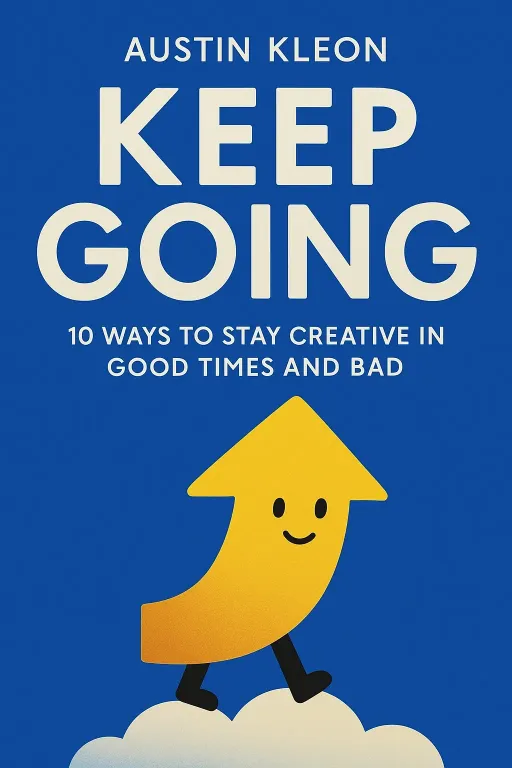
Nova: Exactly! That's the myth we're here to bust today. We're diving deep into the brilliant, deceptively simple ideas of Austin Kleon, a writer and artist who has completely reshaped how countless people, from seasoned professionals to aspiring creators, think about their work. His books are a breath of fresh air in a world obsessed with 'newness' and the pressure to invent something out of thin air.
Atlas: He really cuts through the noise, doesn't he? I mean, for anyone who's ever stared at a blank page or a new project feeling completely overwhelmed by the demand to be 'original,' this is like a massive weight lifted. It’s like he gives you permission to just.
Nova: Absolutely. And that feeling of paralysis, that fear of not being 'original enough,' that's precisely where we need to begin. It's a blind spot that hinders so many people.
Embracing Influence: Why 'Originality' is a Myth
SECTION
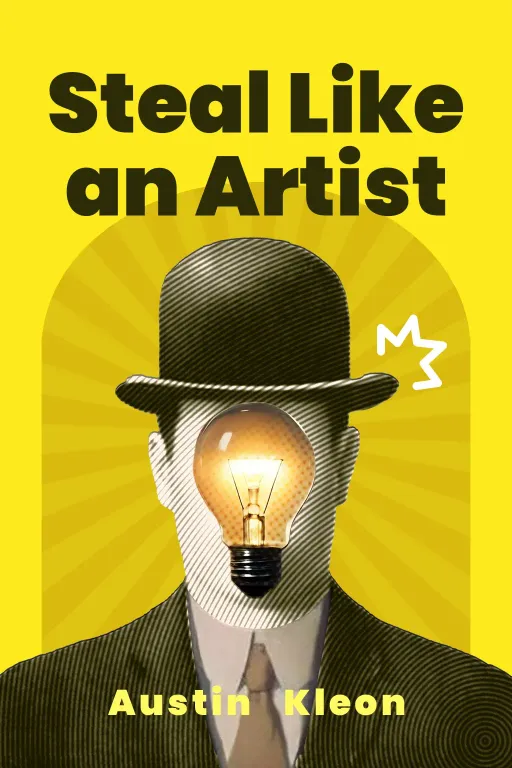
Nova: Kleon's first big, liberating idea, which he champions in his book "Steal Like an Artist," is that the 'originality' myth is a trap. We're often taught that true creation comes from a void, a sudden, lightning-strike spark of genius. But Kleon argues that all creative work, without exception, builds on what came before. It’s about collecting ideas, remixing them, and fundamentally making them your own.
Atlas: So you're saying there's no such thing as a truly original idea? That feels almost... counter-intuitive to everything I've been taught about innovation and personal expression. Like, shouldn't we be striving for something completely unprecedented?
Nova: That's the exact pressure that can paralyze us, Atlas! It's the pressure that makes us afraid to even begin. Think about truly iconic figures. Picasso, for instance. He famously declared, "Good artists copy, great artists steal." He wasn't advocating for plagiarism, of course, but a much deeper, more transformative kind of appropriation. He saw African masks, reinterpreted their powerful forms and lines, and used them as a foundational influence to forge Cubism. He didn't invent geometric shapes or abstract representation itself; he their essence, their raw power, and it into something new and utterly groundbreaking. His work was deeply influenced, yet undeniably and distinctively his own.
Atlas: Okay, that makes a lot more sense. It's not about copying a finished masterpiece; it's about taking the raw ingredients, the underlying principles, the brilliant techniques from various sources, and then cooking your own unique dish. It's like a master chef learning different culinary traditions from around the world, then creating a completely new fusion cuisine that reflects their own palate and vision.
Nova: Precisely! Kleon encourages us to actively curate our influences. He suggests building what he calls a 'swipe file' – a collection of anything and everything you love. This isn't just limited to your immediate field. It could be a powerful lyric from a song, a clever turn of phrase in a novel, a unique architectural detail you spotted, a surprisingly effective marketing campaign, or even just a compelling color palette. The trick then is to look for unexpected connections between these seemingly disparate elements, combine them, and see what emerges. He views creativity as a kind of 'genealogy' – understanding where your influences come from is key to understanding where you can go.
Atlas: Wow, that’s actually really freeing. For those of us who tend to dive deep into subjects, always looking for underlying systems and connections, this is basically giving us permission to nerd out, gather all these disparate threads, and then synthesize them into something meaningful. It totally aligns with that 'Ethical Explorer' mindset, right? You're exploring what others have done, but then you're integrating it purposefully for your own unique impact, rather than just consuming it passively.
Nova: Exactly! It completely shifts the focus from the anxiety of needing to be 'new' to the genuine joy of discovery, transformation, and building upon the vast human creative legacy. It’s about recognizing that every single piece of art, every invention, every idea, stands on the shoulders of giants. Newton himself said, "If I have seen further than others, it is by standing upon the shoulders of giants." He wasn't afraid to admit his influences.
Atlas: So this isn’t about being lazy or unoriginal; it’s about acknowledging the continuum of creativity and finding your place within it. It’s about seeing yourself as part of a larger conversation, rather than needing to start a brand new one from scratch every time.
Nova: Absolutely. It’s a much more sustainable and less paralyzing way to approach any creative endeavor, whether you're writing a book, designing a product, or even just trying to solve a complex problem at work. It gives you a starting point, a rich wellspring of inspiration, instead of an intimidating blank slate.
The Power of Sharing: Making Your Process Visible
SECTION
Nova: And that naturally leads us to Kleon's second big, equally powerful idea, from his follow-up book, "Show Your Work!" Once you've embraced your influences, started collecting, and begun creating by remixing, the next crucial step is to share your process, not just the finished product.
Atlas: Now that's a tough one for me. Most people, myself included, have this strong impulse to present only the polished, perfect version of their work. The messy middle, the mistakes, the false starts – that feels incredibly vulnerable. Why would I want to expose all that?
Nova: Because it's profoundly relatable, it builds genuine connection, and perhaps most importantly, it actually helps grow faster. Think about how much we appreciate behind-the-scenes documentaries. We don't just want to see the blockbuster movie; we want to see the director struggling with a scene, the actors rehearsing, the special effects team figuring out impossible shots. That's the human element, the journey. Kleon argues that sharing your journey, even the imperfect parts, invites people in, fosters a sense of community, and makes your eventual finished product even more impactful and appreciated.
Atlas: So, it's about being open and letting others see the journey, the evolution, not just the final destination. I imagine that's particularly powerful for 'Practical Scholars' who are always integrating knowledge for real-world impact. Showing the 'how' behind their insights, the research, the false assumptions, the learning curve – that could be incredibly valuable for their audience.
Nova: Absolutely. It also fundamentally demystifies the creative process. When you only ever see finished products – the perfectly painted canvas, the flawlessly executed business strategy, the brilliantly written novel – creativity can feel like magic, this unattainable gift bestowed only upon a select few. But when you see the struggle, the iteration, the small daily acts of persistence, the moments of doubt, it suddenly becomes accessible. It becomes human. It's like a master chef showing you how they experiment with different spices and cooking times, how they burn a few dishes, before finally perfecting that signature recipe, rather than just serving the immaculate final product. It builds trust and makes the work feel more authentic and achievable for others.
Atlas: And I can totally see how that would feed back into the first idea too. If I'm openly sharing my process, I'm also implicitly showing my influences, where I'm drawing inspiration from, and how I'm transforming it. It creates this wonderful, virtuous cycle of learning and sharing. It makes me wonder, though, how much is too much sharing? Is there a line between genuine transparency and just, well, oversharing, especially for those of us who tend to dive deep and might be prone to intellectual navel-gazing?
Nova: That’s a really insightful question, and it's something Kleon addresses. He’s not advocating for sharing in real-time, without thought. Instead, it’s about being intentional about documenting and then sharing aspects of your journey that inform, inspire, or educate. It’s about being a generous teacher, not just a performer constantly seeking validation. It's about letting people peek behind the curtain just enough to understand the magic, to connect with the human effort, and maybe even to learn to create some of that magic themselves. It’s a strategic generosity, not an unfiltered stream of consciousness.
Atlas: So it's about curating your process, just like you curate your influences. You show the parts that illuminate, that educate, that connect, rather than just every single step. That makes it feel less daunting.
Nova: Exactly. It's about opening a window into your world, allowing others to see the gears turning, the connections being made, the evolution happening. That shared vulnerability and transparency is incredibly powerful in building a true audience, a community around what you do, rather than just passive consumers of your finished work.
Synthesis & Takeaways
SECTION
Nova: So, what we're really getting at here, with Austin Kleon's brilliant insights, is a profound and liberating shift in how we approach creative work. It's about shedding the heavy, paralyzing cloak of the 'originality' myth and instead embracing our influences, collecting what truly inspires us, and then confidently, uniquely, making it our own.
Atlas: And then, once we've embraced that freedom and started creating, instead of hiding our journey and only presenting the perfect outcome, we open it up. We show our work, we share our process, the good, the bad, and the messy. It's about inviting others in, building community, and making creativity feel accessible, rather than intimidating or exclusive.
Nova: Precisely. The pressure to be perfectly original can truly paralyze us, keeping brilliant ideas locked away. But when we realize that creativity is fundamentally a conversation, a continuous remix, and a shared journey, it frees us to truly create, to experiment, and to contribute authentically. It gives us permission to learn, to grow, and to put our unique spin on the world without the burden of inventing everything from scratch.
Atlas: For anyone out there who feels that crushing pressure to be 'new,' or who's afraid to put their imperfect work out there, this is your permission slip. Your curiosity is your most powerful guide; trust it. Your insights, even if they build on others, are valuable; share them.
Nova: So, we want to challenge you: whose work do you admire most? How can you actively learn from them, dissect their methods, and use that inspiration to inform and enrich your own unique approach? Start there. And then, take that leap: show us your work.
Atlas: We’d absolutely love to hear about the influences you're embracing and the processes you’re sharing. Find us on social media and let us know what you're working on, even if it's still in progress!
Nova: This is Aibrary. Congratulations on your growth!