The Echo of Genius: Finding Your Voice in a Noisy World
10 minGolden Hook & Introduction
SECTION
Nova: What if the secret to finding your unique creative voice isn't to invent something entirely new, a bolt of lightning from a clear blue sky, but to embrace the radical idea that all great art is, in fact,?
Atlas: Whoa, that's a bold claim, Nova! "Stolen" sounds a bit… illicit. Are we talking about intellectual property crime here, or something more nuanced? Because for a lot of our listeners who are Architects, Storytellers, Connectors, the idea of pure, untainted originality is almost a sacred cow.
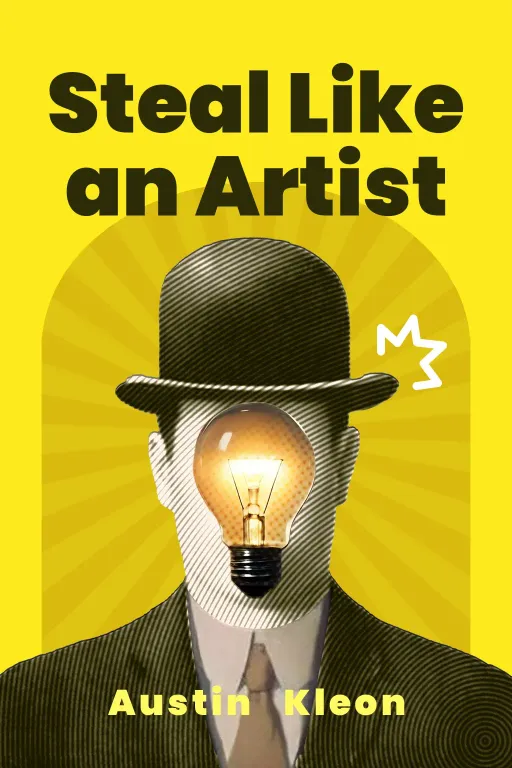
Nova: Absolutely not illicit, Atlas! We're diving deep into the brilliant and liberating philosophy of Austin Kleon, particularly from his two seminal works, and Kleon is an artist and writer who, refreshingly, demystifies the creative process. He pulls back the curtain on the often-intimidating notion of "genius" and shows us that creativity is far more accessible and iterative than we often imagine.
Atlas: I’m curious, what's his background? Because a lot of people feel that pressure, that quiet hum of wanting to create something original, but then they look at the giants in their field and just freeze.
Nova: That's exactly it. Kleon himself is an artist who found his own path by looking at how other artists work. He's not some ivory tower academic; he's a practitioner who speaks to the anxieties of modern creators with refreshing candor and practical advice. His books are incredibly popular because they tell you it’s okay to not be a one-of-a-kind unicorn, that there’s a blueprint for creativity that’s been used for centuries. He moves us away from that mystical "genius" narrative and into a more empowering, actionable space.
Atlas: That’s a great way to put it. I know a lot of our audience, especially those driven by impact and purpose, feel that tension between inspiration and invention. So, let’s unpack this "stealing" concept.
The Myth of Originality and the Art of Creative Theft
SECTION
Nova: So, the first big idea from is this: Originality is a myth. Every new idea is essentially a remix of existing ones. Think of it like a family tree for ideas, or a DJ sampling music. No one creates in a vacuum. Every artist, every innovator, every storyteller, every architect—they all stand on the shoulders of giants.
Atlas: But wait, how do you distinguish between influence and outright copying? For listeners who strive for ethical creation, for the Storyteller crafting a narrative, or the Architect designing a new space, this sounds like walking a very fine line. It feels risky, almost like an excuse for plagiarism.
Nova: That’s a crucial distinction, and Kleon is very clear about it. Good "stealing" isn't about outright plagiarism; it’s about. It honors the source by taking it, dissecting it, understanding its essence, and then recombining it with other influences, your own experiences, and your unique perspective to create something. Bad theft just degrades the source; good theft elevates it through reinvention.
Atlas: Can you give an example of that transformation? Because from a practical standpoint, say, in narrative design, you might draw from classic mythological structures, but you can’t just copy Odysseus’s journey beat for beat.
Nova: Exactly. Think of a famous musician, say, someone like Mark Ronson. He's a master at sampling. He takes old funk or soul riffs—pieces of music that are already great—and he doesn't just loop them. He recontextualizes them, adds new instrumentation, new vocals, new rhythms. The result is a completely fresh, genre-defining hit that still carries the ghost of its influences. Or consider a chef: they aren't inventing new ingredients. They take traditional flavors, techniques, and presentation, and through their unique vision, they reinvent them into a new culinary experience. It's about adding your own flavor to the ingredients you've gathered.
Atlas: So, for an Architect designing a new building, it’s not about copying an existing structure from a famous city. Instead, it’s about drawing inspiration from historical forms, from natural patterns found in a forest, from modern materials, and then blending them, iterating, and transforming them into something that is uniquely suited to its purpose and place. That makes sense. It’s about the of transformation.
Nova: Precisely. It’s about developing what Kleon calls a "swipe file" – a collection of things that resonate with you, things you love, ideas you find compelling. You don't just passively consume them; you actively collect them, study them, and then let them marinate and combine in unexpected ways within your own creative mind. Your unique voice emerges from the specific blend of influences choose, and how choose to remix them. It's deeply personal, even if the ingredients aren't "original."
Atlas: I like that. It reframes the anxiety of not being original into the challenge of being a brilliant curator and remixer. That’s actually really inspiring for anyone who feels that pressure to invent something from nothing.
The Power of Showing Your Work and Building Connection
SECTION
Nova: And that notion of transformation naturally leads us to the second crucial insight from Kleon, which is about the courage to share that transformation process. This is the core of his book It’s not enough to just "steal like an artist" and create; you also have to be willing to open up your creative journey, not just present polished end products.
Atlas: Okay, but for a Storyteller crafting a complex narrative, or a Connector building a new system, there's a strong impulse to only present the polished final product. Showing the messy middle, the drafts, the failed experiments, the half-baked ideas—that feels incredibly vulnerable. It can even feel unprofessional, like you’re showing your dirty laundry. Why is risking that vulnerability worth it?
Nova: That’s a fantastic question, and it speaks to a very real fear. But the "messy middle" is precisely where authenticity lives, and authenticity is the bedrock of connection. When you only show the final, perfect product, you create distance. You reinforce that mythical "genius" idea. But when you share the process—the struggles, the breakthroughs, the iterations—you invite people your world. They see themselves in your journey.
Atlas: So it's about inviting people into the journey, not just unveiling the destination.
Nova: Exactly. Think of an independent game developer. Instead of toiling in secret for years and then dropping a finished game, many successful indie devs share early prototypes, discuss design challenges, and even show their failures with their community online. What happens? The community feels invested. They offer feedback, they become advocates, they cheer you on. They transform from passive consumers into active participants. This turns potential isolation into powerful connection and even co-creation. It’s a powerful way to build a tribe, which is essential for any Architect, Storyteller, or Connector aiming for impact.
Atlas: That resonates so much with the "Connector" aspect of our listeners—building relationships through shared experience, even if that experience is still evolving. It's about transparency fostering trust.
Nova: Precisely. And it's also how your unique voice truly solidifies. When you share, you get feedback, you see reactions, you learn what resonates. Your voice isn't static; it's an evolving conversation with your audience. Remember the "healing moment" from our materials, where we suggest choosing an artist, appreciating their craft, then jotting down how their approach inspires your own? That's a form of "showing your work" to yourself, a way to process influences, to clarify your own evolving perspective before you even think about sharing outwardly.
Atlas: That’s a brilliant way to put it. It turns the act of creation from a solitary confinement into a communal exploration. It’s about building a narrative around your work, not just presenting facts.
Synthesis & Takeaways
SECTION
Nova: Ultimately, finding your unique voice isn't about being a lone wolf, striving for some unattainable, pristine originality. It's about being a curious sponge for inspiration a generous sharer of your evolving journey. These two ideas, "stealing like an artist" and "showing your work," are two sides of the same coin.
Atlas: For anyone feeling that quiet hum of wanting to create something truly original, yet lost in the shadow of giants, the pathway is clear: embrace influences with open curiosity, but then courageously open up your process. It’s a powerful, dual strategy for both individual growth and collective impact. It transforms the anxiety of invention into the joy of discovery and connection.
Nova: Absolutely. And to put it into action, we have a simple but profound "healing moment" for you this week. Take 15 minutes. Just 15 minutes. Pick one artist or creator whose work deeply moves you, whose craft truly resonates. Spend those 15 minutes simply appreciating what they do. Then, jot down three specific ways their approach, their style, their process, inspires work. Don't copy, just observe, internalize, and see how their echo sparks something new within you.
Atlas: That’s a fantastic way to start the "stealing" process ethically and mindfully. It's about active engagement, not passive consumption, and it directly supports that growth mindset our listeners embody. It’s how we bridge logic and emotion, making our empathy a superpower.
Nova: Exactly. And remember, your unique voice isn't something you find fully formed in isolation. It emerges from a deliberate, joyful engagement with the work of others, followed by the courage to share your evolving process. That's the echo of genius.
Atlas: A powerful reminder for all the Architects, Storytellers, and Connectors out there who are driven by connection and seek harmony in their creations. Thank you, Nova, for shedding light on these brilliant insights from Austin Kleon.
Nova: My pleasure, Atlas. Always a joy to explore these ideas with you.
Nova: This is Aibrary. Congratulations on your growth!