The Creative Paradox: Why Constraints Fuel True Innovation
9 minGolden Hook & Introduction
SECTION
Nova: What if everything you thought about creativity was wrong? We're told to think outside the box, break all the rules, pursue boundless freedom. But today, we're going to argue that true innovation, the kind that reshapes industries and inspires generations, actually thrives the box.
Atlas: Whoa, inside the box? That flies in the face of every motivational poster I’ve ever seen. I always thought the more freedom, the more options, the more groundbreaking the idea would be. You're saying less is more, even for creativity?
Nova: Absolutely, Atlas! It’s what we call "The Creative Paradox." Most people genuinely believe that boundless freedom automatically sparks creativity. But the cold, hard fact is, true innovation often thrives within clear boundaries. Limits force us to think differently, transforming challenges into unique opportunities for artistic and intellectual breakthroughs.
Atlas: That’s fascinating. I imagine a lot of our listeners, especially those grappling with complex systems or new technologies, might feel that constant pressure for "unfettered" innovation. So, where does this idea come from? What are we drawing on today?
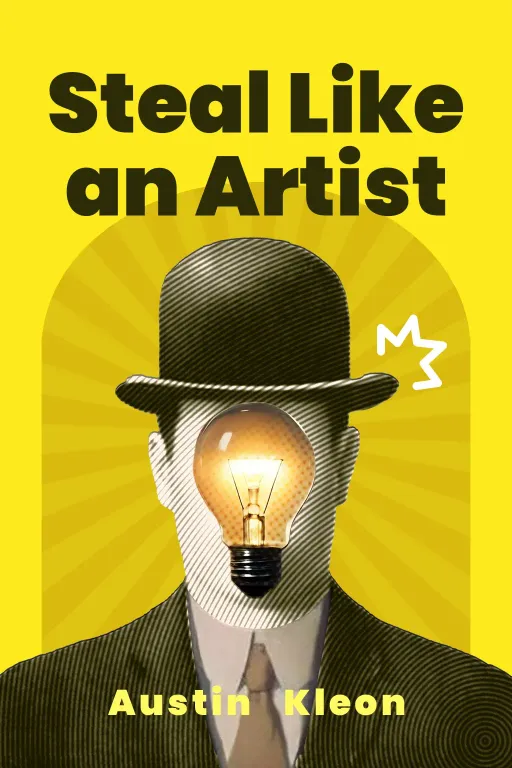
Nova: Today, we’re tapping into some brilliant minds. We’ll dive into insights from two incredible books: "Steal Like an Artist" by Austin Kleon, a widely influential book among creators for its accessible, illustrated take on originality, and "The Creative Act" by Rick Rubin, the legendary music producer whose book offers a truly profound and almost spiritual deep dive into the essence of creation.
Atlas: Okay, so a practical guide and a philosophical one. I like that blend. But let's get into this paradox. Why would boundaries actually creativity? It still feels counterintuitive.
The Counter-Intuitive Power of Constraints in Creativity
SECTION
Nova: It’s a great question, and it's the core of our first deep dive. Think about it: when you have infinite choices, where do you even start? It can be paralyzing. Constraints, on the other hand, provide a framework. They give you a problem to solve, a puzzle to piece together. Austin Kleon, in "Steal Like an Artist," makes a compelling case that original ideas rarely come from a vacuum. He argues that by embracing influence and working within defined structures, we can remix existing ideas into something new and personal.
Atlas: Okay, so it’s not just about resource scarcity, like a painter with only three colors. It's about to work within a framework. But doesn't "stealing like an artist" sound a bit... unoriginal? Where's the true innovation if you're just remixing?
Nova: That's the beautiful nuance, Atlas! Kleon isn't advocating for plagiarism. He's talking about understanding that all creative work builds on what came before. The constraint is the existing body of work. The innovation comes from you combine, transform, and personalize those influences. Think of it like a jazz musician. They operate within the constraint of established chord progressions and melodies, but their genius is in the improvisation, the unexpected variations, the fresh interpretation they bring to those structures. The limits give them a launchpad, not a cage.
Atlas: That's a great analogy. It gives the structure, the rules, but the magic happens in the interpretation. So, it's about channeling, not stifling.
Nova: Exactly! Let me give you a powerful example. Consider the filmmaker Lars von Trier and his Dogme 95 manifesto. This was a set of extremely strict, self-imposed rules for making films: all shooting had to be on location, no special lighting, no optical work, no genre films, no director credit, and handheld cameras only. They were literally putting themselves in a creative straightjacket.
Atlas: Wow, that sounds incredibly restrictive. I'm imagining a lot of filmmakers thinking, "Why would anyone that to themselves?" It sounds like it would just produce bland, uniform movies.
Nova: That's what you'd think, right? But the outcome was revolutionary. By eliminating all the usual cinematic bells and whistles – the huge budgets, the special effects, the elaborate sets – they were forced to focus entirely on story, character, and performance. The constraint wasn't about making a worse film; it was about stripping away everything non-essential to get to the raw truth of the narrative. The result was a series of incredibly raw, emotionally resonant, and highly original films that redefined independent cinema and influenced countless directors. The Dogme 95 films were anything but bland; they were visceral, immediate, and utterly captivating precisely because of their limitations.
Atlas: That's actually really inspiring. So, the constraint becomes a lens, focusing everything onto the core message. It pushes you to find solutions you wouldn't have considered if you had unlimited resources. As an analyst, I see the pattern: when you remove the easy answers, you're forced to dig deeper for the profound ones.
Tactical Application: Embracing Constraints for Personal Innovation
SECTION
Atlas: Okay, so if Dogme 95 and "Steal Like an Artist" show us the of constraints, how do we actually them? How do we apply this in our own work, especially when we're trying to build something new or manage a complex project, or even just be more creative in our day-to-day?
Nova: This is where Rick Rubin's insights in "The Creative Act" become invaluable. He emphasizes the importance of intention and self-imposed rules. Rubin guides creators to listen to their inner voice and shape their work through focused, deliberate choices, not random exploration. It’s about consciously your boundaries.
Atlas: So, it's not about waiting for external limitations to be imposed, but rather proactively setting them ourselves. But how do you choose the constraints? What keeps them from becoming stifling or counterproductive?
Nova: That's the art of it. Rubin would say it comes from deep listening to your creative impulse. But practically speaking, it's about making conscious decisions. For example, a writer might give themselves a strict word count for a chapter, or a designer might decide to only use a certain color palette, or a team might commit to developing a new feature within a wildly ambitious two-week sprint. These aren't arbitrary rules; they're chosen to amplify a specific aspect of the work, or to force a more efficient, innovative solution.
Atlas: I still struggle with this a bit. For someone who values systematic approaches, like many of our listeners, the idea of options feels inherently inefficient. Isn't the goal to explore all possibilities?
Nova: Not necessarily. Imagine a chef who has access to every ingredient in the world. They might create something interesting, but it could also be a chaotic mess. Now imagine that same chef is challenged to create an exquisite meal using only five ingredients. That constraint forces them to become incredibly inventive with each ingredient, to understand its full potential, and to combine them in ways they might never have explored otherwise. The result is often more refined, more distinctive, and more memorable precisely because of the focus.
Atlas: That's a perfect example. It's about depth over breadth. You're forcing yourself to master a smaller domain rather than superficially touching a vast one. So, it's a deliberate act of focus.
Nova: Exactly! And the book offers a tiny step that is profoundly impactful. For your next creative project, choose three strict limitations you begin. It could be the medium you use, a time limit, a specific theme, or even the tools you’re allowed to use. These aren't meant to make the task harder, but to channel your creative energy more effectively, leading to more distinctive and powerful outcomes.
Atlas: I can see how that would work. For someone like me, who tends to overanalyze and map out every single variable, having those predefined boundaries would actually be incredibly liberating. It gives you a clear path, rather than an endless forest.
Synthesis & Takeaways
SECTION
Nova: And that's the profound insight here, Atlas. Constraints aren't about limitation; they're about definition. They provide clarity, intentionality, and a framework within which true originality can flourish. It’s about understanding that the human mind, paradoxically, often performs its best when given a specific, challenging problem to solve, rather than a blank, intimidating canvas. It helps us avoid decision fatigue and focuses our mental energy where it truly matters.
Atlas: So, it's almost like a filter. Instead of being overwhelmed by infinite possibilities, you're given a powerful filter that highlights the most interesting and innovative pathways. It really reframes how I think about boundaries, not as barriers, but as guides.
Nova: Precisely. It’s about conscious choice. By consciously choosing and embracing constraints, we channel our creative energy more effectively, leading to more distinctive and powerful outcomes. It’s a call to embrace discipline as a pathway to freedom.
Atlas: I love that. Discipline as a pathway to freedom. For anyone listening right now, thinking about their next big presentation, a new project, or even just a creative hobby, what's that one tiny step they can take?
Nova: Here it is: for your very next creative endeavor, try imposing three strict limitations on yourself you even start. Maybe it's a deadline, a specific tool, or a theme you wouldn't normally choose. Just three. See how it transforms your thinking. We'd love to hear what you discover.
Atlas: I'm definitely going to try that. It feels like a powerful way to spark something new.
Nova: It truly is. This is Aibrary. Congratulations on your growth!