The Creative Code: Unlocking Artistic Flow and Innovation
9 minGolden Hook & Introduction
SECTION
Nova: What if I told you that the secret to true originality isn't about being unique, but about being a master thief?
Atlas: Wait, are we talking about intellectual property theft or something more… artful? Because for our listeners who dissect systems, the nuances here are critical.
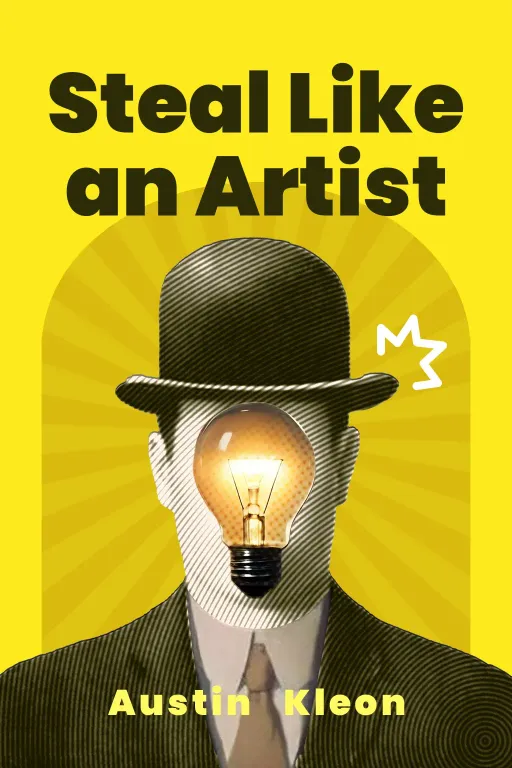
Nova: More artful, absolutely! And profoundly effective. Today we're diving into "The Creative Code: Unlocking Artistic Flow and Innovation," a concept inspired by authors like Austin Kleon and Julia Cameron. Kleon, an artist who found a massive following sharing his creative process online, actually started his career as a web designer, which deeply informed his practical, accessible approach to creativity.
Atlas: That’s fascinating. It grounds his ideas in a very hands-on reality. And Cameron, a former playwright and director, designed "The Artist's Way" as almost a recovery program from creative blocks, drawing from her own journey of rediscovering her artistic voice. So, these aren't just theoreticians, they're practitioners.
Nova: Exactly. And their insights challenge a fundamental blind spot many of us have about creativity. We often see it as this mysterious spark, a gift bestowed upon a lucky few, rather than a skill, a process that can be understood and cultivated.
Atlas: Right, like an innate talent that you either have or you don't. For someone who thrives on understanding systems and processes, that kind of vague, almost mystical definition of creativity can feel like a dead end. It leaves no room for analysis, no path for improvement.
Nova: And that's where we start, by dismantling that myth.
Dismantling the Myth of Solitary Genius & Embracing 'Steal Like an Artist'
SECTION
Nova: Kleon argues that all creative work, truly of it, builds on what came before. He encourages embracing influence, learning from others, and remixing ideas to create something new. Think about the history of music, for instance. From folk songs evolving through generations to modern hip-hop sampling classic tracks, artists are constantly taking elements, recontextualizing them, and forging something distinct.
Atlas: So you're saying a great historian isn't just discovering new facts, but also skillfully reinterpreting existing narratives, drawing connections that weren't obvious before? Like taking disparate pieces of evidence and weaving a new, compelling historical thesis?
Nova: Precisely! Or an architect studying ancient Roman structures, not to copy them, but to understand their principles of stability and aesthetics, then applying those principles in a completely modern, innovative way. It's not about plagiarism. It's about seeing the world as a vast, open-source library of ideas.
Atlas: That makes sense. For an analyst, the process of pattern recognition is key. We look for recurring themes, underlying structures. But how do you ensure that this "stealing" leads to genuine innovation, rather than just a rehash? Where's the line between informed influence and mere imitation?
Nova: That’s the critical question, and it's where your unique perspective comes in. Kleon’s point is that you don't just copy; you. You absorb influences, let them marinate with your own experiences and insights, and then you output something that carries echoes of your influences but is ultimately. It's about finding your voice others, not despite them.
Atlas: So it's like a scientific researcher who builds upon decades of prior studies. They don't just repeat experiments; they use the established knowledge as a foundation to ask new questions, design new methodologies, and ultimately, advance the field. The "theft" is in the rigorous study and understanding of the predecessors.
Nova: Exactly! It's an active, engaged theft. You're not just passively consuming; you're dissecting, analyzing, and then reconstructing. It's a deep form of learning. Kleon says, "Don't just steal the style, steal the thinking behind the style." That’s where the true originality begins to emerge. It’s a process of deep observation, relentless curiosity, and then courageous experimentation with what you’ve collected.
Atlas: That's a powerful distinction. It shifts the focus from a potentially dubious act to a rigorous intellectual process. For someone who values accuracy and intellectual honesty, that reframing is essential. It tells us that even in the most original thought, there's always a lineage, a conversation with the past.
Cultivating Consistent Creativity: The Power of Daily Practice and Nurturing Your Inner Artist
SECTION
Nova: And once we've embraced this idea of drawing from others, the next question for many of our analytical listeners is, 'How do I actually this consistently?' We can't just wait for lightning to strike. That's where Julia Cameron's work becomes so vital.
Atlas: Oh, I like that. The practical application. Because for someone whose routine is often dictated by demanding schedules and the need for consistent output, relying solely on sporadic inspiration is a non-starter. You need a system.
Nova: Absolutely. Cameron, through her book "The Artist's Way," provides practical tools to help individuals unblock their creativity. She emphasizes daily practice and nurturing one's inner artist. Her two most famous tools are 'morning pages' and 'artist dates.'
Atlas: Morning pages, I've heard of those. That's where you write three pages, longhand, first thing in the morning, without editing, just a stream of consciousness. Correct?
Nova: That's right. It clears the mental clutter. Think of it like defragging your brain's hard drive. For our analytical listeners, imagine all the background processes and fragmented thoughts that accumulate. Morning pages are a systematic way to dump them out, creating space for clearer, more focused thinking, and eventually, new ideas. It’s a disciplined practice designed to unblock and reveal.
Atlas: I can see the analytical appeal there. It’s a structured approach to managing internal noise, almost like a daily ritual of mental hygiene. But then there are 'artist dates.' For someone whose time is already allocated to deep study or complex problem-solving, how does one realistically carve out time for what sounds like a leisurely outing?
Nova: It’s not necessarily leisurely, Atlas, though it can be. An artist date is a solo excursion, two hours a week, to do something that nurtures your creative spirit. It could be visiting a museum, exploring a new neighborhood, listening to a concert, or even just sitting in a park observing. The key is that it’s purely for input, for inspiration, for filling your well. It’s not about productivity; it’s about presence and absorption.
Atlas: That gives me an interesting thought. For someone deeply immersed in geopolitical shifts or post-war reconstruction, an artist date might not be a visit to a gallery, but perhaps exploring a historical archive that's unrelated to their current project, or even just reading a historical fiction novel that offers a different lens on human experience. It's about stepping outside the immediate analytical framework to gain a broader perspective.
Nova: Exactly! It’s about feeding your subconscious. These practices, morning pages and artist dates, they’re not about immediate results. They’re about consistent, gentle cultivation. They show that creativity is less about isolated genius and more about consistent practice, observation, and fearlessly drawing connections from the world around us. It's about building a sustainable creative life.
Atlas: So it’s the intellectual equivalent of a consistent workout routine. You don't see massive gains overnight, but over time, that consistent effort builds strength, resilience, and capacity. It's the long game.
Synthesis & Takeaways
SECTION
Nova: And that's the profound insight that ties these two seemingly different approaches together. Whether you're "stealing like an artist" by consciously drawing from a vast well of existing knowledge, or diligently doing your morning pages to clear the path for new ideas, it’s all about consistent, intentional engagement.
Atlas: It reinforces the idea that true innovation, whether in art, science, or even geopolitical analysis, isn't a spontaneous lightning bolt. It's the result of diligent observation, systematic processing of information, and a continuous willingness to engage with both internal and external sources of inspiration. It's a skill you hone, not a gift you're granted.
Nova: It's about seeing the entire world as your studio, your library, your laboratory. Every piece of information, every experience, every historical event can be a prompt, a building block, a catalyst. And the more you engage with it, the more you practice, the richer your creative output becomes.
Atlas: So, for our intellectually rigorous listeners, how might you 'steal like an artist' in your own field, or incorporate a small, daily creative practice into your routine this week, perhaps even tying it to your deep study sessions? What existing ideas can you remix, or what daily ritual can you adopt to clear the path for your own profound insights?
Nova: Think about it. The code for unlocking your artistic flow and innovation is already within reach, waiting for you to practice.
Atlas: This is Aibrary. Congratulations on your growth!