

Mastering Your Craft: The Path to Deep Expertise and Lasting Skill
8 minGolden Hook & Introduction
SECTION
Nova: Atlas, quick question: if I told you the 10,000-hour rule, that famous path to mastery, is actually one of the most misunderstood and, frankly, misapplied ideas out there, what would you say?
Atlas: Oh, I'd say you just broke a lot of people's brains, Nova! Everyone quotes that rule like it's gospel. So, you're telling me it's not simply about putting in the time?
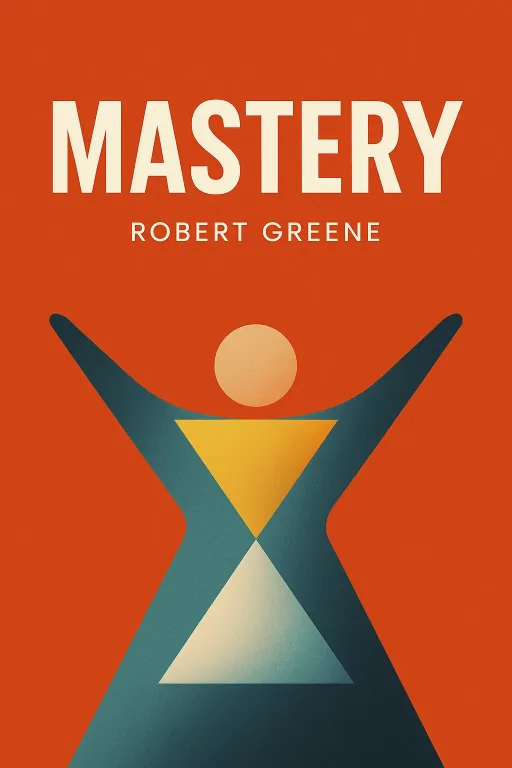
Nova: Exactly! Today, we're unpacking "Mastering Your Craft: The Path to Deep Expertise and Lasting Skill," a powerful synthesis drawing from giants like Robert Greene's "Mastery" and Anders Ericsson's groundbreaking work on 'Peak' performance.
Atlas: Oh, Ericsson, the "father of deliberate practice," right? The guy who basically quantified how champions are made, not born. I always thought that was fascinating, how he demystified expertise.
Nova: Absolutely. His research fundamentally reshaped how we think about skill acquisition, making it less about some mythical 'gift' and more about a strategic, actionable process. It's about dismantling the idea that genius is innate and revealing it as something cultivated.
Atlas: That resonates with anyone who's ever tried to build something robust, like a system or a community. You quickly learn that relying on 'natural talent' only gets you so far. There has to be a deeper, more intentional process.
Nova: And that's precisely where we start: by pulling back the curtain on what true mastery actually looks like, beyond the myths of overnight success or inherited brilliance.
Unpacking the Myth of Innate Talent: The True Nature of Mastery
SECTION
Nova: Many of us grow up believing that some people are just born brilliant. They're the Mozarts, the Einsteins, the da Vincis. We admire them, but often from a distance, thinking their achievements are beyond us because we weren't blessed with the same 'talent.'
Atlas: Right? It's easy to look at a highly successful founder or a visionary architect and think, "Wow, they just it." It feels almost like magic, like they were destined for it.
Nova: And Robert Greene, in his book "Mastery," meticulously dissects this very idea. He argues that what we perceive as innate talent is almost always the culmination of an intense, often solitary, and deeply immersive journey. He showcases historical masters, not as superheroes, but as individuals who followed a specific, arduous path.
Atlas: So, it’s not about waiting for inspiration to strike, but actively seeking it out through relentless effort?
Nova: Precisely. Take someone like Leonardo da Vinci. We see the Mona Lisa, the flying machines, the anatomical drawings, and think 'genius.' But Greene reveals a man who spent countless hours in actual apprenticeships, dissecting cadavers, meticulously observing nature, failing, iterating. His 'talent' was his insatiable curiosity and his profound dedication to understanding the world in its most granular detail. He didn't just paint; he became an expert in optics, geology, human anatomy—all to inform his art.
Atlas: That's incredible. It makes me wonder, for someone who's trying to build a foundational system, how does this 'deep immersion' translate? It sounds like it requires an almost obsessive focus.
Nova: It does, but it's a. For an architect, it might mean not just designing buildings, but deeply studying the properties of every material, the history of structural failures, the psychology of space, the flow of human movement. Greene points out that masters often go through an 'apprenticeship phase' where they absorb everything, then a 'creative-active phase' where they experiment and internalize, and finally a 'mastery phase' where their intuition becomes second nature. It's a journey of profound exploration, not just execution.
Atlas: That’s a great way to put it. It’s less about a single stroke of genius and more about a lifetime of informed intuition. It’s about cultivating wisdom, not just accumulating skills. I can see how that would lead to truly lasting value.
Nova: It's about understanding the underlying principles so deeply that you can innovate within them, rather than just copying what came before. It’s about becoming truly foundational in your approach.
The 'How' of Deep Expertise: Embracing Deliberate Practice
SECTION
Nova: Now, if Greene tells us mastery is—this deep, cultivated intuition—Ericsson gives us the. His work on deliberate practice is the engine that drives this journey.
Atlas: Okay, so if I'm not born with it, and I need to immerse myself, how exactly do I that? What does 'deliberate practice' actually mean on a Tuesday afternoon?
Nova: That’s the million-dollar question, and Ericsson answers it brilliantly. Deliberate practice isn't just practicing a lot. It's a very specific, uncomfortable, and highly focused type of practice. It involves four key elements: specific, well-defined goals; focused attention; immediate feedback; and consistently pushing beyond your comfort zone.
Atlas: Hold on. So it's not just about doing something for 10,000 hours, it's about doing it for 10,000 hours, pushing the edge every single time? That sounds exhausting, but also incredibly effective.
Nova: Exactly! Think of a chess grandmaster. They don’t just play game after game. They analyze their past matches, identify specific weaknesses—maybe their endgame strategy, or their opening moves against a certain opponent. Then, they design drills specifically to improve, often with a coach providing immediate feedback. They're not just playing; they're.
Atlas: I guess that makes sense. For someone trying to cultivate a resilient team, or design robust systems, how does one even identify their 'weakest point' when the feedback isn't as clear as winning or losing a chess game?
Nova: That’s where the "immediate feedback" component becomes crucial, and it’s often the hardest part to implement. In complex fields, immediate feedback might come from peer reviews, structured mentorship, or even self-analysis through rigorous journaling and reflection. The key is to actively seek it out, even if it's uncomfortable. It's about creating a feedback loop where you're constantly testing your assumptions and refining your approach.
Atlas: That makes me wonder, how do you push beyond your comfort zone without completely burning out? For someone driven by sustainable growth, 'uncomfortable' practice sounds like a recipe for exhaustion.
Nova: That’s a valid concern. Deliberate practice isn't about brute force; it's about smart, targeted effort. It’s about finding that sweet spot where the challenge is just beyond your current capability, but not so far that it's overwhelming. And it's often done in short, intense bursts, followed by rest and integration. It demands deep focus, which is why those 30-minute focused sessions are so much more effective than hours of distracted "practice." It's about working smarter, not just harder, to build that resilient skill set over time.
Synthesis & Takeaways
SECTION
Nova: So, what we've really explored today is that mastery isn't some mystical state reserved for the chosen few. It's a journey, as Greene illustrates, of deep immersion and relentless learning, fueled by Ericsson's principles of deliberate practice. It’s a path open to anyone willing to put in the focused, uncomfortable, yet incredibly rewarding work.
Atlas: And what truly stands out for me is that this isn't just about individual skill. It’s about intentionally cultivating a better self, better systems, better communities. It aligns perfectly with the idea of building lasting value, not just short-term gains. It's the ultimate foundational approach.
Nova: Absolutely. It's the difference between being merely competent and becoming truly foundational, truly exceptional. It ensures your contributions are not just good, but profoundly impactful. It's a continuous process of learning, adapting, and growing.
Atlas: That’s actually really inspiring. For our listeners who are Architects or Cultivators, striving for that deeper expertise, what's one tiny, concrete step they can take this week to apply this idea of deliberate practice to that 'core skill' they're aiming to master?
Nova: Identify one core skill you want to elevate. Then, for just 30 minutes this week, design a highly specific practice session that pushes your weakest point in that skill. No distractions, just focused, uncomfortable growth. And then, reflect on what you learned. That small step is the beginning of the long game of mastery.
Atlas: Thirty minutes of focused discomfort for profound impact. I like that.
Nova: It’s how you transform raw potential into a resilient, impactful skill set.
Atlas: Amazing insights today, Nova.
Nova: Always a pleasure, Atlas.
Nova: This is Aibrary. Congratulations on your growth!









