How to Foster Creativity and Innovation Without Relying on 'Natural Talent.'
9 minGolden Hook & Introduction
SECTION
Nova: Forget the tortured artist, the lone genius, the 'aha!' moment that strikes out of nowhere. We've been sold a myth about creativity, and honestly, it's holding us back.
Atlas: Oh, I like that! Holding us back from what, exactly? From our inner Picasso, or from actually getting things done? Because I think a lot of us are still waiting for that lightning bolt of inspiration to hit.
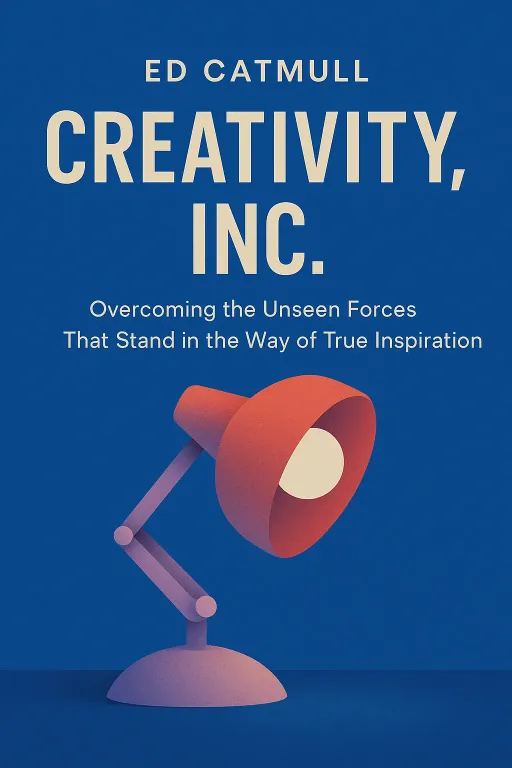
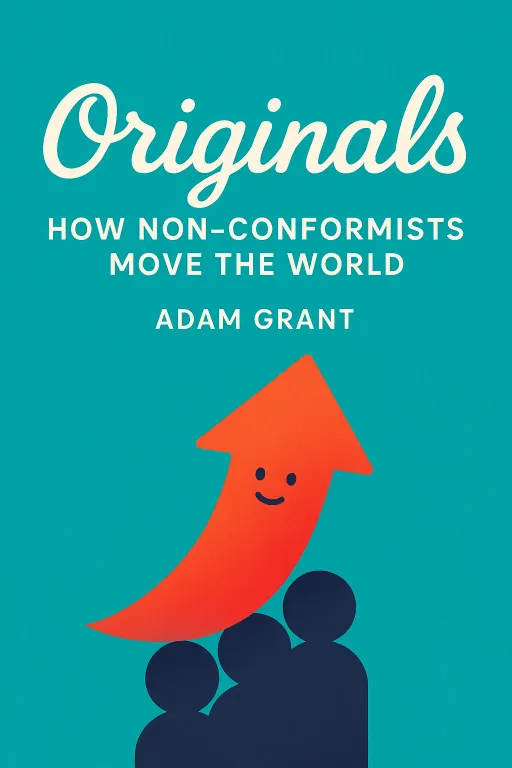
Nova: Exactly! That lightning bolt is rarely how real, impactful innovation happens. Today, we're diving into how creativity and innovation are not mystical gifts, but rather skills and environments that can be systematically built and nurtured. We're drawing insights from two incredible thinkers: Adam Grant's seminal work, "Originals: How Non-Conformists Move the World," and Ed Catmull's "Creativity, Inc.: Overcoming the Unseen Forces That Stand in the Way of True Inspiration at Pixar."
Atlas: And these aren't just feel-good manifestos, are they? Adam Grant, as an organizational psychologist at Wharton, grounds his insights in rigorous research, showing us the data behind what makes some people truly 'original.' And Ed Catmull, the co-founder of Pixar, brings a unique blend of technical wizardry and artistic vision to his leadership, having literally built a creative empire from the ground up.
Nova: Absolutely. Both of them, from their distinct vantage points, dismantle this idea of innate talent and instead offer blueprints for cultivating originality. So, today we'll dive deep into this from two perspectives. First, we'll explore how individuals can champion groundbreaking ideas and navigate resistance, then we'll discuss how organizations can cultivate a culture where those ideas can truly thrive.
Challenging the Status Quo: The Power of Non-Conformity
SECTION
Nova: So let's start with Adam Grant. His book, "Originals," doesn't celebrate rebellion for rebellion's sake. It's about strategic non-conformity. He shows how people who move the world aren't necessarily the loudest or the most radical, but those who are adept at championing new ideas, building alliances, and navigating resistance effectively.
Atlas: That makes me wonder, how do you champion a truly new idea without just being seen as a contrarian, or worse, someone who's simply difficult? Because in many organizations, especially those navigating complex challenges, the default can often be to stick to what's known.
Nova: That's a critical point. Grant illustrates this beautifully with the Warby Parker story. When they first proposed selling prescription glasses online, directly to consumers, the industry giants scoffed. It seemed too disruptive, too risky. But the founders weren't just blindly rebellious. They systematically de-risked their idea. They started small, testing their concept, getting feedback, and slowly building their coalition of believers. They understood that being original isn't about being first; it's about being different and.
Atlas: So it's not about the sudden flash of genius, but more about a calculated, persistent effort to chip away at the status quo. I like that. But what about the ideas that seem truly "out there" at first glance? How do you protect those nascent thoughts from immediate dismissal? Especially when I'm thinking about guiding responsible innovation in edtech, where challenging norms is crucial, but ethical considerations are paramount.
Nova: That's where Grant identifies a fascinating trait: successful originals are often surprisingly risk-averse in other areas of their lives. They might be financially conservative, or have backup plans. This allows them to take bigger intellectual risks. They also know how to present their ideas, not as fully formed revolutions, but as evolving concepts. They invite feedback, they iterate, they don't demand immediate adoption.
Atlas: That makes sense. It's almost like they're presenting an "ugly baby" – a term Catmull uses – something with potential, but not yet polished. But isn't there a danger that too much dissent, even strategic dissent, can lead to chaos or decision paralysis? We're often told to value consensus, especially in global collaboration.
Nova: Absolutely, it's a balance. Grant emphasizes that effective originals aren't just dissenters; they're skilled communicators. They build "vulnerability networks" where they can share their raw ideas without fear of judgment. They understand the art of persuasion, appealing to shared values, and framing their novel ideas not as threats, but as opportunities to achieve common goals more effectively. It's about channeling that non-conformity productively.
Atlas: So, it's less about being a lone wolf, and more about strategically assembling your pack to push new frontiers. That's a powerful distinction for anyone looking to build fundamental shifts, not just temporary solutions.
Building a Culture of Candor: The Pixar Playbook for Creativity
SECTION
Nova: And that naturally leads us to the second key idea we need to talk about, which often acts as a critical counterpoint to individual originality: the environment in which those ideas can actually thrive. This is where Ed Catmull and his insights from "Creativity, Inc." become indispensable. He argues that even the most brilliant individuals will be stifled in a culture that doesn't actively foster creativity.
Atlas: I can see that. You can have all the "originals" in the world, but if the system chokes their ideas, it's all for naught. What exactly does Catmull mean by a creative culture? It sounds like a buzzword sometimes.
Nova: Oh, it's anything but. Catmull's principles, forged at Pixar, are intensely practical. He talks about psychological safety, radical candor, and protecting what he famously calls "ugly babies." These are early, unformed ideas that, if judged too harshly or too soon, will never mature into masterpieces.
Atlas: "Ugly babies." I love that. It perfectly captures the vulnerability of a new concept. But how do you create an environment where people feel safe enough to bring their "ugly babies" to the table, knowing they might be torn apart? Especially in cross-cultural leadership, where direct criticism can sometimes be misinterpreted.
Nova: That's where the Pixar "Braintrust" comes in. It's a vivid case study of radical candor done right. Imagine a room full of Pixar's top creative minds – directors, writers, animators – sitting down to review an unfinished film. The rule is simple: everyone speaks their mind, no holds barred, but the feedback is always focused on the, not the person. And crucially, the director of the film being reviewed is not obligated to take any of the advice, but they listen.
Atlas: So it's peer-to-peer feedback, devoid of hierarchy, but with a clear understanding of intent. That's a nuanced approach. It sounds incredibly effective for refining ideas, but also potentially very challenging to maintain. How do you prevent it from devolving into just criticism, or even a popularity contest of ideas?
Nova: Catmull emphasizes two things: trust and a shared commitment to excellence. The Braintrust is successful because everyone genuinely believes in the collective goal of making the best film possible. There's also a strict separation of creative review from hierarchical power. The director gets the feedback, but they own the final decision. This protects the idea, allowing it to evolve through candid, constructive criticism, rather than being prematurely judged or killed by a single authority.
Atlas: That’s a fascinating model for building visionary edtech ecosystems. It suggests that if we want truly innovative learning solutions, we need to create spaces where new approaches can be rigorously critiqued and refined without fear of failure or personal attack. It's about building a robust feedback loop that strengthens the idea, rather than just validating it.
Nova: Precisely. It's about designing systems where candor is a tool for growth, not a weapon. Where the process values learning and iteration over initial perfection.
Synthesis & Takeaways
SECTION
Nova: So, bringing it all together, what Adam Grant and Ed Catmull show us is that creativity isn't about waiting for inspiration; it's about building the conditions for it. It requires individuals who are brave enough to be "originals" and strategic enough to champion their ideas, AND organizations that are wise enough to cultivate a culture where those "ugly babies" can be nurtured into masterpieces.
Atlas: And what I'm taking away is that this isn't just for Hollywood or corporate giants. For anyone driven to build a better future, whether that's through ethical AI or cross-cultural learning, it's about cultivating ecosystems where new ideas can safely emerge and be refined. It’s a call to action to consciously design our environments.
Nova: Absolutely. It's less about innate talent and more about building environments where new ideas can safely emerge and be refined. And it starts small.
Atlas: Right. So, for our listeners, here’s a tiny step you can take this week: identify one meeting or discussion where you can actively solicit and protect a 'dissenting' or unconventional idea. Don't just listen; create the space for it to breathe, even if it seems a bit 'ugly' at first. That's how we start building the future, one brave idea at a time.
Nova: This is Aibrary. Congratulations on your growth!