The Inner World of the Creator: Crafting Meaning and Identity
12 minGolden Hook & Introduction
SECTION
Nova: Atlas, five words. Describe the feeling of staring at a blank page.
Atlas: Oh, definitely: "Terrifying, exhilarating, endless, necessary, frustrating." It's like a paradox, isn't it?
Nova: A perfect paradox, much like the creative process itself. Today, we're diving into "The Inner World of the Creator: Crafting Meaning and Identity," drawing wisdom from literary giants like Anne Lamott and Stephen King, who masterfully blended their intensely personal experiences with practical advice on the craft. They showed us that the often-solitary act of writing is, in its essence, a profoundly shared human experience.
Atlas: That blend of the deeply personal and the universally practical is what makes their insights so powerful. It's not just about to do, but to do it, and how others have navigated that emotional landscape before us.
Nova: Exactly. And that feeling of shared struggle, that resonance, is where we begin. It's the silent acknowledgment that many creators feel the crushing weight of expectation, the daunting blank page, or the nagging sense of an unfulfilled vision. For so many, it’s a constant companion.
Atlas: It’s interesting how you frame it as a 'shared human experience.' For someone who tends to dissect complex systems and seeks factual understanding, you might initially dismiss emotional struggle as an inefficiency. But you're suggesting it's actually an integral, even vital, part of the creative process. Is that right?
Nova: Absolutely. It’s not an inefficiency; it’s the crucible. Acknowledging this struggle, truly seeing it for what it is—a common thread in the tapestry of creation—is the very first, most crucial step to moving forward. If we pretend it doesn't exist, we're building on shaky ground. It’s a profound insight, really. It moves us past the romanticized idea of the muse striking effortlessly and grounds us in the reality of the work.
The Universal Creative Struggle and the Power of Acknowledgment
SECTION
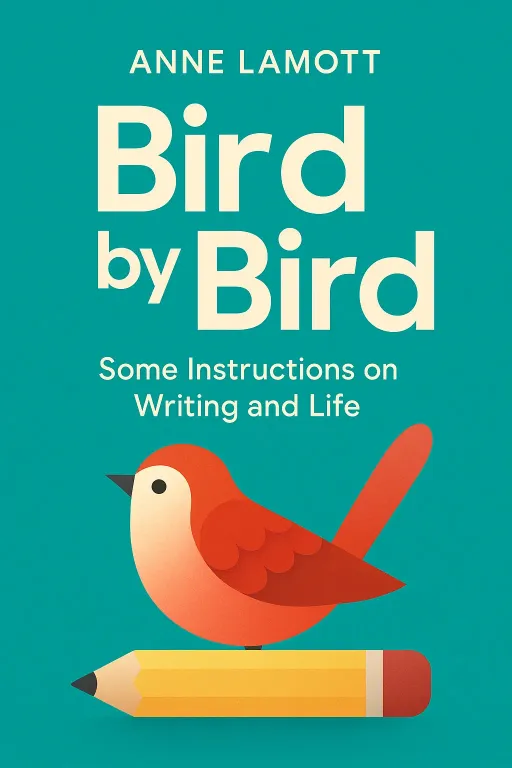
Nova: When we talk about embracing this struggle, Anne Lamott's "Bird by Bird: Some Instructions on Writing and Life" is an absolute masterclass. Lamott is incredibly open about her own vulnerabilities and triumphs as a writer. She offers these poignant, often laugh-out-loud humorous, insights into the sheer vulnerability and the gritty perseverance required for any creative endeavor.
Atlas: I'm curious, for the analytically-minded creator who might prioritize structure and output, how does Lamott's emphasis on "vulnerability" translate into something tangible? Is it a call to just 'feel your feelings,' or is there a more strategic benefit to this emotional openness in the creative process?
Nova: That's a brilliant question, Atlas, and it gets to the heart of it. It’s not just about feeling your feelings in some amorphous way. Lamott gives us a very concrete, almost ritualistic approach to embracing vulnerability. She famously talks about "shitty first drafts." Her simple, profound advice is to give yourself permission to write a terrible first draft. It doesn't have to be perfect; it just has to.
Atlas: "Shitty first drafts." I love that. It’s almost a permission slip for imperfection, which, to an analytical mind seeking clarity and precision, feels counter-intuitive. We’re often trained to strive for excellence from the outset.
Nova: Exactly! But Lamott argues that perfectionism is the enemy of creation. She tells a story about her older brother when he was ten. He had a huge report on birds due the next day, and he hadn't started. He was overwhelmed by the sheer scale of the task – all the different species, all the facts. His father sat him down, put an arm around him, and said, "Bird by bird, buddy. Just take it bird by bird."
Atlas: That’s a powerful analogy. It breaks down an overwhelming task into manageable components. For our listeners who dedicate time to deep, uninterrupted study, that resonates with the idea of focused, incremental progress. It’s a systematic approach to tackling something immense.
Nova: It absolutely is. And the vulnerability comes in admitting that the first "bird" you write about might be clumsy, inaccurate, or just plain. But it's a starting point. Lamott shows us that the emotional landscape of creation is messy, full of self-doubt and fear. By openly sharing her own struggles—her insecurities, her writer's blocks, her moments of despair—she validates our own. She makes us realize we're not alone in thinking, "This is terrible, I can't do this."
Atlas: So, the strategic benefit of vulnerability, then, is that it disarms the internal critic, allowing you to actually and then the work, rather than being paralyzed by the expectation of immediate perfection. It's almost a psychological hack for overcoming inertia.
Nova: Precisely! It's a fundamental truth that many analytical thinkers appreciate: you can't optimize what doesn't exist. You have to create the raw material first, no matter how flawed, before you can refine it. And that permission to be flawed, that self-compassion, is what Lamott champions. It's the courage to show up, even when you feel ill-equipped, and put something, anything, on the page.
Dedication, Consistency, and Self-Compassion as Creative Pillars
SECTION
Nova: And that willingness to show up, even when you feel ill-equipped, naturally leads us to another titan of the craft, Stephen King. His book, "On Writing: A Memoir of the Craft," blends his own fascinating life story with incredibly practical, no-nonsense advice on writing. King demystifies the creative process in a way that’s both inspiring and incredibly grounding. He champions the idea that consistent work and sheer dedication are far more important than some elusive, inborn "pure talent."
Atlas: From a historical perspective, how revolutionary was King's demystification of talent? So many creative fields, even intellectual pursuits, have this romanticized notion of genius. King seems to be saying, "Forget the lightning bolt; just show up." For someone who seeks clarity and factual understanding, what's the practical, almost scientific, argument for 'showing up' even when you don't feel like it?
Nova: That’s a fantastic point, Atlas. King's approach was, and still is, quite revolutionary in its bluntness. He cuts through the mystique. He argues that talent is overrated compared to persistence. His own story is a testament to this: he wrote constantly, even when living in a trailer, working multiple jobs, and struggling to make ends meet. He famously threw his first novel, "Carrie," in the trash after getting frustrated with it, only for his wife, Tabitha, to retrieve it and encourage him to keep going. Imagine if he hadn't had that perseverance, or that support.
Atlas: So, the "scientific" argument, if you will, for showing up, regardless of inspiration, is that it builds a habit, a muscle. It creates a consistent output, which then provides material for refinement, much like Lamott’s "shitty first drafts" idea. It's about generating data points, even if they're imperfect, to then analyze and improve.
Nova: Exactly! King's routine is legendary. He writes every single day, including holidays, aiming for a certain word count. He treats writing like a job, a serious profession, not a hobby dependent on the whims of a muse. He argues that if you want to be a writer, you. You don't wait for inspiration; you create the conditions for it. This consistent application of effort, even on days when the words don't flow easily, is what separates those who dream of creating from those who actually do.
Atlas: That resonates strongly with the "Growth Recommendation" in our listener profile: "Dedicate specific time for deep, uninterrupted study each week." It's about the discipline of consistent engagement. But then, Nova, you also mentioned "self-compassion" earlier. How does that fit into King's rigorous, almost Spartan, work ethic? It seems like a potential tension between dedication and self-kindness.
Nova: It’s a beautiful tension, actually, and it's where Lamott and King's wisdom truly converges. King's dedication is about the of showing up, the discipline. But self-compassion, which Lamott champions, is about how you during that act. It's not about letting yourself off the hook for the work. It's about being kind to yourself when the work is hard, when the words aren't coming, or when the output isn't what you hoped for.
Atlas: So, it's not about being soft on the process, but being soft on the within the process. It's acknowledging the effort without necessarily judging the immediate outcome too harshly.
Nova: Precisely. Let's say you're a historian meticulously researching post-war reconstruction. You dedicate your specific time, you show up, you dig through archives. That's King's dedication. But then you hit a dead end, or a source contradicts your hypothesis, or you feel overwhelmed by the sheer volume of information. That's where Lamott's self-compassion comes in. Instead of berating yourself for not being productive enough, or for not having the answer immediately, you acknowledge the effort, you accept the temporary setback, and you give yourself permission to step back, re-evaluate, and then return to the task with renewed, kinder energy.
Atlas: I see. It's about sustaining the long game. If you're too harsh on yourself, you risk burnout and abandoning the pursuit entirely. Self-compassion, then, becomes a mechanism for psychological resilience, ensuring the dedication can actually continue over time.
Nova: Exactly. These personal accounts from Lamott and King beautifully validate the entire emotional landscape of creation. They remind us that dedication, self-compassion, and a willingness to simply show up—to put that "butt in chair," as King would say—are the foundational pillars to bringing our artistic or intellectual visions to life. It’s a powerful combination: the grit to do the work, and the grace to forgive yourself for its imperfections along the way.
Synthesis & Takeaways
SECTION
Nova: So, what we've really explored today is that the creative process, whether it’s writing a novel, analyzing geopolitical shifts, or understanding comparative political systems, is fundamentally an inner journey. The struggle, the blank page, the unfulfilled vision—these aren't obstacles to be avoided, but rather integral signposts along the path.
Atlas: And the wisdom from Lamott and King provides a powerful framework for navigating that path. It’s a compelling argument that dedication, consistent effort, and a healthy dose of self-compassion are the true engines of sustained creative output, not some mythical, inherent talent. It's almost a systematic approach to managing the inherent unpredictability of human insight.
Nova: It truly is. It's about understanding that the effort you put into your own creative pursuits, no matter how small, is inherently valuable. And the real breakthrough comes when you learn to be kinder to yourself in that process. To accept the "shitty first drafts," to show up even when you don't feel inspired, and to acknowledge the weight of expectation without letting it crush you.
Atlas: For our listeners who are constantly seeking depth and intellectual rigor, who dedicate specific time for deep, uninterrupted study, this idea of self-compassion within a rigorous framework might be the missing piece. It's not about lowering standards, but about creating the psychological space to meet those standards consistently, over the long haul.
Nova: Exactly. It's about trusting your intellectual curiosity, as your growth recommendations suggest, and knowing that the journey itself is as important as the destination. So, take a moment this week, acknowledge the immense effort you pour into your own creative and intellectual pursuits, and ask yourself: How can I be just a little bit kinder to myself in that process?
Atlas: And we'd love to hear how that question resonates with you. What does "self-compassion" look like in your own analytical or creative work? Share your thoughts with us online.
Nova: Because understanding the inner world of the creator is not just about producing more; it’s about living more fully, more authentically, with grace and grit.
Nova: This is Aibrary. Congratulations on your growth!