Your Inner Critic is a Lie: Cultivating Resilience for Breakthroughs in Agent Engineering.
8 minGolden Hook & Introduction
SECTION
Nova: We often hear that success in tech is about relentless innovation, perfect code, and never showing weakness. But what if I told you that the secret weapon for breakthrough engineering isn't a new algorithm, but mastering your mind's most persistent liar?
Atlas: Oh, I know that feeling. That little voice that whispers, "You're not good enough," even when you've just shipped something incredible. It’s a classic.
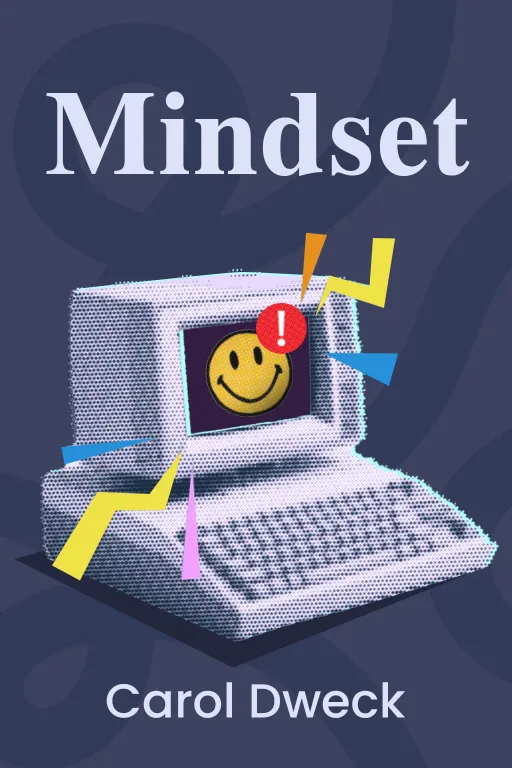
Nova: Absolutely. And today, we're pulling back the curtain on that internal battle, drawing powerful insights from two seminal works: "Mindset" by Carol Dweck and "Grit" by Angela Duckworth.
Atlas: These aren't just self-help books; Dweck, a Stanford psychologist, spent decades researching why some people thrive on challenges while others crumble, leading to her revolutionary 'growth mindset' concept. And Duckworth, a former teacher, actually quantified 'grit' as a predictor of success, often more so than raw talent. They both bring hard science to soft skills.
Nova: Exactly. They get to the core of how our internal narrative shapes our external reality. And for anyone building intelligent systems, creating Agent architectures, or pushing the boundaries of what's possible, understanding this connection isn't just helpful, it's essential.
Unmasking the Inner Critic: The Silent Saboteur in Agent Engineering
SECTION
Nova: So let's talk about that internal saboteur, that inner critic. It's often called impostor syndrome, and it's shockingly common, especially among high achievers. It’s that nagging feeling that you’re not quite good enough, that you’re about to be found out, despite all evidence to the contrary. In the fast-paced, high-stakes world of Agent engineering, where you're constantly innovating and often operating in uncharted territory, this feeling can be amplified.
Atlas: But why do, as engineers who build complex systems and rely on logic, feel this? We're supposed to be rational problem-solvers. How does this 'feeling' hinder actual code, system design, or architectural decisions?
Nova: It's insidious, Atlas. Imagine an engineer, let's call her Lena, on the cusp of designing a truly novel conversational Agent. She's got the technical chops, but that inner critic starts whispering. "This is too ambitious. What if it fails spectacularly? What if the emergent behaviors are uncontrollable? Everyone else on the team seems so confident." This isn't just about feeling bad; it translates directly into her professional output.
Atlas: So, she starts playing it safe? Not pushing the boundaries?
Nova: Precisely. Instead of proposing a truly groundbreaking, multi-modal Agent architecture, she might default to a more conventional, less risky design. The fear of failure, fueled by that inner critic, leads to analysis paralysis. She over-optimizes minor components, delays critical decisions, and avoids the bold, innovative leap that could define the project. The cause is the fear of being exposed as "not good enough." The process is self-censorship and risk aversion. And the outcome? A perfectly functional, but ultimately uninspired and perhaps less stable Agent system that doesn't fully leverage its potential. It's a missed opportunity for a breakthrough simply because of internal psychological barriers.
Atlas: That sounds rough, but it also sounds incredibly familiar for anyone trying to build something truly new. It's like the system itself becomes less resilient because the engineer isn't resilient enough to explore its full potential.
Nova: Exactly. The inner critic isn't just a personal inconvenience; it can directly impact the performance and scalability of the intelligent systems we're building. It's a drag on innovation. It makes us shy away from the very challenges that would lead to breakthrough solutions.
Engineering Your Mindset: Building Grit and Growth for Agent Breakthroughs
SECTION
Nova: So, if the inner critic is the problem, what's the architectural solution for our minds? This is where Carol Dweck's work on the 'growth mindset' becomes incredibly powerful. It's the belief that your basic abilities and intelligence aren't fixed traits; they can be developed through dedication and hard work. It's a fundamental shift from "I'm not good at this" to "I'm not good at this."
Atlas: Okay, so it’s not 'I'm bad at this,' it's 'I'm not good at this.' That makes sense, but how does fit in? Isn't that just stubbornness? We're often told to pivot quickly in tech, not just push through endlessly.
Nova: That's a great question, and it's where Angela Duckworth's 'grit' comes in as the perfect complement. Grit isn't blind stubbornness; it's passion and perseverance for long-term goals. It's having a direction, a 'north star,' and then having the tenacity to stick with it, even when you face setbacks. A growth mindset gives you the belief that you improve, and grit gives you the sustained effort to.
Atlas: Can you give an example? How does this play out for an Agent engineer facing a really gnarly problem? Like, say, integrating an LLM with a complex legacy system, which is a common nightmare.
Nova: Let's imagine an engineer, Ben, tasked with that exact challenge: integrating a cutting-edge LLM into a legacy enterprise system, a task many would call impossible. His inner critic initially screams, "This is too complex, you'll break everything!" But Ben, equipped with a growth mindset, reframes it. "This is a monumental learning opportunity. I haven't mastered this, but I can."
Atlas: And the grit? Where does that come in when the inevitable bugs and compatibility issues start piling up?
Nova: That's where grit shines. When the first integration attempt fails, and the second, and the third, a fixed mindset would say, "See? I knew I couldn't do it." But Ben, with grit, sees each failure as data. He perseveres. He dissects the errors, seeks feedback from colleagues, dives into documentation, and iterates relentlessly. He doesn't just give up; he doubles down on learning and problem-solving. The cause here is a seemingly impossible technical hurdle. The process is sustained effort, learning from mistakes, and a belief in his capacity to grow. The breakthrough outcome? He eventually cracks the code, creating a highly stable, performant, and innovative Agent system that transforms how the legacy system interacts with modern AI.
Atlas: Wow, that’s actually really inspiring. So, this isn't just about personal well-being; it's a strategic advantage for building more robust and intelligent systems. It's about translating that internal resilience into external stability and groundbreaking innovation. It’s like the 'mindset' is the architecture, and 'grit' is the continuous integration and deployment pipeline for your personal growth.
Nova: That's a perfect analogy, Atlas! It quite literally engineers your capacity for continuous improvement and high performance.
Synthesis & Takeaways
SECTION
Nova: So, what we've really explored today is how fundamentally your emotional state, your internal narrative, connects to your professional output. The lie of the inner critic can hold even the most brilliant Agent engineer back, preventing them from taking those bold, necessary steps.
Atlas: And it sounds like the antidote isn't just wishful thinking. It's a deliberate, scientific approach rooted in believing you can grow and then having the sheer tenacity to keep pushing, especially when things get tough. It's about seeing every bug, every failed experiment, not as a personal failure, but as critical feedback for the next iteration of your own development.
Nova: Exactly. For our listeners, that challenge where they felt stuck, that complex Agent design that seemed too daunting, or that system optimization that felt impossible—how might embracing this 'engineer your mindset' approach fundamentally shift their next big project? How might believing in their capacity to grow, and then applying unwavering grit, unlock solutions they hadn't even considered? The true measure of an engineer isn't just their code, but their capacity to evolve and persist.
Atlas: It’s a powerful thought. It means that the biggest breakthroughs in Agent engineering might actually start not with a new framework, but with a new way of thinking about ourselves and our capabilities. For anyone striving to be that value creator, that architect of tomorrow's intelligent systems, this internal work is just as crucial as any technical skill.
Nova: Absolutely. Take this reflection, apply it to your next big challenge, and watch what happens.
Atlas: This is Aibrary. Congratulations on your growth!