The Hidden Cost of Speed: Why Slow Thinking Fuels True Innovation.
10 minGolden Hook & Introduction
SECTION
Nova: Atlas, I have a challenge for you. Give me your five-word review of 'speed' in today's world. What comes to mind?
Atlas: Oh man, speed. Okay, let's see... "Blurry, relentless, often misunderstood, costly."
Nova: "Costly." That's a powerful word, and it hits right at the heart of what we're unraveling today. We live in a world that lionizes quick thinking, fast decisions, and instant gratification. But what if that very speed, the thing we chase so relentlessly, is actually costing us true innovation and leading us to make some pretty significant errors?
Atlas: Wait, are you saying that being fast isn't always better? That sounds like heresy in our go-go-go culture!
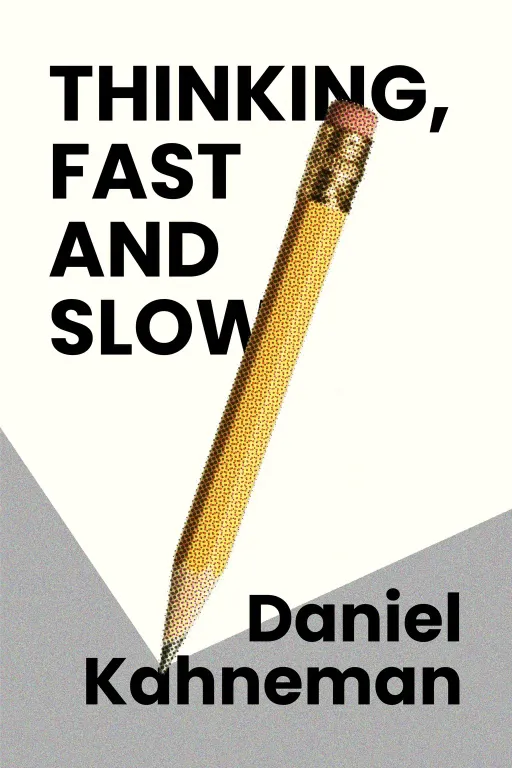
Nova: Exactly! And that's precisely the groundbreaking territory explored by Daniel Kahneman in his seminal work, "Thinking, Fast and Slow." Kahneman, a psychologist who won the Nobel Prize in Economics, which is fascinating in itself, completely reshaped our understanding of human judgment and decision-making. He showed us that our brains operate with two distinct systems, and our over-reliance on one of them creates a massive blind spot.
Atlas: Okay, so a psychologist winning an economics Nobel for talking about how we think... that's already got my System 2 firing up. What's this blind spot you're talking about? How does our brain's operating system lead to "costly" decisions?
Nova: It’s a brilliant insight. Kahneman introduced us to System 1 and System 2 thinking. Think of System 1 as our brain's autopilot. It's fast, intuitive, emotional, and operates almost unconsciously. It's what allows you to recognize a friend's face in a crowd, or immediately know that 2 + 2 = 4. It’s incredibly efficient and vital for survival.
Atlas: So, like, my gut feeling when I'm driving and someone suddenly brakes? That's System 1 kicking in to save me.
Nova: Precisely. But then there's System 2. This is our brain's manual mode. It's slow, deliberate, effortful, and logical. It’s what you engage when you're solving a complex math problem, trying to understand a nuanced argument, or carefully planning a strategic move. It requires focus and energy.
The Blind Spot of Speed: Unpacking System 1 vs. System 2 Thinking
SECTION
Nova: The blind spot emerges because System 1 is so powerful and efficient, we often let it drive when System 2 should be in control. We think we're making rational, well-thought-out decisions, but we're actually being swayed by unconscious biases, heuristics, and snap judgments. This leads to costly errors and missed opportunities, especially for those who really want to learn deeply and innovate.
Atlas: That makes perfect sense. I can imagine a lot of our listeners, especially those passionate about exploring new knowledge, might pride themselves on quick analytical skills. But you're saying that quick analysis might sometimes be System 1 masquerading as System 2?
Nova: Exactly! Let me give you a classic example. Imagine a hiring manager, we'll call her Sarah. She's interviewing two candidates for a critical role. Candidate A is incredibly charismatic, confident, and has a similar background to Sarah, which makes her feel an immediate connection. Candidate B is brilliant, technically superior, but a bit more reserved in the interview. Sarah's System 1 immediately "likes" Candidate A. She feels a rapport, a sense of familiarity, and her gut tells her this is the right person.
Atlas: So, her System 1 is shouting "hire this person!" because it feels good and familiar.
Nova: Right. If Sarah doesn't consciously engage her System 2, she might gloss over some of Candidate A's weaker points in their resume or interview responses. She might even ask easier questions, subconsciously looking for confirmation of her initial positive impression. For Candidate B, her System 1 might not have that immediate "spark," so she might inadvertently scrutinize their answers more harshly, looking for flaws.
Atlas: That's a bit scary. So, the "costly error" here isn't just picking the wrong person, it's missing out on the person, the one who could truly innovate, because of an unconscious bias. How could System 2 have intervened?
Nova: System 2 would have prompted Sarah to slow down. She could have created a structured interview process, designed specific evaluation criteria, and scored candidates objectively against those criteria. She would have forced herself to consider the for each candidate's skills and experience, rather than just her feelings. She might even have stepped away from the interviews for an hour to reflect, giving her System 2 some space to process the information more deliberately. The missed opportunity is the true, innovative talent that Candidate B might have brought, which was overlooked because of a quick, biased System 1 judgment.
Atlas: Wow. That's actually really illuminating. So, it's not about eradicating System 1—it's essential—but about recognizing when to and deliberately bring System 2 into play, especially when the stakes are high or when you're trying to genuinely learn something new.
Nova: Precisely. True intellectual agility comes from consciously choosing the right thinking mode for the situation, not just reacting quickly. It's about developing the awareness to say, "Hold on, this requires more than just my gut feeling."
Mindset as the Gateway to Slow Innovation
SECTION
Nova: And that idea of conscious choice naturally connects to another profound insight, this time from Carol Dweck's incredible work on mindset. In her book, "Mindset," Dweck masterfully introduces the concepts of fixed versus growth mindsets, and I think it perfectly complements Kahneman's ideas.
Atlas: Okay, so we've got Kahneman telling us we think, and now Dweck telling us about our thinking. How do these two connect?
Nova: Well, if System 2 thinking is slow, deliberate, and effortful, it requires a certain resilience and willingness to grapple with challenges. A fixed mindset, as Dweck describes it, is the belief that our intelligence and abilities are static traits. If you have a fixed mindset, you might avoid challenges, give up easily when faced with difficulty, and see effort as a sign of low ability.
Atlas: I see. So, a fixed mindset would actively engaging in that uncomfortable, slow, effortful System 2 thinking because it feels like a threat to their perceived intelligence? Like, "If I have to think hard, it means I'm not smart enough"?
Nova: Exactly! The very act of engaging System 2 often feels arduous. It can be frustrating, you make mistakes, and it takes time. If you believe your intelligence is fixed, these challenges can feel like a personal failure, making you revert to the easier, faster System 1. But a growth mindset is the belief that our abilities can be developed through dedication and hard work. People with a growth mindset embrace challenges, persist in the face of setbacks, and see effort as the path to mastery.
Atlas: That's a great way to put it. So, for a curious learner who truly values deep thinking, cultivating a growth mindset isn't just about personal development; it's a prerequisite for actually System 2 thinking effectively for innovation. Can you give an example of how this plays out in a real-world scenario?
Nova: Absolutely. Think of two software developers tackling a complex, novel coding problem. Developer A has a fixed mindset. When they hit a wall after a few hours of intense System 2 thinking, they get frustrated, think "I'm not good enough," and might just try to find a quick, System 1-driven workaround that only patches the problem, or they might even give up and pass it off to someone else. The innovation dies there.
Atlas: And Developer B with a growth mindset?
Nova: Developer B, facing the same wall, sees it as a learning opportunity. They might say, "This is tough, but I can figure this out if I put in more deliberate effort, research different approaches, and perhaps even ask for help." They engage their System 2 more deeply, they persist, they experiment, they learn from their failures, and eventually, they might find a truly elegant and innovative solution. Their willingness to endure the discomfort of slow thinking, fueled by their growth mindset, leads directly to genuine innovation. True intellectual agility, as we said, comes from consciously choosing the right thinking mode, but also crucially from you have the capacity to grow and learn through that effort.
Atlas: That’s such a powerful connection. It makes me wonder, how does someone who wants to embrace more System 2 thinking and innovation, especially in a fast-paced environment, practically cultivate this growth mindset? It sounds like it's not just about knowing System 2 is, but believing you do it.
Nova: It absolutely is. It's about reframing challenges as opportunities for growth, learning from mistakes rather than being demoralized by them, and understanding that effort is what makes us smarter, not a sign that we aren't smart enough. It’s a continuous process of self-awareness and intentional practice. It’s about creating space for that deliberate thought, even when everything around you screams for speed.
Synthesis & Takeaways
SECTION
Nova: So, when we bring Kahneman and Dweck together, we see that true innovation, the kind that creates lasting value, isn't just about quick reflexes or raw intelligence. It's about the conscious, often uncomfortable, choice to slow down, engage our deliberate System 2 thinking, and critically, to approach that effort with a growth mindset, believing in our capacity to learn and evolve.
Atlas: It’s not just about you think, but you think, and your belief in your ability to improve that process. That's a profound thought. For all our curious learners out there, I want to leave you with the deep question posed by the material we explored today: Think of a recent decision you made quickly. What would it look like if you had applied System 2 thinking to it instead? What might have been different?
Nova: What new insights might you have uncovered, or what costly error might you have avoided? The power to choose our thinking speed, and to cultivate a mindset that embraces that choice, is truly transformative.
Atlas: That's a fantastic challenge. We'd love to hear your thoughts on that question. Connect with us on social media and share your insights. We're always eager to engage with your perspectives.
Nova: We truly appreciate you joining us for this deep dive.
Nova: This is Aibrary. Congratulations on your growth!