The Stoic Artist: Finding Inner Peace in a Chaotic Creative World
8 minGolden Hook & Introduction
SECTION
Nova: Atlas, if I told you there's a secret society of artists and thinkers who never get stressed, who consistently produce masterpieces without a single flicker of self-doubt... what would you say?
Atlas: Oh man, I'd say you've been reading too many fictional manifestos, Nova. Or maybe you've just discovered a cult. Because that sounds utterly impossible.
Nova: Exactly! It impossible, isn't it? The mythical unflappable creative is just that—a myth. But what if there was a way to navigate that inherent chaos, not by eliminating it, but by mastering your internal response?
Atlas: I’m curious. That sounds like something our listeners, especially those deeply invested in intellectual pursuits, wrestle with constantly. That pressure to produce, to be right, to have the definitive framework—it’s intense.
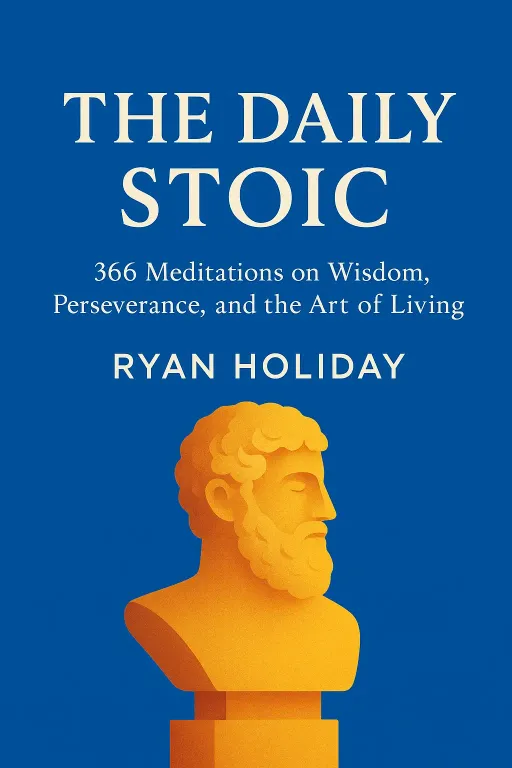
Nova: It absolutely is. And today, we're diving into the essence of what we're calling "The Stoic Artist: Finding Inner Peace in a Chaotic Creative World." While it’s not a single published book, it’s a powerful synthesis of timeless wisdom, drawing heavily from Marcus Aurelius's profound "Meditations" and Ryan Holiday's incredibly insightful "The Obstacle Is the Way."
Atlas: Oh, those are heavy hitters. Marcus Aurelius, the Roman Emperor whose "Meditations" were essentially his private journal, not meant for publication. I always find that fascinating—raw, unfiltered wisdom.
Nova: Exactly! It wasn't some academic treatise; it was his personal operating manual for life and leadership. And Holiday, he’s done an incredible job of making these ancient philosophies accessible and actionable for a modern audience, really sparking a renaissance of Stoic thought for today's leaders and thinkers.
Atlas: That makes sense. So, we're talking about ancient wisdom meeting modern pressure.
Nova: Precisely. And that naturally leads us into our first core idea: the undeniable, often overwhelming, emotional rollercoaster that comes with any deep creative or intellectual endeavor.
The Inevitable Emotional Rollercoaster of Creative Life
SECTION
Nova: Every artist, every philosopher, every historian, every challenger—anyone deeply engaged in intellectual pursuits—knows this feeling. It's the intense emotional swings. The pressure to produce something meaningful, the gnawing fear of judgment, the relentless pursuit of perfection.
Atlas: Oh, I know that feeling. For anyone who's ever tried to dissect a complex idea, or challenge an established narrative, or simply tried to synthesize disparate historical facts into a coherent framework—the emotional toll is real. It's not just about the facts; it's about the intellectual vulnerability.
Nova: Absolutely. And too often, we're told to just "toughen up" or "get over it." But the truth is, these feelings are okay. They’re a sign you care deeply about your work. Think of it like a high-stakes performance. You get butterflies, even if you’re a seasoned performer. That energy, that fear, it's all part of the game.
Atlas: Yeah, I can definitely relate. But wait, looking at this from a "challenger" perspective, where you're driven to expand your worldview and engage in debate, isn't it naive to just 'control your reaction' when your entire intellectual reputation might be on the line, or your deeply held interpretations are being challenged? It feels like the stakes are too high for simple emotional regulation.
Nova: That’s a great question, Atlas, and it gets to the heart of it. Control isn't about denial or suppressing those feelings. It’s about conscious engagement. It’s understanding that while you can't always control the external judgment, the criticism, or the outcome of a debate, you have absolute power over your internal response to it.
Atlas: So it's not about being emotionless, but about being strategic with your emotions.
Nova: Exactly. It's like a seasoned athlete who feels the pre-game jitters, but instead of letting them paralyze her, she channels that energy, focuses on her breath, and executes her strategy. She acknowledges the external pressure but doesn't let it dictate her performance. This requires a framework, a mental operating system if you will.
Stoicism as a Manual for Creative Resilience
SECTION
Nova: And this is precisely where ancient Stoicism offers an incredibly powerful framework. It’s not about being emotionless, as many people mistakenly believe. It’s about cultivating wisdom, courage, justice, and temperance in the face of life's inevitable challenges—perfect for the creative who faces constant external and internal friction.
Atlas: Okay, so you’re saying an ancient Roman emperor's journal can help a modern philosopher dissecting complex ideas or a historian challenging established narratives? That sounds a bit out there. How does that translate practically?
Nova: Well, let's take Marcus Aurelius. He was literally ruling the Roman Empire, dealing with wars, plagues, political intrigue, and personal losses. His 'Meditations' are filled with his daily struggle to remain virtuous and calm amidst unimaginable chaos. His core teaching is distinguishing between what's in our control—our thoughts, judgments, actions—and what isn't—other people's opinions, external events, outcomes.
Atlas: So, for a creative, that means focusing on the craft, the integrity of the idea, the quality of the research, and not getting hung up on the critics or the market reception?
Nova: Precisely. The fear of judgment, the pressure to produce, the pursuit of perfection—these are largely external or driven by external validation. Aurelius would say, focus on effort, intention, character in creating. The outcome is often beyond your direct control. And this is beautifully echoed in Ryan Holiday’s "The Obstacle Is the Way."
Atlas: Ah, Holiday. He makes Stoicism feel incredibly relevant for today's world.
Nova: He does. Holiday takes these ancient ideas and shows how obstacles aren't roadblocks but opportunities. Every challenge, every criticism, every creative block, can be reframed as a chance to learn, adapt, and grow. It’s about turning adversity into advantage. Think of a writer whose manuscript gets rejected multiple times. Instead of giving up, a Stoic artist might see each rejection as feedback, an opportunity to refine the work, to make it stronger, more resilient.
Atlas: That’s actually really inspiring. It connects with the idea of synthesizing and connecting the dots, not just intellectually, but emotionally. So, it's not about avoiding challenges, but about how you perceive and respond to them. It's almost like a martial art for the mind.
Nova: That’s a great analogy! It’s about developing mental resilience. And this brings us to a practical "healing moment" from this Stoic approach. Take five minutes. Write down one external factor causing you stress in your creative or intellectual life right now. Then, write down one thing within your control that you can change about to that factor.
Atlas: I like that. It's a tangible exercise. It shifts the focus from the overwhelming external to the actionable internal. For someone driven by a quest for truth, this framework provides a powerful lens to view challenges, not as threats to their worldview, but as opportunities to strengthen it.
Synthesis & Takeaways
SECTION
Nova: Absolutely, Atlas. The core message of the "Stoic Artist" is this: creative and intellectual pursuits will always come with chaos and emotional intensity. Inner peace isn't the absence of that chaos, but the mastery of your response to it. It’s about understanding what you can control, and courageously accepting what you can’t.
Atlas: And for the historian, the philosopher, the challenger—the ones who truly seek to understand and expand their worldview—this isn't just emotional management. It's a profound intellectual tool. It allows you to engage in debate with less personal attachment to the outcome, to dissect ideas more objectively, and to truly grow from every challenge.
Nova: Precisely. It allows you to transform every obstacle into a stepping stone for deeper insight and greater resilience. So, for our listeners, we encourage you to try that "healing moment" exercise. Identify that stressor, and then find that one internal reaction you can shift. It's a small step, but it's a powerful one on the path to becoming a truly Stoic Artist.
Atlas: And I imagine a lot of our listeners will find that incredibly liberating. It’s a way to reclaim agency in a world that often feels overwhelming.
Nova: It truly is. This is Aibrary. Congratulations on your growth!