

The Story You Live By: Crafting Your Personal Narrative
11 minGolden Hook & Introduction
SECTION
Nova: Atlas, I'll say a historical figure, and you invent their imaginary self-help book title. Ready?
Atlas: Oh, I love this game. Hit me.
Nova: Julius Caesar.
Atlas: "Et Tu, Brute? And Other Networking Fails: How to Conquer Your Inner Circle."
Nova: Excellent! Okay, how about Joan of Arc?
Atlas: "Ignite Your Purpose: From Vision to Victory."
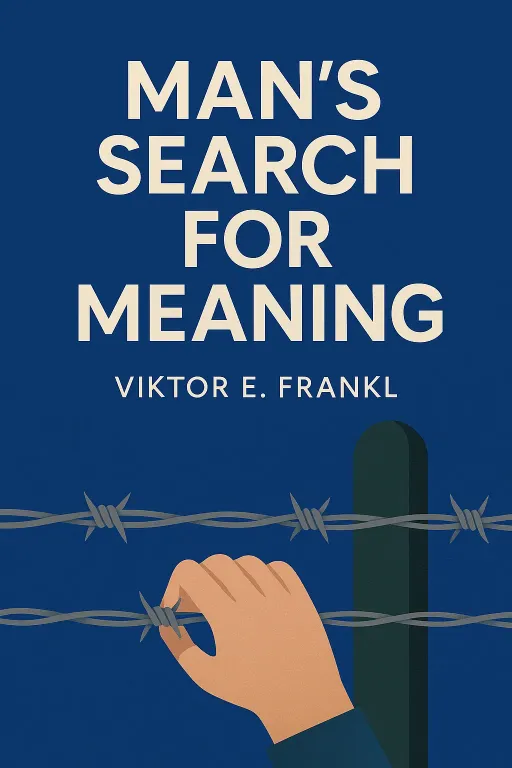
Nova: Perfect! And that actually brings us to our topic today, which is "The Story You Live By: Crafting Your Personal Narrative." It’s a powerful exploration of how we make sense of our lives, drawing profound insights from works like Viktor Frankl's "Man's Search for Meaning" and Joseph Campbell's "The Hero with a Thousand Faces." What's so compelling about this book is how it synthesizes these classic ideas into a practical guide for finding direction.
Atlas: That makes me wonder, how does a book like this, pulling from such foundational texts, translate into something actionable for someone who's, let's say, building a movement or navigating really complex problems in their professional life? It sounds deep, but is it?
Nova: Absolutely. The core of our podcast today is really an exploration of how understanding the universal human search for meaning and the power of personal narrative can help us navigate life's complexities and build a purposeful existence. Today we'll dive deep into this from two perspectives. First, we'll explore the universal human feeling of searching for meaning and connection; then, we'll discuss how we can actively craft our personal narratives, much like a hero's journey, to find clarity and purpose.
The Existential Drift: Understanding the Search for Meaning
SECTION
Nova: Think about it, Atlas. Sometimes, even when we're hitting all our metrics, when we're defining core values for a company, or meticulously solving complex problems, there's this underlying current. This feeling of being a bit adrift, right? Like there's a missing piece in the grand puzzle of our own lives.
Atlas: Oh, I know that feeling. It's like you're on a super-fast treadmill, you're running hard, but you look up and you're not entirely sure you're running or you’re even going. For listeners who are constantly seeking clarity, who are always trying to define the next big thing, that sense of 'drift' can be really disorienting.
Nova: Exactly. And that's where the insights from "The Story You Live By" really shine. It frames this feeling not as some personal failing or a unique struggle, but as a fundamental, universal human experience. It's the 'existential drift.' And to illustrate this, the book draws heavily from the profound work of Viktor Frankl, particularly his memoir, "Man's Search for Meaning."
Atlas: Frankl… that's the Holocaust survivor, isn't it? His story is incredibly powerful.
Nova: It is. Frankl endured unimaginable suffering in Nazi concentration camps. He lost his entire family, everything he owned. Yet, amidst that absolute horror, he observed something remarkable: those who found a reason to live, a purpose beyond their immediate suffering, were more likely to survive. He saw people sharing their last crust of bread, offering comfort, or even just holding onto the hope of reuniting with a loved one, and those acts of meaning became their lifeline.
Atlas: Wow. That's kind of heartbreaking and inspiring at the same time. So, he's saying that even in the most extreme, dehumanizing circumstances, meaning isn't something external that's given to us, but something we or?
Nova: Precisely. Frankl argued that humans' primary motivational force is a search for meaning. He called it 'logotherapy.' He wasn't about asking 'what do I want from life?' but 'what does life demand from me?' It completely flips the script. It means meaning isn't a luxury item you get when everything else is perfect; it's a fundamental necessity, a compass that guides you through the storm.
Atlas: That's a powerful reframing. I imagine a lot of our listeners, who are constantly solving problems and building things, might feel like they need to purpose, like it's a goal to be checked off. What you're saying is, purpose can be found even in the process, in the struggle itself?
Nova: Absolutely. Think about a visionary leader building a startup. There are countless complex problems, setbacks, moments of self-doubt. If their purpose is solely tied to the outcome – a successful IPO, for example – they're vulnerable to immense despair when things go wrong. But if their purpose is in the of building, in the they're trying to create, in treating their team with radical empathy through the messy middle, then each challenge becomes an opportunity to affirm that deeper meaning.
Atlas: That makes sense. It shifts the focus from external validation to internal resilience. So, the book is really saying the search for meaning is a shared human experience, and recognizing that can transform our feelings of isolation into a sense of collective strength?
Nova: Exactly. It connects personal struggle to universal human experience. You realize you're not alone in feeling adrift, and that understanding itself can be incredibly healing. It’s about recognizing that the search for meaning the journey, not just the destination.
Narrative as Navigation: Crafting Your Personal 'Hero's Journey'
SECTION
Nova: And that naturally leads us to the second key idea we need to talk about, which often acts as a counterpoint to what we just discussed: how we actively our personal narratives. It’s not just about finding meaning, but about the story of our lives. This book beautifully integrates Joseph Campbell's "The Hero with a Thousand Faces" into this concept.
Atlas: Oh, Campbell! The hero's journey, right? Luke Skywalker, Neo, Frodo Baggins… the monomyth. It's a classic framework, but how does that apply to someone who's, say, building an adaptive organizational structure for their team, or trying to understand customer psychology? It sounds a bit… mythological for the boardroom.
Nova: That’s a great question, and it's precisely where "The Story You Live By" makes its brilliant connection. Campbell's work isn't just about ancient myths; it's about the of transformation that resonate deep within the human psyche. The hero's journey is a blueprint for navigating change, overcoming obstacles, and ultimately, finding yourself.
Atlas: So you're saying our lives, even our professional ones, can be seen through the lens of a hero's journey?
Nova: In a profound way, yes. Campbell, a renowned mythologist, spent decades studying myths and folklore from around the world. He discovered that despite cultural differences, almost all heroic narratives follow a similar arc: the call to adventure, refusal of the call, meeting the mentor, crossing the threshold into the unknown, trials and tribulations, the ordeal, the reward, the road back, resurrection, and return with the elixir. What’s truly fascinating about his work is how widely acclaimed it became, influencing everyone from George Lucas to countless self-help authors. It’s one of those books that, once you read it, you start seeing its patterns everywhere.
Atlas: That’s a perfect example of profound insight made accessible. So, for someone who's a strategic builder, always thinking about their next destination in customer psychology or visionary leadership, how does knowing this pattern help them craft personal narrative?
Nova: It offers a powerful framework. Think about the 'call to adventure.' For a strategic builder, that might be the spark of an innovative idea, the decision to leave a stable job to pursue a risky venture, or the recognition of a complex problem that desperately needs solving. The 'refusal of the call' could be the self-doubt, the fear of failure, the comfort of the status quo.
Atlas: I can definitely relate to that 'refusal of the call.' That moment where you question everything, where the safe path seems so much more appealing than the unknown.
Nova: Exactly! And then the 'meeting the mentor' could be a key advisor, a book that provides crucial insight, or even a podcast that inspires. The 'trials and tribulations' are the inevitable challenges – the market shifts, the product failures, the team conflicts. The 'ordeal' is that make-or-break moment where everything is on the line.
Atlas: So it's about consciously recognizing these stages in your own life and understanding that the struggles aren't just random chaos, but part of a larger, meaningful pattern?
Nova: Precisely. It allows you to reframe setbacks not as dead ends, but as necessary steps in your personal epic. It gives you agency. You stop being a passive recipient of events and start becoming the conscious author of your own story. For someone who values impact and building a movement, this provides a profound sense of purpose even in the midst of uncertainty. It helps you define your core values, not just reactively, but proactively, as guiding principles for your 'hero's quest.'
Atlas: That gives me chills. It's like having a meta-narrative to understand all the smaller stories within your life. It turns the 'messy middle' of innovation into the 'belly of the whale' where the hero is transformed. It changes the whole mindset.
Nova: It does. It moves from simply navigating problems to consciously shaping a meaningful narrative, transforming feelings of isolation into a shared understanding and resilience. It's about recognizing that your specific challenges, when viewed through this universal lens, connect you to all of humanity's struggles and triumphs.
Synthesis & Takeaways
SECTION
Nova: So, what we've discovered today is that "The Story You Live By" offers a powerful double helix for navigating life: first, understanding the universal human search for meaning, as illuminated by Frankl, helps us find purpose even in suffering. Then, embracing Campbell's hero's journey provides a framework to actively craft our personal narrative, finding strength and direction in our challenges.
Atlas: That's actually really inspiring. It's not about finding a single, static purpose, but understanding that meaning is dynamic, evolving, and something we actively participate in creating. For anyone striving to build something meaningful and enduring, this offers a strategic blueprint for their own inner landscape.
Nova: It really does. It's about recognizing that the story of your life isn't just happening you; it's being written you, moment by moment. And when you consciously choose to see yourself as the hero on your own unique journey, facing trials, seeking mentors, and returning with your own elixir of wisdom, that's where true clarity and profound impact emerge.
Atlas: That's a beautiful thought. It makes me reflect on past challenges, and how often those moments of greatest difficulty were also the moments of greatest growth and clarity. What meaning or strength did you discover within that difficulty? Pause for a moment and consider that question.
Nova: We encourage all our listeners to take a moment and reflect on their own 'healing moment.' What meaning or strength did you discover within a past challenge? Share your insights with us on social media; we'd love to hear your stories.
Atlas: And remember, this journey of self-discovery and purpose isn't a solitary one. We're here with you, exploring these profound ideas together.
Nova: This is Aibrary. Congratulations on your growth!









